Advice and help on Electrical motor safety , potential danger. Greatly appreciated

Thread Starter

Stefi

Joined Jul 27, 2022
13
I will update you when I get an answer from the genitor, also about the motors case being earted. Is it earthed when it has a plug with the neutral 3rd pin for the earthing or is this earthing some other procedure of directly connecting the case to earth via wires? Again excuse me for the probably funny question and thank you
 

Ian0

Joined Aug 7, 2020
13,317
I will update you when I get an answer from the genitor, also about the motors case being earted. Is it earthed when it has a plug with the neutral 3rd pin for the earthing or is this earthing some other procedure of directly connecting the case to earth via wires? Again excuse me for the probably funny question and thank you
That's what the third pin does. The third wire normally carries no current whatsoever. Its only job is to keep the product safe.
From your previous post: the plug in RCD does the same job as the on that should be included in the building wiring. You don't need both, but having two won't cause a problem.

I also know from the spec "Speed = 1425rpm" that you have an induction motor. In an induction motor, the windings (the stator, if you want the technical term) remain stationary and there is no electrical connection to the rotor (the part that rotates). As you can imagine, that alone makes it rather less likely that a fault could develop.
 

Thread Starter

Stefi

Joined Jul 27, 2022
13
That's what the third pin does. The third wire normally carries no current whatsoever. Its only job is to keep the product safe.
From your previous post: the plug in RCD does the same job as the on that should be included in the building wiring. You don't need both, but having two won't cause a problem.

I also know from the spec "Speed = 1425rpm" that you have an induction motor. In an induction motor, the windings (the stator, if you want the technical term) remain stationary and there is no electrical connection to the rotor (the part that rotates). As you can imagine, that alone makes it rather less likely that a fault could develop.
This information is very reassuring. I will buy this plug RCD. It will be as safe as it gets with this type of motors as I understand. Also does the RCD also work with the non earthed double pin plug of the subersible pump?
Wish you a good evening.

If you have time to answer I'd like to ask. What is the difference in safety and effect on the user in contact, between an earthed device which "leaks" current , without an RCD and one with RCD. It seems that the RCD shuts it off faster? Does the earthing also shut the device off a d if yes what happens different compared to am RCD shutting off.
 

Ian0

Joined Aug 7, 2020
13,317
This information is very reassuring. I will buy this plug RCD. It will be as safe as it gets with this type of motors as I understand. Also does the RCD also work with the non earthed double pin plug of the subersible pump?
Yes - it can detect if the current that set off down the live wire didn't return on the neutral.
If you have time to answer I'd like to ask. What is the difference in safety and effect on the user in contact, between an earthed device which "leaks" current , without an RCD and one with RCD. It seems that the RCD shuts it off faster? Does the earthing also shut the device off a d if yes what happens different compared to am RCD shutting off.
If you are touching the earthed case of an appliance which has a "leak" between live and earth, you would not even know, because the case is connected to earth. If the "leak" became more serious then the case could theoretically get to 115V (half the supply voltage) if an enormous fault current flowed, but only very briefly as the fuse would rapidly fail.
With an RCD, the RCD would cut the power at the "leak" stage before the voltage on the case was even noticeable to the touch.

Without the RCD, it's more complicated. Let's suppose the circuit is fused at 16A, and there is 10m of cable between the appliance and the fuse board. It would take 32A to cause the fuse to fail. 32A in the earth lead would result in 3.6V on the appliance. That's the same voltage as the batteries in a remote control handset.
Longer, thinner cables would result in higher voltages on the case of the appliance, that's why RCDs are a good idea for your lawnmower.

For the double insulated product, only the RCD can help. That's why it needs two layers of insulation totalling 5mm thick to be called "double insulated", but that insulation can be made of air, so it's no help if water gets inside. With no earth cable to take the fault current away, the 0.03A that it takes to trip the RCD might have to flow through you! (but you would normally survive 0.03A).
 
Last edited:

Thread Starter

Stefi

Joined Jul 27, 2022
13
Great thank you so much I have learnt soo much already.
In case of the plug adapter RCD which cuts the circuit off at 30ma, will the the 30ma fault current be flowimg through the human body or is it altered in any way, I ask this since im my uneducated impression 30ma can be dangerous?

Also will the RCD plug adapter apply its function to all plugs if a multi plug board is plugged in to it or is it only suitable for one direct connection to a device?
Thank you.
 

Ya’akov

Joined Jan 27, 2019
10,370
Great thank you so much I have learnt soo much already.
In case of the plug adapter RCD which cuts the circuit off at 30ma, will the the 30ma fault current be flowimg through the human body or is it altered in any way, I ask this since im my uneducated impression 30ma can be dangerous?

Also will the RCD plug adapter apply its function to all plugs if a multi plug board is plugged in to it or is it only suitable for one direct connection to a device?
Thank you.
The RCD looks for an imbalance between the live and neutral conductors. They should have the same current. If they are different from each other something is going somewhere it shouldn’t. Time is an important element. 30mA for a very short time isn’t the same as 30mA for a longer time. The RCD must trip within 200ms at the rated current and 40ms at time times the rated current.

Keep in mind the current flow that will trip the RCD is not going to necessarily be current flowing through a person. It will be current flowing to the earthing conductor and even if you are touching a “hot” housing, you will not get all the current since the path to ground through the safety earthing connection is almost certainly going to be lower impedance (AC resistance) than through you to ground.
 

Thread Starter

Stefi

Joined Jul 27, 2022
13
thank you very much, I assume that I will be "safe" then. I am going to buy the RCD since just to be sure if there is none installed already. And I trust that 30ma activation sensitivity is enough.

Can you tell me if I can plug a plug multiplier to the RCD adapter? Will the protection be effecttive on all the plugs then?
Thank you
 

ericgibbs

Joined Jan 29, 2010
21,651
Can you tell me if I can plug a plug multiplier to the RCD adapter? Will the protection be effecttive on all the plugs then?
Hi S,
Thats what I do, using a multiple extension socket module, protects all the devices plugged into the extender
E
 

Thread Starter

Stefi

Joined Jul 27, 2022
13
Hi S,
Thats what I do, using a multiple extension socket module, protects all the devices plugged into the extender
E
Hi Eric
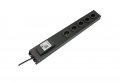
Just to be safe, does it have to be an extension socket with built in RCD/ an RCD with a permanently attached socket or can I just plug a normal non RCD socket into the one plug of the RCD plug adapter?
ACF6AA7F-9748-43FF-800B-6BFE0CDFE27A.jpeg
a normal extension socket plugged in to this or something like below
5C04EC6B-AC8D-460A-B75E-D329AF2753C3.jpegThank you.
 

Thread Starter

Stefi

Joined Jul 27, 2022
13
Hi Eric
Just to be safe, does it have to be an extension socket with built in RCD/ an RCD with a permanently attached socket or can I just plug a normal non RCD socket into the one plug of the RCD plug adapter?
View attachment 272425
a normal extension socket plugged in to this or something like below
View attachment 272424Thank you.
And a short follow up, do you trust a 30ma RCD for yourself or feel the need for 10ma?

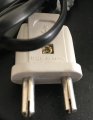
And do you know which type of plug this is? The pins are a little movable. It is the plug of the pump.75B1AD8C-71E1-40DC-AACA-9D30F090A13E.jpeg
 
Last edited:
Top