AC power supply N and L ..#2

Thread Starter

Dallasm1201

Joined Mar 6, 2025
1
In AC power supply, there are two symbols L and N. N is Neutral while L is Live or Line?
N is Neutral: Does it mean this wire is connected to ground and so it always 0V compared to ground.
L is Live or Line: what does it mean?
Thanks!
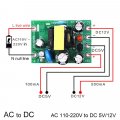
so here is my board

Mod: link to old thread.

https://forum.allaboutcircuits.com/threads/ac-power-supply-n-and-l.105366/post-801097
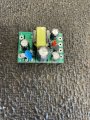
image.jpgOn the two center pins of right side is ground but the left is says L and N on a 240v 3 wire could I possibly do l1 and l2 since I don’t have a neutral ?
 
Last edited by a moderator:

prairiemystic

Joined Jun 5, 2018
428
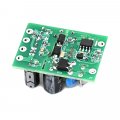
You can see many of these little SMPS boards are dangerous.
The "fuse" is wrongly on the N path, so the entire board can be hazardous live despite it blowing.
There are no mounting holes- are you just going to glue it down lol. Usually when I look at these PC boards there are clearance/spacings violations. I wouldn't use these bottom dollar boards. It has no EMI filtering anywhere as well.
 

MisterBill2

Joined Jan 23, 2018
27,652
L is for LINE, which usually is LIVE. N is supposed to be Neutral, close to "zero volts", seldom exacly zero unless you use it for the zero reference point. And the green wire is a safety ground and never supposed to be for power flow.
 

prairiemystic

Joined Jun 5, 2018
428
You never put the fuse on Neutral. Dangerous and would fail any regulatory or safety inspection.
I have to say something about these $1 SMPS , spend a little more please.
5V 12V PSU wiring.jpg
5V 12V PSU bottom side.jpg
 

Ian0

Joined Aug 7, 2020
13,158
Conventionally, the fuse would go in the live wire, but the fuse is there to break the circuit if the power supply fails short circuit, so it doesn't matter which conductor it is in. If the power supply were encased in a box, does it really matter which supply to it is broken? Consider countries with reversible mains plugs. . . It's simply a power supply with an AC input. Either side could equally be live (or neutral). If the fuse blows, the the live conductor of the cable is still live, and the neutral conductor is still neutral, regardless of which side of the board the fuse is.
At the other end of the cable, where the fuse exists to protect against a damaged cable, or an overload, then it MUST be in the live.
 

MisterBill2

Joined Jan 23, 2018
27,652
I consider that ANY design that depends on one side of the mains connection to be "ground" is unsafe, and probably a poor design, because of a shock hazard, or excess electrical noise, at best. Consider all of those "hot chassis" radios and televisions of yesteryear.
 

MaxHeadRoom

Joined Jul 18, 2013
30,688
I consider that ANY design that depends on one side of the mains connection to be "ground" is unsafe, and probably a poor design, because of a shock hazard, or excess electrical noise, at best. Consider all of those "hot chassis" radios and televisions of yesteryear.
Most of the early N.A. electronics possesed a mains isolation transformer, I had to get used to the rational of the N.A. two-pin AC plug!

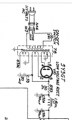
Early Admiral TV PS.
1741449626133.png
 

MisterBill2

Joined Jan 23, 2018
27,652
Evideently you never had to deal with the "hot Chassis" 5 tube radios, nor the fewer numbered but much more deadly HOT CHASSIS/metal CRT televisions. YES! There were actually metal shell CRTs at one time. AND split chassis to go with them. My TV repair shop friend DID acquire an adequate isolation transformer to service them.
 
Conventionally, the fuse would go in the live wire, but the fuse is there to break the circuit if the power supply fails short circuit, so it doesn't matter which conductor it is in. If the power supply were encased in a box, does it really matter which supply to it is broken? Consider countries with reversible mains plugs. . . It's simply a power supply with an AC input. Either side could equally be live (or neutral). If the fuse blows, the the live conductor of the cable is still live, and the neutral conductor is still neutral, regardless of which side of the board the fuse is.
At the other end of the cable, where the fuse exists to protect against a damaged cable, or an overload, then it MUST be in the live.
This is not quite true - the fuse is to be located in Line/Hot, never Neutral. I learned this with UL and CSA.
Reasoning is it's possible to have a short or insulation breakdown between Line and "something else" and if the fuse is in Neutral it will not blow. This is dangerous for many reasons.
Example: my shoddy Yinhua 858D hot air station came with the fuse in neutral. So incoming Line went straight out to the connector, and wand - no fuse or on/off switch involved, always energized and with full branch circuit current available.
Example: OP's power supply transformer can fail with a pri-sec short which would have no fuse involved, and even if it did blow on Neutral, Line is still there...
 

nsaspook

Joined Aug 27, 2009
16,340
This is not quite true - the fuse is to be located in Line/Hot, never Neutral. I learned this with UL and CSA.
Reasoning is it's possible to have a short or insulation breakdown between Line and "something else" and if the fuse is in Neutral it will not blow. This is dangerous for many reasons.
Example: my shoddy Yinhua 858D hot air station came with the fuse in neutral. So incoming Line went straight out to the connector, and wand - no fuse or on/off switch involved, always energized and with full branch circuit current available.
Example: OP's power supply transformer can fail with a pri-sec short which would have no fuse involved, and even if it did blow on Neutral, Line is still there...
It depends on where you live.

We specify linked-breakers on L1 and L2 for all industrial products, with direct bonding for ground and a non-fused neutral tie-in (if there is a neutral).
 
I thought OP's thread is about residential devices, so that is what I was limiting my opinion to.
In North America two-pole breakers are the (residential) branch circuit feed for L1, L2 and in poly-phase for a 1-phase load.

This thread is kinda doomed- we are not in the 1950's or 1970's anymore, polarized line cords came out for a reason and the requirement for a fuse lol. Back in the day I repaired many old TV's and radios with hot chassis, I know how it was scary- but let's make things to today's best practices. Trying to point out an unsafe mains SMPS for $1 shouldn't be so hard. The makers are using these disaster boards based on their price when they really shouldn't be allowed in the country in the first place.
My experiences, Certifiers reject any product with (only) a fused Neutral.

Here it's just done to make the PCB layout even smaller. I like that it has no mounting holes either. Super cheap and super race to the bottom. I wonder if the transformer even would pass a hi-pot test lol.
 

MisterBill2

Joined Jan 23, 2018
27,652
ALL of the explanations as to why fusing the neutral are correct. AND they all make sense, which is even better. This is applicable EVEN IF the item is in an insulated enclosure, AND, in addition to thatstated fire hazard, there is a serious shock hazard, for exactly the reason described.
 
Top