About commercial Li-ion BMS circuits

Thread Starter

ssonel1

Joined Feb 24, 2020
16
Hi everyone. I am trying to do my own DIY BMS for Li-ion batteries. First I examined some commercial BMSs. But they are confused me. Most of them claim that the circuit can work up to 20A and they use DWA01A protection IC to prevent overcharge and overdischarge. This IC is opening the circuit when dedicated voltage exceeded or drops below. How can circuit work with 20A while the internal resistance of Li-ion exists. I mean isn't going to voltage limit exceeded in 20A due the internal resistance? Am I missing something or they are fraud?

Sorry for bad English and Thanks in advance.

Link of product
 

Alec_t

Joined Sep 17, 2013
15,121
Welcome to AAC!
How can circuit work with 20A while the internal resistance of Li-ion exists. I mean isn't going to voltage limit exceeded in 20A due the internal resistance?
The internal resistance will depend on the type of battery cell. A tiny battery cell will almost certainly have a higher internal resistance than a huge battery cell. Reputable cells should have the maximum discharge current either marked on them or stated in the cell's datasheet.
 

Wolframore

Joined Jan 21, 2019
2,619
DWA01 just senses voltage and switches MOSFETS on and off based on its internal comparators. The MOSFETs used will determine the amount of current it can handle. The 20A is most likely a value that states how good the mosfets are. Depending on the size of the battey pack, there are circuits designed for 100A or more for RC racing, hoverboards... etc. Think about how much current is being used with batteries on a Tesla.

Keep in mind that motors have a stall current that demands a lot of current as they start, brake or are pushed hard.

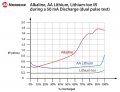
heres a comparison with couple other types.

1582553845300.jpeg
 
Top