3-stage BJT amplifier

Thread Starter

WeniTheElder

Joined Apr 15, 2025
7
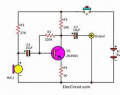
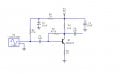
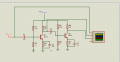
I'm trying to build a 3-stage BJT amplifier to amplify the signal from an electret microphone and drive a 3W, 8Ω speaker. I'm kinda stuck and need some help.


My idea is to use the first two stages as common-base amplifiers, each with a gain of around 15.5. The mic outputs about 20 mV, and I calculated that the speaker needs around 4.9 V peak to deliver 3W, so I aimed for a total gain of about 240. The third stage is a common collector to help drive the speaker.


I chose capacitor values based on suggestions from ChatGPT, and for the resistors I assumed β = 100, VBE = 0.7V, and IC = 1 mA.


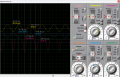
The problem is, when I simulate just the first two stages, I get a really distorted waveform, not a clean sine wave at all. I’m not sure if it’s because the gain is too high, or maybe the biasing is off.


Any advice would be appreciated — I just want to get a clean amplified signal before adding the last stage. Thanks! Screenshot 2025-04-15 170212.pngScreenshot 2025-04-15 155003.png
 

crutschow

Joined Mar 14, 2008
38,322
Your design will not do what you want.

You need emitter (negative) feedback to control the gain and reduce distortion for each stage, as shown in MrChips circuit, and then a push-pull Class AB output stage to generate the 3W into the low-impedance speaker load.
Look up audio amp circuits to drive a speaker and you will find loads of them.
 

LowQCab

Joined Nov 6, 2012
5,101
A Class-A Amplifier, ( as originally shown ),
has limited usefulness as an Audio-Amplifier.

What are You using for a Power-Supply ?,
the Power-Supply is the first thing that needs to be specified,
and either built or bought.

Battery-Powered ?, or AC-Powered ?, or Both at the same time ?


Is this project intended to act as an Intercom ?

If this project is intended to be a Desk-Top-tinkering experiment,
all it will do is make a loud squeal of Audio-Feedback.

What are You planing on using for a Speaker ?,
does it have to be "small" ?,
how loud do You expect it to be ?,
( measured in "db" ? ),
( or how much ambient-Noise must it overcome ? )
Does it need to be weather-resistant ?

What does the Frequency-Response need to look like ?
reasonably High-Fidelity ?,
or moderate-Speech-only, very-Quiet-Environment ?,
or High-Speech-Intelligibility / Extremely-Noisy-Environment ?

Is the environment near the Microphone Noisy ?
How will the Microphone be used ?,
mounted on a Wall with "Push-to-Talk" Button ?,
Headphones with built-in "Boom-Mic" ?

My first-guess / suggestion would be a ~12-Volt Power-Supply and
a Bridged-Single-Chip-Stereo-Amplifier.

Other Circuitry may be required to achieve your desired performance parameters.
.
.
.
 

Danko

Joined Nov 22, 2017
2,135
I'm trying to build a 3-stage BJT amplifier to amplify the signal from an electret microphone and drive a 3W, 8Ω speaker.
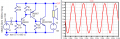
The mic outputs about 20 mV, and I calculated that the speaker needs around 4.9 V peak to deliver 3W, so I aimed for a total gain of about 240.
Something like that?
1744775520221.png
 

Attachments

Last edited:

Thread Starter

WeniTheElder

Joined Apr 15, 2025
7
A Class-A Amplifier, ( as originally shown ),
has limited usefulness as an Audio-Amplifier.

What are You using for a Power-Supply ?,
the Power-Supply is the first thing that needs to be specified,
and either built or bought.

Battery-Powered ?, or AC-Powered ?, or Both at the same time ?


Is this project intended to act as an Intercom ?

If this project is intended to be a Desk-Top-tinkering experiment,
all it will do is make a loud squeal of Audio-Feedback.

What are You planing on using for a Speaker ?,
does it have to be "small" ?,
how loud do You expect it to be ?,
( measured in "db" ? ),
( or how much ambient-Noise must it overcome ? )
Does it need to be weather-resistant ?

What does the Frequency-Response need to look like ?
reasonably High-Fidelity ?,
or moderate-Speech-only, very-Quiet-Environment ?,
or High-Speech-Intelligibility / Extremely-Noisy-Environment ?

Is the environment near the Microphone Noisy ?
How will the Microphone be used ?,
mounted on a Wall with "Push-to-Talk" Button ?,
Headphones with built-in "Boom-Mic" ?

My first-guess / suggestion would be a ~12-Volt Power-Supply and
a Bridged-Single-Chip-Stereo-Amplifier.

Other Circuitry may be required to achieve your desired performance parameters.
.
.
.
Thanks for the detailed response! Honestly, I’m just working on this as a school project and still learning—most of the things you mentioned are a bit over my head right now. I don’t have specific requirements; I’m mainly trying to make a basic circuit that works and learn from it along the way.
 

Thread Starter

WeniTheElder

Joined Apr 15, 2025
7
Your design will not do what you want.

You need emitter (negative) feedback to control the gain and reduce distortion for each stage, as shown in MrChips circuit, and then a push-pull Class AB output stage to generate the 3W into the low-impedance speaker load.
Look up audio amp circuits to drive a speaker and you will find loads of them.
I really don't know where to start — I wish I could find a ready circuit for an electret microphone and a speaker with 3w@8ohm
 

Thread Starter

WeniTheElder

Joined Apr 15, 2025
7
Hello everyone,

I'm working on a school project where I need to design and build a simple audio amplifier for an electret microphone. The microphone's bandwidth is roughly 40 Hz to 20 kHz, and the goal is to amplify its signal enough to drive a 3W@8 ohm speaker using a 9V power supply.

The design I’m aiming for uses three BJT stages. The first two stages are common emitter amplifiers, each providing a voltage gain of around 26. This should give me an output of about 7 volts peak, which I believe is enough to drive the speaker. The third and final stage is intended to be a common collector (emitter follower) to provide sufficient current to actually power the speaker.

I’ve tried to implement the first two stages on my own, but I couldn’t get the circuit to work correctly. I do understand the theoretical part — if I’m given a working circuit, I can analyse it and calculate its parameters — but when it comes to designing one from scratch, I struggle to make it function properly in practice.

Here is my previous thread for some background and what I’ve already tried:
https://forum.allaboutcircuits.com/threads/3-stage-bjt-amplifier.206286/

If someone could guide me through the process or even share a basic working schematic, I’d really appreciate it. I’ll be building the final circuit on a Perfboard, so I’d prefer the design to be as simple and straightforward as possible — just enough to meet the project’s requirements without unnecessary complexity.

Thanks a lot in advance for your help!
 

LowQCab

Joined Nov 6, 2012
5,101
A BJT-Transistor-Amplifier may "look" simple,
but getting one to work as You expect is not simple at all.

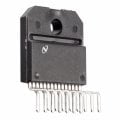
That's why I suggested a ~$7.oo Stereo-Chip-Amp. ( Texas-Instruments LM1876 ).
Relatively speaking, You almost can't get it wrong,
unless you've never touched a Soldering-Iron before.

If You have not become proficient in making simpler Circuits than this,
what You are proposing may be too complex for your current skill-level.

Please describe the most complex Project that You have successfully completed.

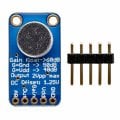
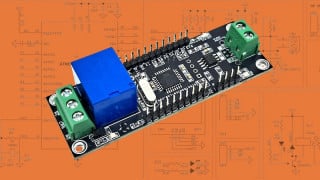
Here is an Electret-Microphone, plus Amplifier, plus Automatic-Gain-Control-Circuit, ( AGC ),
all on one very simple, easy to use, Chip, complete on a tiny, and very useful, PCB, for ~$7.oo.
But, as with any Mic-Pre-Amp that You might build or purchase,
it will also require a 5-Volt Voltage-Regulator to operate safely.
.
Electret Mic MFG_1713 .jpg.
.
Next, You will need an Audio-Power-Amplifier.
.
LM-1876 Stereo Audio Amp .jpg
.
.
For a Power-Supply and Speaker .........
Visit a near-by "Thrift-Store" ( Good-Will, etc. ), or a Computer-Repair-Shop.
Get a LapTop-Power-Supply, most of them are regulated to around ~20-Volts,
and capable of delivering ~2 to ~3-Amps of Current, or around ~40-Watts.
They might even give You one for free if You tell them it's for a School-Project.

Also, pick-up the largest used Desk-Top-Computer-Speakers that You can find.
You may, or may not, want to use the really-wimpy built-in Amplifier, or build your own Amplifier.

You NEED at least twice the Power that the Speakers are rated for, for truly satisfactory results.

The completed Power-Supply for the Amplifier must include a High-Current-Op-Amp to
create the required "Ground-Potential" for the Dual-Power-Supply, ( ~10-Volts-Plus, and ~10-Volts-Minus ).
.
.
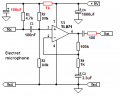
Here's a Schematic for an Op-Amp Mic-Pre-Amp.
I can't recommend that You try to do this with individual BJTs.
This Circuit does NOT have an AGC-Circuit built-in.

electret mic preamp .png.
.
.
 

Attachments

Last edited:

MrAl

Joined Jun 17, 2014
13,667
I'm trying to build a 3-stage BJT amplifier to amplify the signal from an electret microphone and drive a 3W, 8Ω speaker. I'm kinda stuck and need some help.


My idea is to use the first two stages as common-base amplifiers, each with a gain of around 15.5. The mic outputs about 20 mV, and I calculated that the speaker needs around 4.9 V peak to deliver 3W, so I aimed for a total gain of about 240. The third stage is a common collector to help drive the speaker.


I chose capacitor values based on suggestions from ChatGPT, and for the resistors I assumed β = 100, VBE = 0.7V, and IC = 1 mA.


The problem is, when I simulate just the first two stages, I get a really distorted waveform, not a clean sine wave at all. I’m not sure if it’s because the gain is too high, or maybe the biasing is off.


Any advice would be appreciated — I just want to get a clean amplified signal before adding the last stage. Thanks! View attachment 347063View attachment 347064
Hi,

You didn't do too bad for a beginner, you just have to understand a few more little concepts in both AC theory and transistor amplifier theory. After that you should be able to get going.
Transistor amplifier theory is not all that simple. You have to learn about how the transistor works in fairly detailed way. It may take some time for you to grasp this but if you stick with it you will start to understand it and then it will seem easy. It would be better if you started with a single transistor stage and work up from that. You can ask questions about that and that will help enormously with your amplifier project.

In AC theory we have different ways of measuring voltage. One way is to measure the peak voltage Vpk and the other way is to measure the RMS voltage Vrms. The RMS voltage is the root-of-the-mean of-the-square of the peak voltage. For a pure AC signal though, it's easy to calculate:
Vrms=Vpk/sqrt(2)
and alternately:
Vpk=Vrms*sqrt(2)

You might also know from Ohm's Law that power can be calculated by squaring the voltage and dividing by the resistance:
P=V^2/R
and in pure AC theory that 'V' is in volts RMS as above.
So the first step is to calculate the RMS voltage which with a little algebra is:
V^2=P*R
Vrms=sqrt(P*R)
and to get the peak voltage we use the formula farther above Vpk=Vrms*sqrt(2) and we get:
Vpk=sqrt(P*R)*sqrt(2)
or:
Vpk=4.899*1.414
so:
Vpk=6.928
That means you need at least close to 7 volts peak output.

To get that, you have to understand that you need a positive power supply of at least 7 volts and a negative supply of -7 volts, or a positive supply of 14 volts. Unfortunately, there is another little catch. That is the transistor can not turn on perfectly there will be at least a 0.2v drop in most cases and in many cases even more. So if we figure in at least 1v drop, we need a 16 volt power supply (or plus and minus 8 volts).

That's all considering what we need for the output stage.

If we consider that we might get a gain of 20 on the output stage, then we have to think about what the previous stage(s) will be. If we happened to need a gain of 400, we'd need a gain of 20 in the input stage.
The input stage you have shown may be close to what you need, but you may have to bias it in a way that allows the transistor to work right (called the linear mode). Once you get that and the right gain, you can think about coupling it to the output stage.

What I would suggest is start from the input stage an see if you can come up with something that can develop an output of plus and minus 7 volts if you plan on using a common collector output. Get that working first.
Pay attention to the bias and the gain at the same time. It is common to bias the transistor(s) so that the output of that stage is at one-half of Vcc in the case of a single power supply like 16 volts.

See what you think of all this.
 

LowQCab

Joined Nov 6, 2012
5,101
I may be loosing the plot with my comments ............ ( not totally unusual for me ).

You say this is a "School-Project".
What are the specific "Rules" that "must-be-followed" ?
Or, are there merely "suggestions" as to how to proceed with this Project ?

Are You expected to learn how to design an out-dated Multi-Stage-BJT-Audio-Amplifier ?
( this "could-be" very useful knowledge, but I don't know where exactly, it's not 1970 anymore )
.
.
.
 

MrChips

Joined Oct 2, 2009
34,628
Since this is homework, you need to learn how to bias a transistor in common emitter configuration.

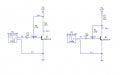
Start with this circuit on the left. The choice of Q1, NPN transistor is not critical. Use whatever you have.
Adjust the load resistor R3 as you wish.
Adjust bias resistor R1 to make the collector voltage half of the supply voltage, V1.
You can simulate this first. Then try to build it on a breadboard.
Note that the base-emitter voltage, Vbe is about 0.75 V.
What happens when R1 is reduce?
What happens when R1 is increased?
What happens when R3 is increased?

2N3904 common emitter amplifier A & B.jpg

The circuit on the right introduces negative feedback. This helps to prevent thermal run-away.
 

MrChips

Joined Oct 2, 2009
34,628
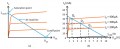
After completing the above, learn how to use transistor I-V characteristics with a load line.

From the circuits above, at saturation, Ic = V1 / R3
At cutoff, Vcc = V1.

Q1, Q2, Q3 demonstrate different bias points (or quiescent points).
When a signal is applied to the base, the operating conditions of the transistor must slide along the DC load line.
Hence to avoid clipping at the top and bottom peaks, you want to choose a Q-point somewhere in the middle, such as Q2.


1744978540849.png
 

MrAl

Joined Jun 17, 2014
13,667
After completing the above, learn how to use transistor I-V characteristics with a load line.

From the circuits above, at saturation, Ic = V1 / R3
At cutoff, Vcc = V1.

Q1, Q2, Q3 demonstrate different bias points (or quiescent points).
When a signal is applied to the base, the operating conditions of the transistor must slide along the DC load line.
Hence to avoid clipping at the top and bottom peaks, you want to choose a Q-point somewhere in the middle, such as Q2.


View attachment 347389
Hi,

I hadn't done that in so long I almost forgot it's a possibility. Found in basic transistor books which seems very fitting for this thread.
 
Top