3 phase AC star system to Hi-Link 5V DC module queries

Thread Starter

kowshik1729

Joined May 10, 2020
99
Hi

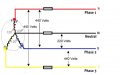
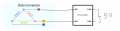
Need some help. We have 220V, 3 phase AC (delta) so we have converted it to a star system to get neutral point. When we measured between two phases we get 440V AC.

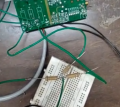
Then we took one phase out of this star system and connected it to a Hi-Link 5V module. When we connected some load to this, the DC is pulsating (we added bulky capacitor >1000uF also) but even after that we're seeing pulsating. What could be the reason? is it common for HiLink module to behave like this?
 
Last edited:

schmitt trigger

Joined Jul 12, 2010
2,056
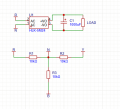
The schematic you have posted bears absolutely no resemblance to your verbal description.
And the schematic itself is wrong, wrong on many aspects.
If you expect to obtain accurate advice on something that is clearly dangerous, you need to draw the EXACT schematic as you have actually wired it, including ALL the component values, and then provide a datasheet of the Hi-Link 5V module.
 

Thread Starter

kowshik1729

Joined May 10, 2020
99

schmitt trigger

Joined Jul 12, 2010
2,056
Those hi-link modules have an universal AC input of 90 to 265 volts. You can connect them directly from phase to phase. No need for any delta-wye conversions.
 

schmitt trigger

Joined Jul 12, 2010
2,056
If your phase to phase voltage is nominal 220 volts, the device will operate correctly. It has sufficient margin to withstand even a high-line condition of +15%.
 

Ian0

Joined Aug 7, 2020
13,114
We are using industrial power which means phase to phase voltage will be 440V RMS not 220V. I might be understanding something grossly wrong too.
If it is 220V phase to neutral then it is 380V phase to phase, or if it is 240V phase to neutral, then it is 415V phase to phase.
Needless to say, three 10k resistors are not going to make a star point that’s good for any more than one or two watts. To get star from delta you will need a transformer.
 

schmitt trigger

Joined Jul 12, 2010
2,056
Hi

Need some help. We have 220V, 3 phase AC (delta) so we have converted it to a star system to get neutral point.
Then you need to correct your first post, which again, is misleading.
For 440 to 220 volt conversion, you do require a transformer. You have no other alternative.
But since I have the feeling you will reject this solution, I can only wish you good luck.
 

schmitt trigger

Joined Jul 12, 2010
2,056
If it is 220V phase to neutral then it is 380V phase to phase, or if it is 240V phase to neutral, then it is 415V phase to phase.
Needless to say, three 10k resistors are not going to make a star point that’s good for any more than one or two watts. To get star from delta you will need a transformer.
And if it is really a 480V phase to phase, it will be 277V phase to neutral. It will still require a transformer.
 

Ian0

Joined Aug 7, 2020
13,114
And if it is really a 480V phase to phase, it will be 277V phase to neutral. It will still require a transformer.
No escaping the transformer!
But I’ve never come across a supply that is nominally 277V phase to neutral.
230V/400V is standard throughout Europe.
 

schmitt trigger

Joined Jul 12, 2010
2,056
In the US and Mexico, industrial plant voltage distribution is 480Vp-p.
Therefore most of the hi-bay and parking lot lighting is 277Vp-n. It is very common to see electrical panels with a 277V label.

To operate the common office equipment, a dry type transformer is used to lower it down to 120V.

In Canada, in addition the 480Vp-p, they also use 600Vp-p, yielding 347Vp-n, which is also used as a hi-bay and parking lot lighting voltage.

An example;

https://www.amazon.com/Voltage-Lighting-Distribution-Daylight-Approved/dp/B07C3XHSYS
 

Ian0

Joined Aug 7, 2020
13,114
In the US and Mexico, industrial plant voltage distribution is 480Vp-p.
Therefore most of the hi-bay and parking lot lighting is 277Vp-n. It is very common to see electrical panels with a 277V label.

To operate the common office equipment, a dry type transformer is used to lower it down to 120V.

In Canada, in addition the 480Vp-p, they also use 600Vp-p, yielding 347Vp-n, which is also used as a hi-bay and parking lot lighting voltage.

An example;

https://www.amazon.com/Voltage-Lighting-Distribution-Daylight-Approved/dp/B07C3XHSYS
I'm intrigued now - why so many different voltages?
 

schmitt trigger

Joined Jul 12, 2010
2,056
I would believe that the Canadians decided to upgrade to 600 volts to be able to deliver the largest amount of power and still remain under the North American low tension (voltage) safety requirements.
European regulations however, define low tension up to 1000 volts AC.
 
Top