Facebook
 Google
 GitHub
 Linkedin

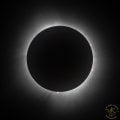
Curious how dark it got (qualitatively).I am here in Dallas. Despite some cloud cover, there was a momentary break precisely at the point of totality.
I have watched many eclipses on videos, but it is one of those things which one has to really experience it personally.
The last one (2019) hit a bit more than 90% here and if you didn't know it was happening, you would not have noticed anything. Those of us that were standing out in the sun could perceive a lowering of the temperature, but very slight and less than you would normally perceive walking from sunlight to shade (we did that as soon as it passed to get a feel for the comparison). We noticed absolutely no difference in perceived light (despite several light meters and solar panels and other devices clearing indicating a significant drop in illumination). People that were standing nearby in the shade of the building noticed no temperature difference (we didn't have any thermometers around, so we don't know if there was any actual drop in air temperature, but we all doubted it).
I was surprised by that, because I figured a 10:1 change would be sensible to humans, but apparently not. But that had me wondering how much the perceived light change is under totality, given the amount of light that would still be scattering from the rest of the atmosphere. Does it get anything close to night-time dark, or twilight, or what?