I don’t understand your question. Are you asking how to use the PWM module I showed you?Can you please help me with this module. If this is connected with MCUs then output form is adjusted through code or using potentiometer.
The LM4140ACM is a very stable voltage reference. You could use is with the MCP4922, which is a DAC.LM41140ACM this is the IC that you used?
Yes sir. Is it manually potentiometer moves or our code will give output according to that.I don’t understand your question. Are you asking how to use the PWM module I showed you?
Why we need voltage reference.The LM4140ACM is a very stable voltage reference. You could use is with the MCP4922, which is a DAC.
I have10v dc power adapter this is also done with this but i'm unable to tune this with MCUs that's why we need any IC that can communicate with MCUsWhy we need voltage reference.
The voltage reference will set the fully scale voltage. If you use the power supply as a reference you will probably see a lot of drift over temperature. A voltage reference chip will vastly improve temperature stability. You don't need a separate reference, it all depends on how stable you want your readings to be. I use the power supply for many A-to-D applications where I don't care as much about stability.Why we need voltage reference.
Arduino, MCP4922 and LM4140ACM. Using MCUs I want 10v,9v,5v resp output not moving with potentiometer.The voltage reference will set the fully scale voltage. If you use the power supply as a reference you will probably see a lot of drift over temperature. A voltage reference chip will vastly improve temperature stability. You don't need a separate reference, it all depends on how stable you want your readings to be. I use the power supply for many A-to-D applications where I don't care as much about stability.
I fear there is something of a language barrier here.Yes sir. Is it manually potentiometer moves or our code will give output according to that.
OK thanu so much.I fear there is something of a language barrier here.
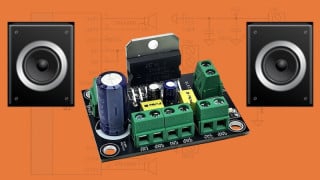
The module I showed you takes a PWM input and outputs 0-10V. To use it, you generate the appropriate PWM signal for the corresponding voltage you want. The PWM is generated by the MCU, the module uses it to determine the voltage output. There is no limitation on how discrete the steps are, once you calibrate it, you can choose any specific voltage without passing through the others.
It’s PWM controlled, it produces 0-10V. I don’t know how i can be more clear. I’m sorry, but I am having a very hard time understanding what you want at this point so I am going to step away. Good luck.
Ok I'll tryAs Yakkov says, you don't need a DAC if you are using an Arduino. If you set a PWM output to 50% the filtered output will be 50% of the reference voltage, which may be the power supply. PWM is a very simple and straight forward means of generating precision voltage ratios.