Facebook
 Google
 GitHub
 Linkedin
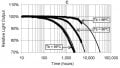
A few years ago we switched from off-the-shelf 7-segment displays to custom LED assemblies in our machines (white LEDs in both cases.) Ever since then, we've had issues, to varying degrees, with dramatic fading of certain segments (the segments that are on the greatest percentage of the time fade the fastest.) The operating environment is roughly 130F (~55C) and that part can't be avoided. We told the company who designed our custom LED assemblies what the operating temperature would be, and they said it would be fine, but now that we're having problems, they just keep saying it's too hot.
Very frustrating.
The old LEDs survived in the same environment, operating the same percentage of the time, indefinitely. We've got machines running over 8 years with them at this point and have no evidence that any of them has ever shown noticeable fading. The new ones are fading enough to be detectable in as little as 3 months, and we have plenty of examples that were dramatic in 6 months or less (like 50-60% of original brightness on some segments and full brightness on others, all within the same display assembly.)
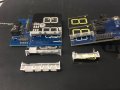
I cut samples of both LED assemblies open to examine construction techniques, thinking maybe one would dissipate heat much better than the other, so maybe the ambient temperature is the same, but the LED junction temperature is dramatically different, but they look remarkably similar to me. I'm wondering if they use different phosphors, and one handles heat much better than the other, but I haven't found any good info yet.
We've been going back and forth for over two years now with out manufacturer, and they've been difficult to say the least. We're definitely open to finding someone new, but I'd really like to know what we're looking for before talking to more people.
Any thoughts on what might be going on? What should I be researching? What questions should I be asking?
Very frustrating.
The old LEDs survived in the same environment, operating the same percentage of the time, indefinitely. We've got machines running over 8 years with them at this point and have no evidence that any of them has ever shown noticeable fading. The new ones are fading enough to be detectable in as little as 3 months, and we have plenty of examples that were dramatic in 6 months or less (like 50-60% of original brightness on some segments and full brightness on others, all within the same display assembly.)
I cut samples of both LED assemblies open to examine construction techniques, thinking maybe one would dissipate heat much better than the other, so maybe the ambient temperature is the same, but the LED junction temperature is dramatically different, but they look remarkably similar to me. I'm wondering if they use different phosphors, and one handles heat much better than the other, but I haven't found any good info yet.
We've been going back and forth for over two years now with out manufacturer, and they've been difficult to say the least. We're definitely open to finding someone new, but I'd really like to know what we're looking for before talking to more people.
Any thoughts on what might be going on? What should I be researching? What questions should I be asking?
Attachments
-
 134.4 KB Views: 7
 -
 6.3 KB Views: 6