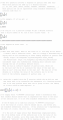
If those two values are NOT the same, then that means that there must exist a value that is not equal to either of them and that lies between them. It is impossible to construct such a number.
There are also lots of informal ways to prove this. For instance,
If those two values are NOT the same, then that means that there must exist a value that is not equal to either of them and that lies between them. It is impossible to construct such a number.
There are also lots of informal ways to prove this. For instance,
It is a mistake to treat "0.9999999 {recurring}" as though it had a value. It might have a limit if "{recurring}" were properly defined, but as given it has no value.
It is a mistake to treat "0.9999999 {recurring}" as though it had a value. It might have a limit if "{recurring}" were properly defined, but as given it has no value.
Then it is equally a mistake to treat 1234 as though it had a value, since it must also be properly defined before being able to do so.
Just as 1234 is nothing more than a symbolic representation of a value defined by an implied associated equation, namely
1234 = 1x10^3 + 2x10^2 + 3x10^1 + 4*10^0
and we call 1234 a "number" without difficulty, a representation involving an overbar is likewise a symbolic representation of a value defined by an implied associated equation and there is no issue calling it a "number".
It is pretty universally defined that the notation involving an overbar is the value produced by the associated equation.
Using the {recurring} notation here is simply a matter of conforming to the TS's textual description, which would more conventionally be written as asking whether the following equality is true:
Part way down the page under the heading "Infinite series and sequences". In a paragraph under that heading we find this:
"A 19th-century reaction against such liberal summation methods resulted in the definition that still dominates today: the sum of a series is defined to be the limit of the sequence of its partial sums."
If the TS's notation was intended to mean the limit, then the second of the 3 voting options is correct.
Not sure if anyone is interested in this side issue but i have run into the storage of these kinds of numbers on digital computers countless times and run into somewhat similar issues.
For example:
a=1/3 (simple division performed one time)
b=1/a (also simple division performed one time)
What is the value of 'b' ?
The only way to store numbers like this exactly is to store TWO values not just one. If we store the '1' and also store the '3' we can carry them into other calculations exactly with no loss of accuracy.
It is still not possible to store a number like 0.9999 with recurring 9 unless we accept that it must equal 1.
We can get close if we limit the precision:
999/1000
9999/10000
99999/100000
etc.
I also ran into this when storing algebraic equations. There we are forced to store A/B or whatever. That does not get resolved numerically until later anyway.
Reminds me of learning to use a slide rule. I suspect you are in that same age group. We never (almost never) solved arithmetically, until the algebra was reduced. Having umpteen decimal accuracy at our finger tips might change that process a little, but as you point out, there are still times to address the algebra first.
Reminds me of learning to use a slide rule. I suspect you are in that same age group. We never (almost never) solved arithmetically, until the algebra was reduced. Having umpteen decimal accuracy at our finger tips might change that process a little, but as you point out, there are still times to address the algebra first.
Oh yes slide rules...ha ha. Havent seen one of those in a long time now. Yes we learned in class way back when. I even had a tie clip slide rule that actually worked.
I cant even remember the last time i used one though. Once calculators came out everybody had one. I was thrilled to get my first programmable calculator, i think it was a Radio Shack with maybe 50 program steps max.
You are actually lucky to have as many as you do. This is possibly the first poll on AAC that I've voted in since, as a pretty firm rule, I refuse to participate in junk surveys. Don't really know why I voted in this one.
I didnt vote because i felt a discussion was necessary in order to clarify what was being asked and also just because a discussion is a better idea anyway.
As others have rightly pointed out, the poll question as stated is meaningless without further clarification, as all (or none) of the options can be justified in different number systems. What I think the poll question is trying to achieve is the "surprise" that two different-looking numbers can be the same, but that relies on the naive idea that the symbolic representations of numbers are themselves numbers.
We have no problem understanding that this set of symbols represents the same number: 1, I, "one", "uno". Yet many confuse the first symbol, the Arabic numeral 1, with the actual number that it represents. This is the equivalent error of mistaking the word "tree" for an actual tree. Perhaps it's the familiarity with using Arabic numerals in math context that leads to the assumption, yet most 5th graders will have no problem realizing that 3/3 represents the same number as 1. So, having two different representations for a single number shouldn't be a surprise.
Nothing about this is unique to the number represented by 1, or even base-10 positional notation. Every rational number can be written in an equivalent non-terminating form, e.g., 2.47 = 2.46999... .
More interesting, I think, is that the measure of the set of representable real numbers is zero. In other words, of all the infinite ways that we can write down a real number -- π, π + 1, √5 / 10^9, 0.42e, and so on -- there is still an uncountably infinite amount of real numbers that we can't write down. This is because almost all real numbers have no realizable representation; they are uncomputable. If we took out all of the possible real numbers that we can write down, it'd have far less impact on the size of ℝ than removing a single hydrogen atom from the universe.
The enormity of ℝ is quite literally unimaginable, and it's the second smallest cardinal in the beth sequence!

 Facebook
 Google
 GitHub
 Linkedin