What would you do?

Thread Starter

joeyd999

Joined Jun 6, 2011
6,300
13 years ago, I designed and built a test fixture to validate, during production, the performance of a transducer that I developed. This week, the fixture died a horrible death, so I had to build a new one.

Luckily, I had made extra PCBs at the time and found them in storage with most of the components required (the boards were a bit oxidized but usable). Some quick shopping at Digikey and I had everything I needed to build a new fixture.

So, I get the thing together and begin testing it. I notice that the transducer's output seems about 1/2 of that which was recorded using the old, now dead fixture. Crap. I did something wrong.

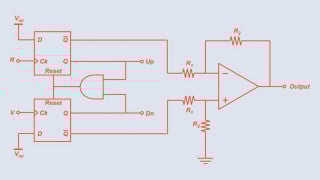
The only gain in the circuit is from an MFBP filter, and the response looks like this:
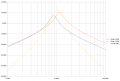
Selection_040.png

The new board follows this nearly exactly. So, I looked back at the old board. To my surprise, there was an incorrect resistor on the second stage of the filter. The response with the erroneous resistor looks like this:
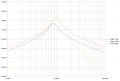
Selection_041.png

This means for 13 years(!) I have been incorrectly measuring the output of my transducers. The gain was wrong by a factor of 2, and it wasn't even a good flat top bandpass centered about 10Hz (the frequency my transducer runs at). Double crap.

Fortunately, the pass/fail limits were set based upon the performance of the fixture, so this hasn't affected my production material.

But, here's my dilemma. Do I:

A) Recalculate the new pass/fail limits based on the correct circuit, or
B) Stick the old, incorrect resistor back in and use the original limits.

I would like to kick myself of 13 years ago.
 

Thread Starter

joeyd999

Joined Jun 6, 2011
6,300
A.

Two wrongs never make a right.
Unfortunately, choosing A would mean I have to revise all the production documentation and re-validate/characterize all the existing stock sensors against the new fixture.

That will cause bit of disruption.
 

wayneh

Joined Sep 9, 2010
18,104
B) Stick the old, incorrect resistor back in and use the original limits.
The answer, in my opinion, depends on your customers. My products were consumables with ingoing repurchases. In that scenario it's important to not actually change the product if customers have become familiar with it and have come to rely on it for consistency from lot to lot. Correcting things, which is fine, is like changing a specification. You have to let customers know that things are potentially different.

We always struggled with this because we had a number of internal specs that were unknown to customers. Does a change in one of those warrant an alert to customers? Sometimes yes, sometimes no.
 

Thread Starter

joeyd999

Joined Jun 6, 2011
6,300
The answer, in my opinion, depends on your customers. My products were consumables with ingoing repurchases. In that scenario it's important to not actually change the product if customers have become familiar with it and have come to rely on it for consistency from lot to lot. Correcting things, which is fine, is like changing a specification. You have to let customers know that things are potentially different.

We always struggled with this because we had a number of internal specs that were unknown to customers. Does a change in one of those warrant an alert to customers? Sometimes yes, sometimes no.
Yup. This is a consideration.

Luckily, my product automatically compensates for changes in sensitivity (which is what the fixture measures). At worst, the customer may noticed a reduced sensor lifetime.
 

Thread Starter

joeyd999

Joined Jun 6, 2011
6,300
WOW!!! You are in a jam. It seems like possibly all of these years the sensor product claimed sensitivity may have been wrong. Oh WOW!!!
Nope. Not like that. The sensitivity is constant. The power required to drive it changes.

Anyways, all good. We are using the correct values now and made the appropriate adjustments. No animals have been harmed.
 

WBahn

Joined Mar 31, 2012
32,848
But, here's my dilemma. Do I:

A) Recalculate the new pass/fail limits based on the correct circuit, or
B) Stick the old, incorrect resistor back in and use the original limits.

I would like to kick myself of 13 years ago.
As with everything in engineering, the is "it depends".

Depending on the situation, I would be tempted to contact a few of my biggest customers and get their input, since the real issue is what is best from their perspective. I'd point out to them that if the old test fixture yielded transducers that have served them well, then a strong argument exists that the old fixture, regardless of whether it was as intended, was a valid fixture. The question then becomes whether to duplicate this known, reliable test fixture or "upgrade" it with the originally intended one.

Depending on how critical the difference is to performance, it might be worth coming up with a set of evaluation transducers that map out the corners of the two pass/fail regimes as well as the boundaries of where they intersect. Let the customers, if they choose, evaluate this set and tell you whether the choice of test fixture matters to them and, if so, which one they prefer. Worst case is you have some customers that feel the change would hurt them and want new transducers tested with the old fixture while you have others that want transducers that meet the originally intended test. So you might need to keep both fixtures around and perhaps modify the part number to indicate which test(s) that part passed. If it's only a small number of parts that need to pass the old test, then it might be sufficient to just note somewhere that parts they order need to be binned against the old fixture before shipping. The good news is that this should be an attrition situation in which you decide that new customers only get parts tested against the new fixture. You might even be able to tell customers that want the old test that they have a time limit in order to make a one-time-lifetime buy of units tested against the old fixture and that future parts will only be tested against the new.

Oh, and if it turns out that there is a strong difference between the response, you might need to cast the net wider to a larger fraction of your customers. I guess that's the real worst case scenario.
 
Top