What is the clear plastic coating I see on laminations of electrical transformers?

Thread Starter

Michael Hlavaty 1

Joined Aug 17, 2015
7
Hello,

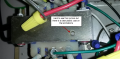
I am designing a 196W EI power transformer. I am done with the design and it is working at the proper power levels. I am concerned with a little resonance hum I hear when I am drawing full load ~ 3 amps. I have a very similar transformer I pulled out from a old power supply but this one has a clear plastic coating on the laminations of transformer that seems to help alot with noise.

Does anyone know what type of coating this is and what type of stores/shops can help me get this done for my design? I am in the San Diego, CA region but don't mind traveling to LA.

Thanks alot,

Mike H

upload_2017-4-6_12-31-21.png
 

shortbus

Joined Sep 30, 2009
10,050
Most times it is put on in a vacuum chamber, to get the varnish to flow in between the lamination's. Just putting it on the outside doesn't do much .
 

SLK001

Joined Nov 29, 2011
1,549
The individual laminations have to be electrically isolated from each other (otherwise, the core could be just a big chunk of silicon steel). They are usually assembled with the lacquer as a temporary "glue" to hold them in their place. They are electrically isolated to keep eddy currents as small in circular cross area as possible (to keep heat buildup in the core low). The lacquer "glue" also keeps the core from vibrating at the energized frequency to keep it quiet.
 

MrAl

Joined Jun 17, 2014
13,677
Hi,


When i worked in the industry we had to have all the transformer and inductor designs, big or small, sent to the vacuum chamber. There they would be immersed in varnish and the vacuum would suck out all the air from anywhere inside the transformer, like between the windings and some in between the laminations. That would get the varnish in there pretty good. As others have said, this helps a lot for the audible noise when the device is running. We worked with 50Hz to 400Hz devices and they would make a lot of noise during testing but after the transformer or inductor was varnished the noise level came down quite a bit. As far as insulating the laminations from each other electrically, varnish wont do that when applied in this manner because before they are varnished the laminations are bolted together with bolts that are tightened with a decent amount of torque so they touch anyway. After the varnish they might get some in between but it cant get perfectly in there because they are forced together beforehand with a lot of force from the bolts. You cant loosen the bolts before the bath either because many times there is a gap placed in the core and it is adjusted per unit so loosening the bolts would change the properties of the construction. The whole thing is hung to dry afterward.

There could be other chemicals used too though. That was just one example. If you are going to do it yourself maybe you could apply it to each winding layer as it is being wound, and maybe 'glue' each lamination to each other as you build up the stack one by one. Never tried this though.

You dont want to hear the 400Hz transformers and inductors whine before they are varnished as they make a LOT of noise :)
 

Thread Starter

Michael Hlavaty 1

Joined Aug 17, 2015
7
Hi SLK001,

The eddy currents are reduced by using laminations I don't think you need to isolate individual laminations. I never seen that done.

MrAl,

From the picture above with the hole in the plastic it looks like it went through a vacuum chamber. Did your company outsource this work or was it done in house? I am very curious of this process and would like to try it myself.

THanks
 

#12

Joined Nov 30, 2010
18,224
They are usually assembled with the lacquer as a temporary "glue" to hold them in their place.
That wasn't true in the 1970's. We depended on some sort of passivation on the surface of the steel plates and just stacked them dry. Maybe the isolation wasn't perfect, but the defects in 100 randomly selected laminations will never line up with each other.
 

SLK001

Joined Nov 29, 2011
1,549
The eddy currents are reduced by using laminations I don't think you need to isolate individual laminations. I never seen that done.
If you don't isolate the individual laminations, your eddy currents can be huge. Usually there is a thin layer of varnish applied to each lamination prior to assembly. I've reassembled transformers that I rewound and I dipped each piece in polyurethane prior to reassembly. The isolation doesn't have to be perfect, but any metal-to-metal contact will allow eddy currents to increase.
 

shortbus

Joined Sep 30, 2009
10,050
The eddy currents are reduced by using laminations I don't think you need to isolate individual laminations. I never seen that done.
What do you think the blackish color is on the individual lamination's? the raw steel is a silver color th color of cold rolled steel. After being stamped out they are sent to a furnace that has an chemical atmosphere inside the form an oxide type layer on them, that's the black color. they are assembled then vacuum chamber varnished. Maybe not all are vacuumed but the big majority are.
 

joeyd999

Joined Jun 6, 2011
6,242
If you don't isolate the individual laminations, your eddy currents can be huge. Usually there is a thin layer of varnish applied to each lamination prior to assembly. I've reassembled transformers that I rewound and I dipped each piece in polyurethane prior to reassembly. The isolation doesn't have to be perfect, but any metal-to-metal contact will allow eddy currents to increase.
See the "Lamination Coatings" section of this article.
 

Thread Starter

Michael Hlavaty 1

Joined Aug 17, 2015
7
Joeyd999,

Thanks for the link. "Very early practice was to insulate each lamination with a layer of paper or a varnish coating, but this reduced the stacking factor of the core and limited the maximum temperature of the core.[11]"

Do you have any examples of varnish coating that you have done? Can you share pics? I want something professionally done like the pic I provided above but seems like varnish impregnation services don't exist.

Thanks
 

joeyd999

Joined Jun 6, 2011
6,242
Joeyd999,

Thanks for the link. "Very early practice was to insulate each lamination with a layer of paper or a varnish coating, but this reduced the stacking factor of the core and limited the maximum temperature of the core.[11]"

Do you have any examples of varnish coating that you have done? Can you share pics? I want something professionally done like the pic I provided above but seems like varnish impregnation services don't exist.

Thanks
Year ago, as far back as the 80's or so, it was cost effective to construct your own transformers. This is not the case anymore. I haven't been involved with building transformers in a very, very long time.
 
I have a microwave oven transformer that makes a far amount of noise (which scares people when I am playing with high voltage:D) it is varnished, so the laminations shouldn't be vibrating, I was wondering if the coils themselves could be vibrating.
A.H.W.
 

joeyd999

Joined Jun 6, 2011
6,242
I have a microwave oven transformer that makes a far amount of noise (which scares people when I am playing with high voltage:D) it is varnished, so the laminations shouldn't be vibrating, I was wondering if the coils themselves could be vibrating.
A.H.W.
It could be ionizing the air or arcing. Note also that varnished transformers still vibrate -- just not as loudly.
 
They will definitely vibrate when passing AC if they are not physically restrained by either being zero spaced or glued together.
Thanks.
A.H.W.
I tested to see if some polarized caps would blow if I ran the power from the transformer to it's leads, and I was surprised that they didn't, I guess there isn't enough current flowing:(. But the resisters where awesome.:)
Here's a picture
View attachment 124227
 

MrAl

Joined Jun 17, 2014
13,677
Hi SLK001,

The eddy currents are reduced by using laminations I don't think you need to isolate individual laminations. I never seen that done.

MrAl,

From the picture above with the hole in the plastic it looks like it went through a vacuum chamber. Did your company outsource this work or was it done in house? I am very curious of this process and would like to try it myself.

THanks

Hi,

In house. Potting also in house.
Well i guess you would have to have a pot chamber that can take the force of the vacuum and fill it partially with varnish, then close the chamber, then apply the vacuum, then allow some time to pass.
To find out how well you've done you would have to do a number of test samples and leave them for various times. You would then pull them out, let them dry thoroughly, then cut them down the middle to see if the varnish got where it should have.
This wont be easy because you have to have a cast iron pot i think, so it can handle the force when the vacuum is applied which would tend to try to collapse the sides in.
Maybe you could try just immersing them in varnish and leave them overnight or longer. Maybe that would be enough i am not sure though.
The varnish also gets into the windings and conducts heat out better than air spaces
 
Top