What are the -V terminals on a power supply ?

Thread Starter

Rittter

Joined Dec 5, 2015
60
I just purchased an AC/DC power supply to generate 12VDC. I have two -V terminals and two +V terminals. I have read that the -V terminals can be used as a -Voltage supply or as the circuit's ground.

1) Can the -V terminal be used as the circuit ground (return) ?
2) Can the circuit ground be connected directly to the AC neutral (white) wire ?
 

crutschow

Joined Mar 14, 2008
38,503
1) Yes
2) No. You never want to connect circuit common to the AC neutral, as it can have high voltage on it if there's a failure in the AC circuit..
You can can connect to the circuit safety ground (green) if you want (but it's usually not necessary).
 

Thread Starter

Rittter

Joined Dec 5, 2015
60
Thank you all.

Now, there is a concern that the AC neutral may have high voltage on it. Thats fine, but when you pulse a coil, the kick back voltage can be many hundreds of volts. It is my understanding that when a coil is pulsed, the kick back reverses polarity (-) to (+) and wants to continue on the same path as the original pulsed voltage, which in my case will go to the circuit ground. No diode is used to re-route the kick back, back into the coil.

Should there be as much concern with the high (+) kick back voltage going into the circuit's ground as there should be with the potential high voltage in the AC neutral ? I hope I made that clear.
 

ErnieM

Joined Apr 24, 2011
8,415
Should there be as much concern with the high (+) kick back voltage going into the circuit's ground as there should be with the potential high voltage in the AC neutral ?
Into what circuit? Can you post a schematic or some sort of sketch?
 

phranzdan

Joined Aug 4, 2017
40
I just purchased an AC/DC power supply to generate 12VDC. I have two -V terminals and two +V terminals. I have read that the -V terminals can be used as a -Voltage supply or as the circuit's ground.

1) Can the -V terminal be used as the circuit ground (return) ?
2) Can the circuit ground be connected directly to the AC neutral (white) wire ?
Hi: In my experience, the + and - V terminals are generally used for remote load sensing. If the terminals are tied together at the supply, the supply will control voltage at the local output terminals. If sensing is desired at a remote location, you would need to connect wires from the remote location to the + and - V terminals. Most of the older supplies such as HP, Sorenson had the sensing terminals close to the output terminals. Be certain you have them tied to something either remote or local or the supply may go to full output on turn-on.
 

Ramussons

Joined May 3, 2013
1,568
I just purchased an AC/DC power supply to generate 12VDC. I have two -V terminals and two +V terminals. I have read that the -V terminals can be used as a -Voltage supply or as the circuit's ground.
the + and - V terminals are generally used for remote load sensing.
The two -V terminals are redundant, they are connected together, so you can connect more wires conveniently.
Thats it. There cannot be 2 pairs of V- and V+ for remote sensing.
 

Thread Starter

Rittter

Joined Dec 5, 2015
60
Into what circuit? Can you post a schematic or some sort of sketch?
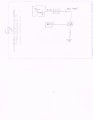
This is the circuit. My concern is the kick back voltage from the coil. It should be (+) and high. I am concerned hooking it up to the circuit ground as far as feeding back into the circuit. If I connect it to the 110VAC ground line (green) and the green is connected also to the metal enclosure, does that present a safety problem ?
 

Attachments

ErnieM

Joined Apr 24, 2011
8,415
Sorry I cannot follow your schematic as drawn. It apparently shows a DC blocked by a capacitor so the relay never does anything.

And ZVS is undefined.

I'll look again of you redraw.
 

Thread Starter

Rittter

Joined Dec 5, 2015
60
Sorry I cannot follow your schematic as drawn. It apparently shows a DC blocked by a capacitor so the relay never does anything.

And ZVS is undefined.

I'll look again of you redraw.
The ZVS is a zero voltage switching capacitor charger. The ZVS charges the capacitor. The capacitor is discharged through the optocoupler
and through a coil. The optocoupler is triggered by the 555 timer.
 

ErnieM

Joined Apr 24, 2011
8,415
If you are discharging the cap into the inductance of the coil then there should be no kickback.

However, there probably isn't much movement of the contractor either. At best a momentary closure.
 

Thread Starter

Rittter

Joined Dec 5, 2015
60
If you are discharging the cap into the inductance of the coil then there should be no kickback.

However, there probably isn't much movement of the contractor either. At best a momentary closure.
I don't understand your last sentence. What do you mean "there probably isn't much movement of the contractor" ?
 

ErnieM

Joined Apr 24, 2011
8,415
Oops.. contactor. The points of the relay. Seems you are feeding a DC thru a capacitor.

That will pass a current... for a moment. Then the current ends, and the relay (if it moved at all) will reset.
 
Top