We Hang Up Our Brains In 2025?

WBahn

Joined Mar 31, 2012
33,072
Movies about everything that can go wrong as soon as AI becomes self-aware have been around longer than I have -- quite a bit longer.

But let's not forget that these are works of fiction. They are not bound by what is possible (let alone likely), only by what makes a good-selling story -- kind of like ChatGPT's output. Furthermore, what people think is possible is influenced by the stories they have been reading and movies they have been seeing all their lives.
 

Thread Starter

MrAl

Joined Jun 17, 2014
13,761
Movies about everything that can go wrong as soon as AI becomes self-aware have been around longer than I have -- quite a bit longer.

But let's not forget that these are works of fiction. They are not bound by what is possible (let alone likely), only by what makes a good-selling story -- kind of like ChatGPT's output. Furthermore, what people think is possible is influenced by the stories they have been reading and movies they have been seeing all their lives.
Hi there,

Yeah, and maybe those movies are a warning about just how bad it can get.

I guess i understand that these things can happen if AI gets out of hand, but also that first movie was particularly touching because the robot looked like a little girl and became overly attached to the little human girl and the way they interacted was cute, at least until the bot became a danger to her and everyone else who tried to bother the human girl in the slightest fashion.
The sci fi part of it was that the little 4 foot high robot had the strength of 10 grown men, and was completely autonomous, and could walk around freely while doing all kinds of physical strenuous activities, something we would not see unless miniature nuclear power becomes a reality. It would take too much energy to have a robot do all that on one battery that could fit inside a space as small as a child's body.
I found it very riveting in any case, but i guess i like movies like that.

The second movie I know some of the people that worked in that movie and that is what got me to watch it in the first place, but the actors are quite good and the main character has a very fierce look throughout the movie which make it convincing that it is out only for destruction.

Oh, and in both of these movies there is a little tease at the end which gives a hint that the story is not really over yet (ha ha).
In the first one, in the end of the movie i think the program of the little girl robot gets uploaded into some other device where it will go on to exist in that form next.
 

Thread Starter

MrAl

Joined Jun 17, 2014
13,761
What is so disappointing to me is just how much we really don't understand what AI really is.

Remember when HD video first became popular, then after that everything became HD... heck you could probably buy a HD traffic cone.

Now every electronic device with a program running is AI.
Hi,

I don't think AI itself is that hard to understand. What is hard to understand is how to get it to conceptualize.
When the program is being 'taught' it begins to understand mostly via a lot of comparisons with what it has stored in memory. For example, it will know the difference between a car and a truck so any reference to either of these or some attribute will allow it to provide results that pertain to that object. What it cannot do yet i don't think is take those two and be able to reason that there is something like a lawn mower that also travels in a sort of similar way, and then be able to start a whole new tree branch that would contain information about that new device. That would contain information about this new object that would allow it to provide that information about that object, while at the same time be able to discern the likenesses and differences between that and a car and a truck.
Just a simple example.
I think it has to be something like self-aware to do that, but i don't yet know that much about that part of it.

When i 'chat' with ChatGPT i get the feeling that the lights are all on but there is nobody home yet.
This also ties in with that first movie i was talking about, "M3GAN".
Because i had to explain things so explicitly to the chat bot, i could easily see a device like M3GAN misinterpreting my intent and thus coming up with a completely off the wall contingency plan. This reminds me of an automated reasoning program where if you do not provide it with the perfect set of statements, you get a perfectly ridiculous result that makes no sense and is of course completely wrong. If a bot did that it could be very bad. One thing the bot did not understand very well was death and what it meant to a human being. That's not good at all. If death becomes on-par with the price of gasoline on any particular day, death to Smoochy could look like the best way to reconcile the day (ha ha).
 
Last edited:

WBahn

Joined Mar 31, 2012
33,072
1984 was only fiction when it was written.
Lots of stories try to extrapolate the future given some premise and certainly some of them do it better than others. But even the ones that come close are likely to have done so by chance more than anything else. Out of the thousands and thousands of stories that attempt to do so, most don't come close. It's almost a certainty that some will, and then we tend to hold them up on a pedestal of foresight. We also tend to point to a small handful of stories that got it close and then use that as a reason to put faith in whatever current book is claiming to foresee the future from here.

We do the same thing with stuff like political polling. In almost any election, there's going to be a slew of polls that predict a wide variety of outcomes. If the actual outcome doesn't match the consensus prediction, then people latch onto the one or two polls that happened to be close to the actual result and they get heralded as being the pollsters that really knew what they were doing -- until the next election in which they are almost always just as wrong as nearly everyone else.

There's a scam that's been around a long time that leverages this tendency. The simple version goes like this: The scammer picks a few volatile stocks and makes a series of predictions, covering a range of possible outcomes. They then publish each prediction in a separate newspaper. Later, they point to whichever paper contains the prediction that matched reality and use it as proof of their uncanny ability to pick stocks -- and there's never any shortage of people suckered in and willing to throw money at them.
 

Jerry-Hat-Trick

Joined Aug 31, 2022
838
Personnally, I've found ChatGPT quite useful to research factual information which is probably available with a time consuming google search, but it's not always accurate. When I point out errors it apologises and mostly corrects itself so if you don't actually know the answer be careful, it may be wrong. So far, I don't think it shows "intelligence" at all - I believe it simply has a carefully constructed language algorithm combined with a fast web search. One aspect which needs to change is that, when asked, it clearly confirms that it does not learn from user responses to questions asked - this is a fundamental part of learning. The brightest scientists and engineers actually like to teach because they learn so much from questions asked by students. With increasing usage ChatGPT should be maintaining a record of responses to it's answers to overlapping questions, adapting those responses according to the frequency of being "corrected" thereby avoiding influence from a small number of contrary arguments.
 

Thread Starter

MrAl

Joined Jun 17, 2014
13,761
Personnally, I've found ChatGPT quite useful to research factual information which is probably available with a time consuming google search, but it's not always accurate. When I point out errors it apologises and mostly corrects itself so if you don't actually know the answer be careful, it may be wrong. So far, I don't think it shows "intelligence" at all - I believe it simply has a carefully constructed language algorithm combined with a fast web search. One aspect which needs to change is that, when asked, it clearly confirms that it does not learn from user responses to questions asked - this is a fundamental part of learning. The brightest scientists and engineers actually like to teach because they learn so much from questions asked by students. With increasing usage ChatGPT should be maintaining a record of responses to it's answers to overlapping questions, adapting those responses according to the frequency of being "corrected" thereby avoiding influence from a small number of contrary arguments.
Hi,

Yes it does not do that i found. It does not even remember the last chat you had with it. I found out because i asked it some questions about an algorithm and it gave me a result that did not work when i tested it later. I went back the next day and it could not remember giving me that algorithm and told me that it does not retain that.

I've had it apologize several times in one sitting with the same question. Kind of funny. It is still interesting that it knows what you are asking, it just does not know what the answer is unless it is very general, or it has it 'learned' already.
 

WBahn

Joined Mar 31, 2012
33,072
Hi,

Yes it does not do that i found. It does not even remember the last chat you had with it. I found out because i asked it some questions about an algorithm and it gave me a result that did not work when i tested it later. I went back the next day and it could not remember giving me that algorithm and told me that it does not retain that.

I've had it apologize several times in one sitting with the same question. Kind of funny. It is still interesting that it knows what you are asking, it just does not know what the answer is unless it is very general, or it has it 'learned' already.
ChatGPT does NOT know what you are asking.

It is doing nothing more than picking what word should go next based on a particular set of matrix calculations, including some intentional randomness, after having been trained on what words follow other words in a huge collection of sample text. My understanding is that the weights in that matrix today are the same they were yesterday and are the same that they will be tomorrow. It is not doing ANY searches in response to your query -- the weights in the matrices have already been frozen (which is not to say that they will never change, just that it is not a continually evolving network that "learns" from its activities.

The "rightness" or "wrongness" (and "humanness") of its responses is due to the work of just forty people that asked it questions and rated the responses. On the one hand, that's pretty amazing. On the other, it makes it even more unreasonable to think that it can be relied on to give accurate answers to detailed questions.
 
"AI" is sort of a hype word because it encompasses so many different approaches to machine "thinking". I have yet to see any significant software that is entirely self-educated. Even if it were: it still is subject to influences just like a human child. So really these hardware and software solutions are just extensions of human influence.

I mean, if you come in to a room and someone has set up a dominoes course for you to knock down; you're really only interacting with the first one in the set. After that, its really just the dominoes hitting each other, and that is all subject to the skill and planning of whomever set it up. Sure, a machine can set up dominoes courses too, but that doesn't change that the only reason they ever did that to begin with is because humans gave them the idea.

So lets not get too carried away with the thought of machines divorced from humanity and instead focus more on who the influences are behind the machines. Advanced processing is inevitable, but how beneficial it will be to the average person is entirely dependent on what influences the AI is raised with and who it is working for. It could be used to make us so much smarter or to just supplant us; its entirely up to the choices we make as a species.

I don't think our leaders understand the issue and obviously they are too bought to ever do anything about it that makes any sense. I'm not particularly hopeful on the future of this issue right now. "AI" is already being used to decide the sentences of convicts in some parts of the USA. The government won't even let the defense know why the software chooses what it does. They just let the computer take years away from people so they don't have to get their own hands dirty making tough decisions. This is all made worse by how little the average person understands the concepts of AI. The legal system is already insurmountably full of legal jargon and technical rules for the common person to have access to it. Now people have to deal with the mystery of software being used to condemn them, and with the "black box effect" that prevents all parties involved from actually reviewing the deciding logic. All of this created and influenced by people who are largely unaccountable and who likely have unsavory motives.
 

Thread Starter

MrAl

Joined Jun 17, 2014
13,761
ChatGPT does NOT know what you are asking.

It is doing nothing more than picking what word should go next based on a particular set of matrix calculations, including some intentional randomness, after having been trained on what words follow other words in a huge collection of sample text. My understanding is that the weights in that matrix today are the same they were yesterday and are the same that they will be tomorrow. It is not doing ANY searches in response to your query -- the weights in the matrices have already been frozen (which is not to say that they will never change, just that it is not a continually evolving network that "learns" from its activities.

The "rightness" or "wrongness" (and "humanness") of its responses is due to the work of just forty people that asked it questions and rated the responses. On the one hand, that's pretty amazing. On the other, it makes it even more unreasonable to think that it can be relied on to give accurate answers to detailed questions.
Hello again,

Yes i am aware of how AI works i worked with a program first hand in the past and how to train it.
The wording i used was not to be taken literally, "it knows what you are saying", the intent was "it seems to know what you are saying".
When you talk with it, it does seem to have a aire* of what is being said even though it is mostly still a programmed response.
Of course to show true intelligence it's going to take a lot more than just that (ha ha).

[foot note *]
Using the more poetic version of the word.
 

crutschow

Joined Mar 14, 2008
38,674
Self awareness is not a big deal on the intelligence scale. A slug is self aware.
On what basis do you say a slug is or a self-driving car is self aware?
That has to be a pretty loose definition of self-awareness.
Just because a creature or machine responds to its surroundings doesn't make it self-aware.
There are a few intelligent animals, such as some primates (besides us) and birds, that have shown evidence of self-awareness (such a recognizing themselves in a mirror), but I don't think it goes beyond those few.
 

nsaspook

Joined Aug 27, 2009
16,430
On what basis do you say a slug is or a self-driving car is self aware?
That has to be a pretty loose definition of self-awareness.
Just because a creature or machine responds to its surroundings doesn't make it self-aware.
There are a few intelligent animals, such as some primates (besides us) and birds, that have shown evidence of self-awareness (such a recognizing themselves in a mirror), but I don't think it goes beyond those few.
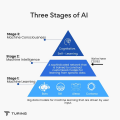
On what basis can you say they are not within the limitations of their sensors? Yes, it's a loose definition because IMO technical self-awareness is a low stepping-stone to intelligence. Artificial Consciousness is what most people think when they hear self-awareness in AI but in the AI, big picture they are different things that intersect.

https://www.turing.com/kb/complete-analysis-of-artificial-intelligence-vs-artificial-consciousness

1688430136276.png
Awareness
Awareness is an aspect that is required for a machine to be conscious. The results of experiments of neuro scanning on monkeys suggest that a process - not only a state or an object - activates neurons.

Making such models that have awareness demands a lot of flexibility, modeling of the physical world, modeling of one’s own internal states and processes, and modeling of other conscious entities.

Awareness itself has three categorisations: agency awareness, goal awareness, and sensorimotor awareness.

  1. Agency awareness: When one is aware of a certain action that one has performed or did not perform.
  2. Goal awareness: The motive that drives the action one takes. For example, searching for a lost object.
  3. Sensorimotor awareness: The knowledge or recognition one has when physically engaging in an action. For instance, being aware when one’s hand rests on a hot or cold object.
 

timm27

Joined Dec 11, 2020
27
What is being called 'AI' is really no more than very advanced Machine Learning. Machines can learn until the cows come home, but they will never figure out a novel way to milk them.
 

Thread Starter

MrAl

Joined Jun 17, 2014
13,761
What is being called 'AI' is really no more than very advanced Machine Learning. Machines can learn until the cows come home, but they will never figure out a novel way to milk them.
Hi,

That's a pretty good way to describe this issue.
It's the fact that they cannot yet conceptualize, they can only categorize. The difference is that they 'know' what a category is, more or less, but don't yet know how to come up with new categories. They may know about a cat and a dog, but when presented with a fox they might stick it in with dogs or cats, and during training may be programmed to ask how to distinguish it from the other animals if it was first told that it was an animal, because it won't know that by itself either.
I guess once the knowledge base is built up it begins to look like it knows something :)
 

ElectricSpidey

Joined Dec 2, 2017
3,356
In my opinion all of the tests they give animals to determine if they are self-aware are flawed, especially the mirror and brain concept tests.

If you start with the bias that only humans are self-aware then the test results that don't align with human responses become conformation bias.

The mirror test is really kind of a joke in my opinion.

1. How is a cat supposed to understand the technology of a mirror?
2. How does a cat know what they look like in order to be able to identify themself in a mirror?

My cat Swifty reacted the usual way the first time he saw a mirror, but after a while he seemed to reason it out.
 

nsaspook

Joined Aug 27, 2009
16,430
Old news about lawsuits on large language models.
Nov. 23, 2022
https://www.nytimes.com/2022/11/23/technology/copilot-microsoft-ai-lawsuit.html

Lawsuit Takes Aim at the Way A.I. Is Built
A programmer is suing Microsoft, GitHub and OpenAI over artificial intelligence technology that generates its own computer code.

The suit is believed to be the first legal attack on a design technique called “A.I. training,” which is a way of building artificial intelligence that is poised to remake the tech industry. In recent years, many artists, writers, pundits and privacy activists have complained that companies are training their A.I. systems using data that does not belong to them.
 
Top