Vripple

Thread Starter

Rslh

Joined Mar 29, 2020
6
Hello every one
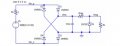
In this circuit,
20200330_144518.jpg I had to find the value of Rreg &Crec and then calculate ripple Volatage with these conditions:
Rreg+-5%
Crec+-10%
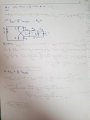
I've calculated Rreg & Crec in this file(I'm not sure if they're true or not.)
20200330_144435.jpg
My question is how to find Vripple in this case?
(I know these formulas , but the Vripple I found is different from simulation's.

Vripple=I/2fC I=load current
Vripple=V/2RfC V=max of Vrec
R=load resistance )
Can anyone help me?
 

MrAl

Joined Jun 17, 2014
13,702
If you look at the Vrec waveform you will see a peak and a valley.
During the valley, the load gets all the current through Reg.
During the peak, the load gets the current as determined by the zener voltage and the zener gets the rest.

Does that help?
 

Thread Starter

Rslh

Joined Mar 29, 2020
6
If you look at the Vrec waveform you will see a peak and a valley.
During the valley, the load gets all the current through Reg.
During the peak, the load gets the current as determined by the zener voltage and the zener gets the rest.

Does that help?
So how I can calculate exact value of Ireg=(Vrec-Vreg)/Rreg while Vrec is changing between the peak and valley, as you said?
 

MrChips

Joined Oct 2, 2009
34,808
I assume that you are trying to find the ripple in Vreg?

As long as Vreg does not fall below Vz and the zener diode is modeled as an ideal zener diode, then the rippple voltage is zero.
No calculation required.
 

MrAl

Joined Jun 17, 2014
13,702
So how I can calculate exact value of Ireg=(Vrec-Vreg)/Rreg while Vrec is changing between the peak and valley, as you said?
Well call the peak Vpk and the valley Vdip.
Can you see that when Vrec is at Vdip the zener does not conduct if the input voltage is exactly set for zero current through the zener? If the voltage is slightly higher, then RL gets some current and the zener gets the rest.

The current though RL is always gong to be Vz/RL. Can you figure out the rest now?
 

Thread Starter

Rslh

Joined Mar 29, 2020
6
Well call the peak Vpk and the valley Vdip.
Can you see that when Vrec is at Vdip the zener does not conduct if the input voltage is exactly set for zero current through the zener? If the voltage is slightly higher, then RL gets some current and the zener gets the rest.

The current though RL is always gong to be Vz/RL. Can you figure out the rest now?
yes I can. thank you.
 

MrAl

Joined Jun 17, 2014
13,702
yes I can. thank you.
Ok so then now you know the two main design points.
The Vrec valley should be somewhat near the zener voltage (but higher due to tolerances) and the valley will determine the minimum zener current, and the peak will determine the max current though the zener.
In this way the load always gets the correct zener voltage which in theory for an ideal zener means it always get the correct voltage. In practice the zener voltage will vary slightly with current but in zener circuits like this that is usually acceptable.

Good luck with it and please come back and post your results when you are done.
 

Thread Starter

Rslh

Joined Mar 29, 2020
6
Ok so then now you know the two main design points.
The Vrec valley should be somewhat near the zener voltage (but higher due to tolerances) and the valley will determine the minimum zener current, and the peak will determine the max current though the zener.
In this way the load always gets the correct zener voltage which in theory for an ideal zener means it always get the correct voltage. In practice the zener voltage will vary slightly with current but in zener circuits like this that is usually acceptable.

Good luck with it and please come back and post your results when you are done.
Thank you. Here's my calculations and results.
 

Attachments

Thread starter Similar threads Forum Replies Date
D Homework Help 4
bug13 Homework Help 3
Top