Voltage Protect 220V split phase?

Thread Starter

Curtis2010

Joined Jun 20, 2025
15
Electrical service to my home is 220V split phase. There are loads of voltage protectors for single phase and 3 phase, but nothing I have found for split phase. How do I create whole house voltage protection ? (hi/lo voltage protection, not surge protection). Can I use 2 single phase voltage protectors wired to a common neutral?
 

nsaspook

Joined Aug 27, 2009
16,271
Electrical service to my home is 220V split phase. There are loads of voltage protectors for single phase and 3 phase, but nothing I have found for split phase. How do I create whole house voltage protection ? (hi/lo voltage protection, not surge protection). Can I use 2 single phase voltage protectors wired to a common neutral?
https://www.homedepot.com/p/Square-...rge-Protection-Device-HEPD50-HEPD50/300716359

Your split phase is single phase.
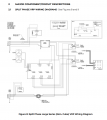
https://download.schneider-electric...t&p_File_Name=NVE82551.pdf&p_Doc_Ref=NVE82551
1750519477011.png
 

MaxHeadRoom

Joined Jul 18, 2013
30,593
Re: Wikipedia:

"Split phase, also known as single-phase three-wire, is a type of electrical power distribution system.
It's commonly used in residential settings, particularly in North America, to provide both 120V and 240V power from a single transformer.
This system utilizes two "hot" wires, 180 degrees out of phase with each other, and a neutral wire connected to the center tap of the transformer's secondary winding. "
 

crutschow

Joined Mar 14, 2008
38,401
This system utilizes two "hot" wires, 180 degrees out of phase with each other, and a neutral wire connected to the center tap of the transformer's secondary winding.
A 180° phase-shift to neutral is, of course, the normal output of the center-tapped transformer,
 

MaxHeadRoom

Joined Jul 18, 2013
30,593
A 180° phase-shift to neutral is, of course, the normal output of the center-tapped transformer,
Quite !
As opposed to 2 phase which although being similat with three connections the neutral is a star point of 2 phases ,generally 120° apart.
Or the obsolete 90° supply version
 

Thread Starter

Curtis2010

Joined Jun 20, 2025
15
Thanks for the replies. I understand what split phase is, and I am familiar with surge protection devices like the HEPD series.

My question pertains to voltage protection, not transient surge protection. Voltage protection devices shut of power when the voltage is outside of the configured ranges (hi & lo). These are not transient surge protection devices like the HEPD.

Example of such a device for single phase below:

https://www.amazon.com/Display-Adjustable-Voltage-Protector-Protective/dp/B07XBTKTT5/ref=mp_s_a_1_3?crid=B10HUY4GU8LM&dib=eyJ2IjoiMSJ9.Ke_8LmayhRbJdv6uR21VskGFlbjf1MyrKZ9TjEa2KoqDpOgS6t1XetaK3LVJ7VXqBEdo3G43wt_NX8_3uhroVtbJEm4vByd3WDf48Pdw69D69YoP0j3ymQViv562TyatwwWgjdFchE6KFFTe1Qb1-xeqkqOFxKLN8PnyokA1-b_x6J9LpTPjga0Tz_sdA6Cik6D8l4XJR4rfYiUAagNnsQ.vGpILYzndmr00Iqo4TthDZdrW1IU9CDRc1YoHouyW_E&dib_tag=se&keywords=voltage+protector+220v&qid=1750525332&sprefix=voltage+protector,aps,358&sr=8-3
 

Thread Starter

Curtis2010

Joined Jun 20, 2025
15

The HEPD is for transient surge protection, not voltage protection.

For example, if the voltage is 10% out of spec, in either direction, the HEPD will do nothing. A voltage protector will shut off the power (assuming thats outside of its configured range).

The HEPD and similar devices only protect against very high, very quick, transient voltages, not your utility company providing power that is 10V too high/low.
 

nsaspook

Joined Aug 27, 2009
16,271
The HEPD is for transient surge protection, not voltage protection.

For example, if the voltage is 10% out of spec, in either direction, the HEPD will do nothing. A voltage protector will shut off the power (assuming thats outside of its configured range).

The HEPD and similar devices only protect against very high, very quick, transient voltages, not your utility company providing power that is 10V too high/low.
The solution for that is to have the utility correct the supply voltage or for you to have a local voltage regulator. Shutting off the power (not a good solution except in emergencies) will just make a nasty surge that will require a HEPD to suppress the transient voltages from the ON/OFF/ON switching.

Either way the voltage is single phase.
 

MisterBill2

Joined Jan 23, 2018
27,312
Here is a serious question relative to that OVER voltage protector: Just exactly WHAT do you expect it to do for you?? I have seen a few of them installed in service breaker panels, and NONE of those installations would be able to do more than short circuit and trip the connected circuit breaker.
 

Thread Starter

Curtis2010

Joined Jun 20, 2025
15
Here is a serious question relative to that OVER voltage protector: Just exactly WHAT do you expect it to do for you?? I have seen a few of them installed in service breaker panels, and NONE of those installations would be able to do more than short circuit and trip the connected circuit breaker.
Im not talking about an OVER voltage protector, nor a transient surge protector, but a voltage protector which functions for both low and high voltages. I have installed these in single phase applications and they work great. They do not function by creating a short resulting in a tripped breaker. They interrupt power internally and restore the connection as soon as voltage is back in range. Im currently running several of them in single phase applications. Ive just never installed one in a split phase application (thus my original question).

What you describe sounds like an SPD (surge protection device). These function as you describe. They have an internal MOV with a high clamping voltage. When this clamping voltage is exceeded the MOV resistance drops and diverts the power (which, depending on how installed, might result in tripping a breaker). For brief over voltages the MOV returns to normal when voltage drops below its clamping voltage. For large/prolonged over voltage the MOV fails, but in doing so, it protects the devices downstream. Ive already got an SPD installed. My question is not about this type of device.
 

nsaspook

Joined Aug 27, 2009
16,271
Im not talking about an OVER voltage protector, nor a transient surge protector, but a voltage protector which functions for both low and high voltages. I have installed these in single phase applications and they work great. They do not function by creating a short resulting in a tripped breaker. They interrupt power internally and restore the connection as soon as voltage is back in range. Im currently running several of them in single phase applications. Ive just never installed one in a split phase application (thus my original question).

What you describe sounds like an SPD (surge protection device). These function as you describe. They have an internal MOV with a high clamping voltage. When this clamping voltage is exceeded the MOV resistance drops and diverts the power (which, depending on how installed, might result in tripping a breaker). For brief over voltages the MOV returns to normal when voltage drops below its clamping voltage. For large/prolonged over voltage the MOV fails, but in doing so, it protects the devices downstream. Ive already got an SPD installed. My question is not about this type of device.
You are confusing us by using the wrong terms for what you want.
A UPS with AVR functionality seems to be what you need.

https://www.tsipower.com/product/2167

1750552792240.png
 
Top