Use a dc ampere gauge in conjunction with a standard lamp

Thread Starter

Lila

Joined Feb 14, 2015
12
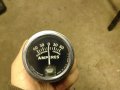
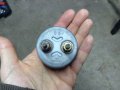
Good morning all. I'm a newbie and I have some basic knowledge of electrical work for household elements. I'm currently making steampunk style lamps that incorporates various pressure/electrical gauges that I find on ebay into my designs. I have this one gauge inparticular that came from a vehicle, an ampere gauge, that I want to add to a new design of one of my lamps and have it work when the lamp switch is turned on. I'm not at all familiar with these types of connections and I don't even know if connecting this type of gauge is even possible. I've been scouring the Internet for information on circuits and gauges etc, but the lingo, to me, is like a foreign language. So I was hoping to maybe find some answers here. Here are pictures of the gauge
 

Attachments

wayneh

Joined Sep 9, 2010
18,134
That's a DC ammeter and won't work easily in an AC-powered application. What would you like it to do, maybe have two positions, one for off and one for on?
 

Thread Starter

Lila

Joined Feb 14, 2015
12
Wow that was quick :). My idea was to have it the gauge needle move when a lamp switch turned on. Just something that would be fun as an added feature to a lamp. It works when I test it on 2 double A batteries.
 

Kermit2

Joined Feb 5, 2010
4,159
you need to add one more thing. a diode. this will block part of the AC voltage and let the meter operate on a pulsing DC waveform. the pulses will be at 60 hertz, so the needle might "jiggle" a small amount.
the next problem is one of range. that meter can probably read very large currents. 80 or more amps and your lamp will probably only use 1 amp or less. the meter may not give you any needle movement when you turn on the lamp. the current may be to small.
 

Alec_t

Joined Sep 17, 2013
15,149
If the lamp is a mains voltage one it would be risky to use a low-voltage-rated meter :eek:. The meter's insulation may break down, or there could be a current leakage path to the meter casing. The meter could then be LETHAL if touched.
 

Thread Starter

Lila

Joined Feb 14, 2015
12
i connected 1 wire to each probe and then just touched the other end of the wires to the batteries and the needle moved to almost 30. With one AA battery I got a little under half that
 

Kermit2

Joined Feb 5, 2010
4,159
There is the way you can do it then, using the batteries along with a multi pole switch capable of switching the AC lamp as well as the batteries.
It would burn through batteries pretty quick. maybe D cells and a 1 or 2 ohm ballast resistor?
 

Reloadron

Joined Jan 15, 2015
7,908
i connected 1 wire to each probe and then just touched the other end of the wires to the batteries and the needle moved to almost 30. With one AA battery I got a little under half that
When you do that you are effectively placing a short across your batteries and the little ammeter is the short. Not a good thing to do as it makes the batteries very unhappy for a short period of time as they scream for mercy. The ammeter is designed to be in series with a load and not be the load. You have a -60 to +60 Amp ammeter. It is designed for automotive DC current applications. For example current flow to or from a battery.

Ron
 

Thread Starter

Lila

Joined Feb 14, 2015
12
There is the way you can do it then, using the batteries along with a multi pole switch capable of switching the AC lamp as well as the batteries.
It would burn through batteries pretty quick. maybe D cells and a 1 or 2 ohm ballast resistor?
I was thinking about doing the battery idea but then it becomes more of chore to change out batteries. But there was mention of a diode, a current transformer and resisters. I know what each of these things are but putting it all together is something I would need help with. I know I'm talking to a lot of smart people on this thread so I apologize if I dont quite "get it." I was hoping for a simple way with using the smallest parts possible. I can follow diagrams. But if this project using this particular meter is impossible than that's ok because I also need the lamp to be safe. And hey if it is possible than the lamp would be really cool
 

Kermit2

Joined Feb 5, 2010
4,159
Can you get the meter open without damaging it?

The ammeter is itself a simple millivolt meter with a low resistance shunt. Basically a piece of brass or some similar. It can be removed or bypassed and the meter would then be simple to use.

The back might come free if you remove all the nuts on the connector posts.
 

Alec_t

Joined Sep 17, 2013
15,149
The ammeter is itself a simple millivolt meter with a low resistance shunt. Basically a piece of brass or some similar. It can be removed or bypassed and the meter would then be simple to use.
My guess is it's a moving magnet meter, which is rugged but insensitive.
 
Last edited:

WBahn

Joined Mar 31, 2012
33,075
i connected 1 wire to each probe and then just touched the other end of the wires to the batteries and the needle moved to almost 30. With one AA battery I got a little under half that
It sounds like what you have MIGHT be configured as a voltage meter intended to be used in conjunction with a current shunt. Do you have an ohmmeter? Measure the resistance of the meter and see what you get. If it is high, then it is probably a voltmeter. If it is low, then it is probably an ammeter. Then, if you can, measure the current flowing out from your batteries when you connect them to the meter. That will let us determine if it will be easy to do what you want. By using suitable external components, it should be doable.
 

WBahn

Joined Mar 31, 2012
33,075
When you do that you are effectively placing a short across your batteries and the little ammeter is the short. Not a good thing to do as it makes the batteries very unhappy for a short period of time as they scream for mercy. The ammeter is designed to be in series with a load and not be the load. You have a -60 to +60 Amp ammeter. It is designed for automotive DC current applications. For example current flow to or from a battery.

Ron
A little hard to believe that two AA batteries in series produced 30A into a short.
 

Reloadron

Joined Jan 15, 2015
7,908
A little hard to believe that two AA batteries in series produced 30A into a short.
Actually looking back at that yes it is. So roughly 3V drove the meter to 30 Amps indication. While I screwed up on that call I wonder what is in this meter? Never took one like that apart exactly like that one.

Wait a min, I have seen meters similar that were +/- 6V F/S so yes, as you mentioned. If the meter movement is +/- 6 V then two 1.5V batteries in series would drive it to about 1/2 scale which is what was seen.

Ron
 

#12

Joined Nov 30, 2010
18,224
It's rarely easy to use the wrong part and make it work.
Here's an idea: Find out which antique car that came from and post it on eBay for $50.
 

WBahn

Joined Mar 31, 2012
33,075
Actually looking back at that yes it is. So roughly 3V drove the meter to 30 Amps indication. While I screwed up on that call I wonder what is in this meter? Never took one like that apart exactly like that one.

Ron
I'm a little confused the other way. It seems surprising that it would be set up to require a 6V drop for a full scale reading. Even if this were intended for 24V systems, that's pretty excessive.

I looked up the patent http://www.google.com/patents/US2867768 and while I am not very adept at reading patent legalese, it seems like it is a stand along ammeter. So I'm left scratching my head.

I also looked up the typical short circuit current for AA batteries and the numbers seem to be in the 3A to 5A range for new alkalines.

Hopefully the TS will be able to make some measurements to shed some light on things.
 

Reloadron

Joined Jan 15, 2015
7,908
I'm a little confused the other way. It seems surprising that it would be set up to require a 6V drop for a full scale reading. Even if this were intended for 24V systems, that's pretty excessive.

I looked up the patent http://www.google.com/patents/US2867768 and while I am not very adept at reading patent legalese, it seems like it is a stand along ammeter. So I'm left scratching my head.

I also looked up the typical short circuit current for AA batteries and the numbers seem to be in the 3A to 5A range for new alkalines.

Hopefully the TS will be able to make some measurements to shed some light on things.
Yeah, beats me too? I just seem to remember something about a +/- 6V FS. Maybe it was a dream? :)

Ron
 

wayneh

Joined Sep 9, 2010
18,134
Guys, she wants to use a DC meter with an AC circuit. We can't discuss a diode-resistor-cap solution as that would be mains-direct. That limits discussion to batteries, which the TS doesn't want to bother with, or a transformer/SMPS.

It is worth knowing what current is required to move the needle. Cranking more than, say, 1A through it would be wasteful and a heat risk.
 
Top