Turning on/off a circuit problem... Help Please!

Thread Starter

Doug Hill

Joined Dec 7, 2018
2
Hello,
Just a forewarning, I'm not the most competent with electronics - I know the basics etc but as I am starting to delve deeper, I find myself coming short in knowledge so coming to ask for a little help.

Essentially, my problem is as follows:
I have a 48V, 7.5A DC switching power supply to power my project. It has an AC input which I will wire to a female kettle connector before putting into a project box.

Now, I haven't received the power supply yet, but am planning how it will work as preparation is always best.. In the images online, it has no power switch on the power supply so one assumes that either it will power on when the output circuit is complete or it is always on when the plug is on - I'm not sure so will need to figure this out once I receive it. This is my main concern as if it is always on, I will need to figure out how to turn it on once the output circuit is complete.

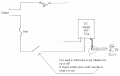
My output circuit is for an electromagnet setup which I am planning to have a limit switch implemented in to provide a little more safety. What I can't figure out is how do I wire the circuit so that I either safely have the 48V running safely through everything or do I make some form of separate circuit to control the output whether it is on or off so it doesn't have the full 48V running through it all?

Both the main switch and limit switch will need to be closed for the circuit to work. I don't want to spend like £25 on a switch that can handle the current/voltage as it would be a bit of a waste in my eyes.

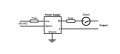
I drew up a mock circuit just to show my initial ideas.

Thanks for any help/input,

Doug
incomplete-circuit2-Doug.png


Mods Mote:
Some members do not like to open the .pdf file for security reason.
 

Attachments

Tonyr1084

Joined Sep 24, 2015
9,744
If the PS does not have its own switch you can easily put a switch in line to turn it on and off. One word of caution: With regards any project hooked to it - when the PS is switched on it can send a slug through the output into your project and can knock it out. Blow something out.

What you want with just about any power supply is to have a switch to control the power going to the project. If the PS does not come with a switch, like I said, you can add one, but what's the problem with it always being powered? OK, maybe it's consuming some energy, wasting money. But if the supply is on, up and running, then you switch on your project then the project won't be hit with a huge burst of energy.

5 volts can't hurt you. Right? Well, I read an article (going from memory here) a young girl was bathing with her cell phone plugged in and charging. She dropped the phone in the tub - remember, this is only 5 volts - and was electrocuted. The PS that charged her phone was a switching power supply. Even though there was an average of 5 volts, there were sufficient peaks of power to end her life. I'm not sure how all that works, but the reason for bringing it up is that switching PS's expose the other end to the possibility of a serious jolt of power. I can't speak with any kind of authority on the subject, and if someone disagrees with me they will make it known. I'm fine with that. We learn from our mistakes, as long as they don't take our lives.

ME? I'd go with the switch on the output side of the PS. Some supplies have smart start capabilities where they don't send that slug of power out before they can begin regulating. Since I don't know what supply you're getting, even if I did know, I couldn't tell you exactly what to expect. Still, I'd opt for the more secure method of controlling power to your project. Switching the output on and off (in my opinion) is safer than switching the supply on and off with your project hanging potentially in harms way.
 

Lyonspride

Joined Jan 6, 2014
137
Your post is very confusing.......... But.....

Mains side - Build the power supply into a project box, fit a "switched and fused IEC socket", inside the box I would send the Live/brown mains wire through a thermal fuse mounted in a screw terminal block (but this a totally personal preference for safety). If the box has metal parts you need to earth it, and loop the earth wire into the 0v terminal on the power supply so that the 0v rail isn't floating at potentially hundreds of volts.

DC side - Put a fuse in +48v line, not the 0v. Put the limit switch (and another switch if you like) in the +48v side so that the device is always at 0v potential when not powered.

Now you've got a fuse in the mains side and a fuse in the 48v rail.

The power supply will always be on, but if there's no current draw on the 48v output, then it won't really use any power on the mains.
And this is why I use thermal fuses in power supplies that are always on.
 

Lyonspride

Joined Jan 6, 2014
137
I read an article (going from memory here) a young girl was bathing with her cell phone plugged in and charging. She dropped the phone in the tub - remember, this is only 5 volts - and was electrocuted. The PS that charged her phone was a switching power supply. Even though there was an average of 5 volts, there were sufficient peaks of power to end her life. I'm not sure how all that works

That's what happens when the 0v rail is left floating and not referenced to mains earth, which typically happens in cheap power supplies. Between 5v and 0v you get 5v, but between 5v (or 0v) and an earthed surface (a radiator, a fridge, a tap), you could get hundreds of volts and potentially lethal shock if it runs from arm to arm across the chest.
 

Tonyr1084

Joined Sep 24, 2015
9,744
A fuse on both ends is a good idea. Since you clarify that the PS will always be live - you don't need a switch on that side. Only a switch controlling the 48 volts. As for the fuse on the 48 volt output, you can put it on either side (48 volts or 0 volts). The current used by your project will pass through the fuse either way. So protection is provided. But it's better convention to put it on the 48 volt line.
 

Tonyr1084

Joined Sep 24, 2015
9,744
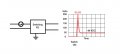
Here's what I meant by "Slug": When the PS comes on the output COULD look like this. If you switch your project on and off via the power supply switch you could damage your project. COULD being the operative word.

Slug.jpg
 

Lyonspride

Joined Jan 6, 2014
137
Here's what I meant by "Slug": When the PS comes on the output COULD look like this. If you switch your project on and off via the power supply switch you could damage your project. COULD being the operative word.

View attachment 165303
Just drop in a 48.4v TVS diode across the 48v rail :)

That said, mains switching (as a regular thing) isn't ideal simply as a matter of good practice, but anything running at 48v is unlikely to be all that sensitive.
 

Tonyr1084

Joined Sep 24, 2015
9,744
Use any switch you like, as long as it's rated for the current and voltage.

SPST
SPDT
DPDT
DPDT Center off
the list can go on and on. All you're using the switch for is to make or break the circuit. As for the proper switch, use one that is closely rated to what you are doing. Using contacts that are rated for 1000KVA for a 5 volt signal won't work well.
 

dl324

Joined Mar 30, 2015
18,231
5 volts can't hurt you. Right? Well, I read an article (going from memory here) a young girl was bathing with her cell phone plugged in and charging. She dropped the phone in the tub - remember, this is only 5 volts - and was electrocuted.
I remember reading about that. As I recall, it was a common practice in that household.

I saw someone short a 5V 100A power supply with his metal watch band. That was not a pretty sight...

There was a reason why we had no jewelry rule while working.
 

Reloadron

Joined Jan 15, 2015
7,866
This may go better with a link to the power supply. Anyway you have a 48 VDC 7.5 ADC power supply which is about a 48 * 7.5 = 360 Watt supply. Lets call it a 400 eatt supply which leads me to believe the mains current at 220 VAC will be about 400 / 220 = 1.8 Amps. I would fuse your mains at 2 amp slow blow fuse rated for the voltage of 220 VAC. If you want to switch the mains I would use a SPST toggle switch rated for 5 amps 220 VAC and only switch the High Side of your mains.

If you want to switch the secondary 48 VDC side, 7.5 Amps maximum I would use a SPST switch making sure it is rated for about 10 ADC and the required voltage. If you want to be cool about it I would place a pilot light either upstream or downstream of your DC out switch. If you switch the AC line I would also use a pilot lamp between your switch and the power supply. The use of pilot lights is at your own discretion depending on what you want to have indicated. Pilot lamps can be LED or incandescent again based on your preference.

If the PSU you ordered chassis is open frame I would place it in a metal enclosure box and earth ground the box or use a plastic enclosure and don't ground it. Again, depends on what you ordered and your preference.

Ron
 

ebp

Joined Feb 8, 2018
2,332
48 volts DC is above the rating of many switches. DC is a problem because it doesn't pass through zero "naturally" like AC, so if an arc is started when the switch opens, it may persist. You can get switches that are adequate for 48 V but the choices are seriously narrowed. The same issue exists for fuses. Many fuses are rated for no more than 32 volts DC.

You MUST be sure to provide a path for the discharge of the energy stored in the inductor if you switch the DC, otherwise you could produce a voltage well into the hundreds when the circuit is abruptly opened, as with a switch. This makes the arcing problem with the switch even worse. Often a diode with a current rating equal to the load current can be placed across the inductor (cathode to the positive side of the load), but this slows the decay of the magnetic field, which may not be permissible.

Switch mode power supplies place large capacitors immediately after the input rectifier in most low-cost designs. This causes transient currents of many tens of amperes when power is first applied. This is also hard on switch contacts, but there is not an issue with arcing on opening.

If you have a power supply that produces a waveform anything even remotely like that shown in #7, it is a complete and utter piece of rubbish. Any halfway decent power supply won't overshoot by more than a few percent of nominal output voltage under any circumstances. Most switchers have a "soft start" feature that ramps the output voltage up over the course of a few milliseconds to help prevent overshoot at power up. A TVS across the output to try to "fix" something like that is a very bad idea. Dump the terrible power supply and get a decent one.

A decent power supply does not require Earth grounding of the output. Typically there will be a low-value capacitor in the supply that connects one side of the DC output to one side of the rectified AC mains on the "primary" side. This does allow a very tiny current at mains frequency, but there are strict limits on the maximum value of the cap and hence the maximum current, and the capacitor used is made specially to be safe in such an application ("double insulated", in effect). Sometimes there is merit in directly grounding the DC side or connecting it to Earth ground via a fairly high-value resistor to "bleed off" any charge that might build up due to static electricity. Once again, if you need to ground the output for safety, you have a power supply that belongs in the trash.

Do not trust cheap power supplies from Chinese suppliers. Some are perfectly OK, but many either have never been tested and approved by safety agencies and many have fraudulent safety agency markings. I simply will not buy electrical products directly from China. It isn't worth the risk of fire or lethal shock.
 

ebp

Joined Feb 8, 2018
2,332
Should have mentioned:
Switchers usually have some means of limiting the current transient when AC power is applied, but it typically still will be tens of amps. The most common limiter is a device that has "high" resistance (a few tens ohms at most, usually) when "cold" and "low resistance" when "hot." These devices require "recovery time" to cool after the power is switched off, otherwise they will still be hot when the power is turned on again and the current spike could be several times higher. Recovery typically will take at least a second or two.
 

KMoffett

Joined Dec 19, 2007
2,918
That story reeks of "urban myth". The 5 VDC end of an "isolated" phone charger cord in bath water can no way be lethal. Now if the charger was not isolated from line voltage, or had an extremely high leakage path between input and output and reference to ground, then maybe. A solid metal short across a 5VDC 100A supply is a totally different thing. You could stick your tongue across that 5V power supply and maybe just fell a little tingle. Resistance is the current limiting factor there.

Ken
 

Tonyr1084

Joined Sep 24, 2015
9,744
If you have a power supply that produces a waveform anything even remotely like that shown in #7, it is a complete and utter piece of rubbish.
It was a drawing intended to show what I mean by "Slug". It's not an accurate drawing of anything I know of. I drew it just to emphasize my point. I do that sometimes.
 

Reloadron

Joined Jan 15, 2015
7,866
Texas girl electrocuted while using cellphone in bathtub. Unfortunately the only person who would know what actually did happen is the deceased so obviously we can't ask her. The story is very limited in what it does mention. There is another story about the same incident but with a caveat in the title "Texas teen electrocuted after cell phone accidentally falls in bathtub" so what actually fell in the bathtub? Was it a phone charger complete plugged into mains? Again, nobody knows or is saying exactly what happened? I do know when a 14 year old kid dies a coroner will list the cause of death after an autopsy. Until a coroner reviews a case and makes a determination everything is speculation. I don't doubt that this poor kid died but none of what I read actually list a plausible cause as to what actually happened.

It was a drawing intended to show what I mean by "Slug". It's not an accurate drawing of anything I know of. I drew it just to emphasize my point. I do that sometimes.
And a fine drawing it was! :)


Ron


ebp

Joined Feb 8, 2018
2,332
I have certainly seen switch mode wall warts that I regard as extremely dangerous because of inadequate creepage and clearance distances between the mains side and the output side. In some, a little bit of force applied to the case or perhaps a drop could well produce a galvanic connection. I had looked at a couple that unfavorably impressed me. The last one I bought straight from a Chinese vendor I opened up and never put back together. It was simply not worth the fire or shock risk I assessed it to carry.

Compare the construction of Apple charger "cubes" with the cheap imitations. Very scary!
 

Lyonspride

Joined Jan 6, 2014
137
That story reeks of "urban myth". The 5 VDC end of an "isolated" phone charger cord in bath water can no way be lethal. Now if the charger was not isolated from line voltage, or had an extremely high leakage path between input and output and reference to ground, then maybe. A solid metal short across a 5VDC 100A supply is a totally different thing. You could stick your tongue across that 5V power supply and maybe just fell a little tingle. Resistance is the current limiting factor there.

Ken
Forget dynamite fishing, just drop a cell phone into a lake and watch as all the fish float to the surface!!

True "story".
 
Top