Transition from Hobby Electronics to Real World Electronics (Independent home garage work)

workinonit

Joined May 30, 2025
3
I worked in heavy duty truck shops as a driver mechanic. I developed a strong interest in electronics as a result of a 5 week coarse in high-school. I continued learning with radio shack books and so experimenting. But as my wife became ill I went into trucking for money reasons and then got invited into the shop. My interest in electronics helped out in many ways like having real conversations with tech support for specific chassis modules. My service manager always put me on those jobs and also I assisted other techs with troubleshooting that involved electronic issues. So even though I was still learning, i was doing real time work on big rigs, other trucks and equipment that the other techs couldn't do. So you can keep it limited to what your skill level is and at the same time learning every day. I'm retired now but that's no reason to quit learning. I know that not every profession will make room for your hobby but mine did, maybe yours will too.
 
Last edited:

Thread Starter

RUSTYWIRE

Joined Aug 28, 2023
113
I worked in heavy duty truck shops as a driver mechanic. I developed a strong interest in electronics as a result of a 5 week coarse in high-school. I continued learning with radio shack books and so experimenting. But as my wife became ill I went into trucking for money reasons and then got invited into the shop. My interest in electronics helped out in many ways like having real conversations with tech support for specific chassis modules. My service manager always put me on those jobs and also I assisted other techs with troubleshooting that involved electronic issues. So even though I was still learning, i was doing real time work on big rigs, other trucks and equipment that the other techs couldn't do. So you can keep it limited to what your skill level is and at the same time learning every day. I'm retired now but that's no reason to quit learning. I know that not every profession will make room for your hobby but mine did, maybe yours will too.
Great story. The real problem is that there are only 24 hours in a day and if you have to spend most of those hours making a living, then have to deal with domestic and home maintenance issues when you come home, there is little time left and you (i.e. anyone) have to budget your remaining time.

Your experience is kind of an exception to the rule as your electronics interest merged right into your day job by circumstancial happenstance and necessity on your regular non-electronics job.
 

workinonit

Joined May 30, 2025
3
Great story. The real problem is that there are only 24 hours in a day and if you have to spend most of those hours making a living, then have to deal with domestic and home maintenance issues when you come home, there is little time left and you (i.e. anyone) have to budget your remaining time.

Your experience is kind of an exception to the rule as your electronics interest merged right into your day job by circumstancial happenstance and necessity on your regular non-electronics job.
Well that's kind of exactly it. It kind of morphed and grew and I was able to fill a void that was a real issue in our shop. Maxon Lift Gates has a rail gate That is double idiot stick controlled and it's all operated by a module. I became the main troubleshooter for those lift gates. Eventually my shop started farming me out to other shops in order to deal with them gates. But really, I was put on all of the electrical/electronic issues. It just seemed to work out...
 

boostbuck

Joined Oct 5, 2017
1,067
There's an unfilled need (at least where I am) for electronic repair. There is lots of 20 - 40 years old electronics equipment (ie still technologically repairable, unlike newer equipment) still in use, and with the decline of the 'tv repair' as a trade there is now no one to turn to when gear such as this breaks.

I came across a guy lives near me who started such a business when he retired. A total standing cold start - he knew little about electronics, but skilled up on soldering and desoldering and did a bit of advertising. By the time I met him he had a shed filled to the roof with the most amazing range of equipment awaiting his attention (beautiful old kit imo), and he seemed to be making a passable living at it. He was by then too sick to keep up with demand and trying to offload it all onto someone to take over. I was tempted, but I'm too busy!

No doubt such repair trade is on a par with COBOL programming and will eventually disappear with time, but still viable at the moment I think.
 

Thread Starter

RUSTYWIRE

Joined Aug 28, 2023
113
There's an unfilled need (at least where I am) for electronic repair. There is lots of 20 - 40 years old electronics equipment (ie still technologically repairable, unlike newer equipment) still in use, and with the decline of the 'tv repair' as a trade there is now no one to turn to when gear such as this breaks.

I came across a guy lives near me who started such a business when he retired. A total standing cold start - he knew little about electronics, but skilled up on soldering and desoldering and did a bit of advertising. By the time I met him he had a shed filled to the roof with the most amazing range of equipment awaiting his attention (beautiful old kit imo), and he seemed to be making a passable living at it. He was by then too sick to keep up with demand and trying to offload it all onto someone to take over. I was tempted, but I'm too busy!

No doubt such repair trade is on a par with COBOL programming and will eventually disappear with time, but still viable at the moment I think.
Most people I come across, who work in electronics, including here, say the TV repair type person & business is long gone.
You are the first person I have come across who say it still exists (although will vanish)

From talking to different people I have been told that"vintage" nostalgia gear is still in demand for repair. I know someone
who makes his living doing that. Someone suggested that older high end audio gear repair can be lucrative.

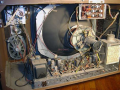
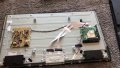
Modern TVs are a joke for repair compared to the old picture tube types .

Old for TV Repair Man to dig in to

1748936020852.png


New for Board Swap ?? or a New TV ??

1748936050819.jpeg
 
Last edited:

workinonit

Joined May 30, 2025
3
Friends and family bring me various devices, printers, microwave ovens etc. Some I fix, some I cannibalize for parts. Usually they let me make the call as to which fate the devices have. My brother inlaw loaned his old amplifier out to friends for a wedding. Somebody tripoed over it and rolled it. The amplifier quit working. He likes to do dj work for special occasions. Inside the amp I found an ancient repair that left it vulnerable to the kind of shock that happened to it. I love those easy repairs and it made my wife's family happy...
 

Thread Starter

RUSTYWIRE

Joined Aug 28, 2023
113
I wonder if there is an advantage to using tube / valve analog gear over digital, (ICs, microprocessors, microcontrollers)
especially in audio and RF? Yeah, gear is smaller now, even tiny, but is that always a good thing?
Or are the digital devices superior in every way, hands down, no questions please?

Without satellites cellphones would be useless, and many audiophiles swear that tube amplifiers have a better sound than
solid state digital amplifiers.

No doubt small SMD digital devices certainly have their advantages, but there is something about tubes and analog.
Maybe a combination of both, but not resticting the use of tubes so much, as seems to be todays electronic devices.
Audio and RF seem to be where this is viable. Power also.

Just contemplating this and not claiming to know all that is happening in electronics. I still have my Pickett slide rule from college
and my programmable scientific calculator which tells a lot. I've also programmed code in UNIX for robotic machines for what
it's worth. Once took a college course, "Electron Tubes & Semiconductors" taught by a protege' of Lee de Forest.
 
Last edited:

Ya’akov

Joined Jan 27, 2019
10,365
I wonder if there is an advantage to using tube / valve analog gear over digital, (ICs, microprocessors, microcontrollers)
especially in audio and RF? Yeah, gear is smaller now, even tiny, but is that always a good thing?
Or are the digital devices superior in every way, hands down, no questions please?

Without satellites cellphones would be useless, and many audiophiles swear that tube amplifiers have a better sound than
solid state digital amplifiers.

No doubt small SMD digital devices certainly have their advantages, but there is something about tubes and analog.
Maybe a combination of both, but not resticting the use of tubes so much, as seems to be todays electronic devices.
Audio and RF seem to be where this is viable. Power also.

Just contemplating this and not claiming to know all that is happening in electronics. I still have my Pickett slide rule from college
and my programmable scientific calculator which tells a lot. I've also programmed code in UNIX for robotic machines for what
it's worth. Once took a college course, "Electron Tubes & Semiconductors" taught by a protege' of Lee de Forest.
There is an advantage to vacuum tubes in certain high powered applications such as commercial transmitter final stages and DC power transmission lines—but—

The "audiophile" applications of tubes is almost-but-not-quite-totally...superstition and flim-flam. In their infancy, transistors used as power amps didn't perform as well as better tube amps, but as with all technology, they were improved over time and all of the complaints made by hollow state aficionados—except that they weren't tubes—were addressed. (though during the 80's there were experiments with "vacuum tube ICs" and some folks thought that would be good for photo preamps).

As far as analog vs. digital, it's the same picture—CD players (like the very first Philips/Sony model that started it all) were not targeting audiophiles at all. They were introduced as a better way to store music which, compared to vinyl, they certainly are. And, vinyl records, much like film vs. digital photography is another rabbit hole.

It is certainly true that vinyl can beat many of the specs of the CD format—but we don't use that any more. A really good direct to disk pressing on a really good turntable, with a really good tone arm, and a really good cartridge can be really amazing with a startling dynamic range and unlikely frequency response—but it is also really, really, really... expensive, delicate, and in parts, rare.

Today, you would digitize that pressing at a very high bit rate and put the disk in a climate controlled vault. You do have one, right? Keep in mind the same people that might advocate for tube amps over transistors as inherently better, also (as a group) pay more than $100 for a wall receptacle and hundreds for power cords because they "hear the difference". The also spend hundreds on...Ethernet cables to get the "better sounding ones".

What it comes down to is this: it is perfectly reasonable to like the sound of a tube amp. But you have to state the goal. If it is high fidelity reproduction than well designed gear that uses transistors and high bit rate digital formats is clearly superior. The amps will produce less distortion and the formats contain more information about the original signal—full stop.

The truth is, people don't compare their music systems with live performance (which is what high fidelity is about). This is true for many reasons—an important one is that much music today doesn't exist outside its recording. It is produced entirely in a studio—and barring odd exceptions—is digital from day one by the way.

They compare with other music systems and choose arbitrary aspects of the sound as benchmarks. If someone is actually interested in live music, where the sound starts as the compression and rarifaction of air and microphones are used to transduce it for recording—they will have a very different approach (if they are knowledgeable and discerning).

No, the goal of tube amps and the general constellation of other gear that orbits them is not first music reproduction, if at all. It's a social hobby with all the same oneupmanship, superstition, and hipsterism that plagues other areas (e,g.: photography, firearms, &c.)

There are no longer many good applications for vacuum tubes—but enjoying them is one. That is, if you do it honestly and don't make sill claims about their nature or value. If people want to play with vintage radios, Futterman OTL amps, vinyl—whatever—I hope they enjoy it but... let's not pretend a $2000 power cord is anything more than buying status.
 

timf

Joined Jun 5, 2025
2
I started a garage electronics sensor business 30 years ago. My son decided that he did not want to do electronics and my daughter is getting married and does not want it. I never promoted it much as they never had much interest, but if you want it I can give it to you. timf@emssensors.com
 
Top