Tonight's Libation

MrAl

Joined Jun 17, 2014
13,702
Oh no, I'm going to go thirsty now.
Actually, I only drank it once or twice and only because it was served to me without ordering from a host that happened to have that brand. I never bought it I don't think, but if I did it must have been only once or twice over many years. Pabst Blue Ribbon was a favorite of someone I knew well, so I would drink that sometimes over their house but if I purchased that it was only once or twice too. That's another company that has been around for something like 175 years.

I tried a number of different beers over the years and a particular store I used to pass had a lot of specialty beers so I would try a different one every month. I eventually settled in to the dark beers, like Sam Adams and Guiness, but I've backed out of that in recent years and went back to regular stuff like Heinekens. These days though I rarely have any alcohol too busy to get drunk :)
 

wayneh

Joined Sep 9, 2010
18,104
Yes, that began the death spiral for the brand. The entire industry has adopted adjunct brewing - using sources of fermentable sugar other than malt - but somehow Schlitz failed to maintain its signature flavor. Budweiser uses rice and corn syrup, the latter just like all the major brewers. That reduction in malt - and flavor in general - is a big part of what paved the way for the craft brewing explosion. For Schlitz, one of the final nails in the coffin was a strike that closed a brewery making Schlitz for an extended time.
 

cmartinez

Joined Jan 17, 2007
8,759
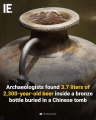
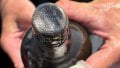
A bronze bottle containing 3,740 millilitres of liquid was recently excavated from the Shanjiabao cemetery near Guyuan in northern China, just 2 kilometers south of the Great Wall. The tomb dates to the end of the Warring States period (475–221 BCE). Chemical analysis of the liquid identified more than 2,400 organic compounds, while microscopic examination of starch grains, phytoliths, and yeast confirmed it was an alcoholic beverage. The presence of broomcorn millet and Triticeae — wheat or barley — indicated a cereal-based brew rather than a fruit wine, making it closer to beer than anything else. It would not have tasted like any modern beer: the liquid was relatively rich in lactic acid, oxalic acid, and tartaric acid, suggesting a sharp, sour flavour — though that's likely a consequence of sitting sealed in a tomb for two millennia. The bottle, described as having a garlic-shaped mouth, was found among burial goods, suggesting the deceased was sent off with a final drink.


1780310123294.png
 
Top