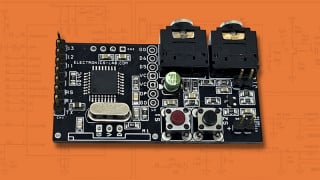
It probably has a 300-75 ohm balun at the base. The intrinsic impedance of a rabbit ear antenna is 300Ω. The input impedance of all new TVs is 75Ω, so for a proper match, the balun is needed. A good balun will work across the entire TV frequency band.
A balun is a transformer or circuit. If there is a balun at the base, the receiving elements should be dipolish, not a suspected whip with a 'loading' inductor that just makes it electrically longer. The TV input being unbalanced, then the receiving elements should be balanced to have a balun.
And why 300Ω mentioned ? If it is a 'whip', that intrinsic impedance does not play well.
The impedance of a TV tuner may be 75Ω at one frequency; not at the entire band. TV tuners have a 75Ω connector but that is all, the tuner itself is an unpublished impedance mystery probably veeery high from FETs at the RX front end.
(By the way, am just trying to learn what is inside those ; not about receiving TV. Am a C-band person, with a couple of 2.5m dishes in my side yard, watching Japan NHK right now)
Pay? --- What is that ? I refuse to pay to watch advertisements. Never had cable service in my life.
And only at its resonant frequency. At any other frequency, nope. So, any antenna -including TV- has a impedance that changes with the frequency being received. Impedance is tightly paired to frequency.
And only at its resonant frequency. At any other frequency, nope. So, any antenna -including TV- has a impedance that changes with the frequency being received. Impedance is tightly paired to frequency.
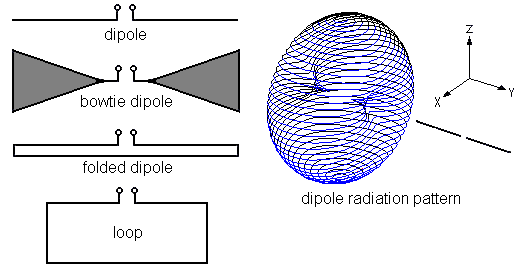
The design of the (folded) bow-tie makes it a wide-band antenna. The antenna doesn't need to be resonant for it to radiate or receive. It only needs to provide stable nodes for waves to reinforce instead of cancel as the fields move around the conductors. At the frequency of operation the impedance of the wide-band antenna will be mainly resistive and usually near (impedance does change as the frequency changes but its usually only a few dB signal change) the tuned (folded) dipole value because power will be moving to/from space instead of just being stored as near-field energy. All of the true dipole antennas need a balun or choke (even if there is a 1:1 impedance match) because the receiver input is usually unbalanced 75 ohm coax and the antenna is a balanced ~75 or ~300 ohm. This is to prevent RF from traveling on the outside of the coax from the antenna.

 Facebook
 Google
 GitHub
 Linkedin