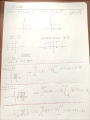
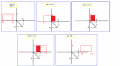
There is a nonsense signal about Convolution and I couldn't understand what to do.

Thread Starter

circuit975

Joined Jun 13, 2024
43
First of all, I wholeheartedly greet my colleagues and the entire community!

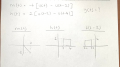
I’ve set the signal as
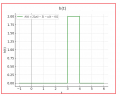
m(t) = −t [ u(t) − u(t−2) ]
and the impulse response as
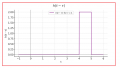
h(t) = 2 [ u(t−3) − u(t−4) ].


But while trying to find y(t), I ran into a small issue with the sketches.
Because there is no overlap, and thus they don’t convolve.
I just can’t figure out what I’m missing.

There is a topic I can't get my head around.
I have 2 signals. I’m going to convolve them, but even if I flip one of them, the other one lies horizontally on a different axis, so I can’t get them to overlap in any way — meaning I can’t convolve them.
In problems like this, how are we supposed to perform the convolution operation?
What’s the logic to solving these kinds of questions? What am I supposed to do?


I’ve attached an image of the graphs I drew below.
Any answer that helps me figure out how to proceed will be honored with sincere appreciation. I am grateful — thank you!


m(t) graphic ;
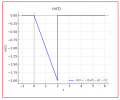
1751196964157.png


h(t) graphic ;

1751196987154.png


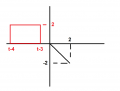
h(t−τ) graphic ;

1751197005802.png
 

Ian0

Joined Aug 7, 2020
13,097
You need h(t-τ) for every possible value of τ, so that you can calculate
m*h(t)=∫m(τ).h(t-τ)dτ
note that the output is a function of t but the integral is from -∞ to +∞ of τ.

Imaging doing it for a discrete time sequence.
start with t=0.
Then calculate the sum of m(τ).h(t-τ) for all possible values of τ, that gives you m*h(0).
then change t to 1 (it's like sliding the graph along the t axis by 1)
Then calculate the sum of m(τ).h(t-τ) for all possible values of τ, that gives you m*h(1).
Then change t to 2. (slide the graph along a bit further)
etc.
You end up summing over all values of τ but your final output is a function of t
 

Thread Starter

circuit975

Joined Jun 13, 2024
43
You need h(t-τ) for every possible value of τ, so that you can calculate
m*h(t)=∫m(τ).h(t-τ)dτ
note that the output is a function of t but the integral is from -∞ to +∞ of τ.

Imaging doing it for a discrete time sequence.
start with t=0.
Then calculate the sum of m(τ).h(t-τ) for all possible values of τ, that gives you m*h(0).
then change t to 1 (it's like sliding the graph along the t axis by 1)
Then calculate the sum of m(τ).h(t-τ) for all possible values of τ, that gives you m*h(1).
Then change t to 2. (slide the graph along a bit further)
etc.
You end up summing over all values of τ but your final output is a function of t

thank you for your valuable comment.
i can fully apply what you say in other signs, I've done it before, yes.

but the graphs of the signs are as I showed in the figure. and I can't match these signs somehow, so I can't perform the convolution operation. :(
 

Ian0

Joined Aug 7, 2020
13,097
thank you for your valuable comment.
i can fully apply what you say in other signs, I've done it before, yes.

but the graphs of the signs are as I showed in the figure. and I can't match these signs somehow, so I can't perform the convolution operation. :(
I'm not sure which bit you don't understand.
Following their example, draw a graph for h(t-τ) for τ=-2, τ=-3 and τ=-4.
 

MrAl

Joined Jun 17, 2014
13,667
First of all, I wholeheartedly greet my colleagues and the entire community!

I’ve set the signal as
m(t) = −t [ u(t) − u(t−2) ]
and the impulse response as
h(t) = 2 [ u(t−3) − u(t−4) ].


But while trying to find y(t), I ran into a small issue with the sketches.
Because there is no overlap, and thus they don’t convolve.
I just can’t figure out what I’m missing.

There is a topic I can't get my head around.
I have 2 signals. I’m going to convolve them, but even if I flip one of them, the other one lies horizontally on a different axis, so I can’t get them to overlap in any way — meaning I can’t convolve them.
In problems like this, how are we supposed to perform the convolution operation?
What’s the logic to solving these kinds of questions? What am I supposed to do?


I’ve attached an image of the graphs I drew below.
Any answer that helps me figure out how to proceed will be honored with sincere appreciation. I am grateful — thank you!


m(t) graphic ;

View attachment 351840


h(t) graphic ;

View attachment 351841


h(t−τ) graphic ;

View attachment 351842
Think about one of the signals 'sliding' along the time axis. If one slides backwards and the other stays still, they must overlap at least for some time or else slide the other signal instead.
 

Thread Starter

circuit975

Joined Jun 13, 2024
43
I'm not sure which bit you don't understand.
Following their example, draw a graph for h(t-τ) for τ=-2, τ=-3 and τ=-4.
The part I'm trying to understand is this:
One of the signals is below the axis of the graph, while the other is above.
When performing the convolution operation, we need to align them, but they don't overlap.
I'm trying to understand how we're supposed to do that.
 

awagner

Joined Jul 11, 2017
3
The overlap occurs on the tau axis, not on the magnitude axis. The product of the functions on the tau axis is what is integrated.

In case 1, two positive steps are convolved, and the product is positive.

In case 2, a positive step is convolved with a negative step, and the product is negative.

Scan_20250701.jpg
 

Thread Starter

circuit975

Joined Jun 13, 2024
43
Note correction at bottom of page

My dear friend, first of all, I would like to express my gratitude for your valuable response.

However, what I was actually trying to say is this:

Under normal circumstances, in the first image I provided, I can visualize the convolution properly on the graph and see what aligns with what, and then perform the calculation accordingly.


1.png


But the point I was asking about — and the part I couldn't understand — was in the second image I shared: when the signal is pointing downward; in other words, when the two signals are in opposite directions, I don't know how to compute their convolution.

2.png

1751452558299.png

This is exactly where I get stuck and can't move forward, because they don't overlap in any way, and I can't take the convolution. This was precisely the part I was trying to ask about.
 

Ian0

Joined Aug 7, 2020
13,097
but they don't overlap? I can't understand what you're saying, how is my convolution happening?
Convolution is the integral of the product of two signals on one axis vs. the time shift between them on the other.
To calculate the integral you have to work out the product of the two signal for all values between -∞ and ∞.
Obviously, when either signal is zero, the product is zero.
If both signals are non-zero then you have a non-zero product which goes into the integral.
Graphically, if both signals are non-zero, then they overlap on a graph (i.e. they are both non-zero at the same time)
If it worries you that one is non-zero on the negative side and the other is non-zero on the positive side, draw graphs of the absolute values and multiply the result by -1.
 

Thread Starter

circuit975

Joined Jun 13, 2024
43
Convolution is the integral of the product of two signals on one axis vs. the time shift between them on the other.
To calculate the integral you have to work out the product of the two signal for all values between -∞ and ∞.
Obviously, when either signal is zero, the product is zero.
If both signals are non-zero then you have a non-zero product which goes into the integral.
Graphically, if both signals are non-zero, then they overlap on a graph (i.e. they are both non-zero at the same time)
If it worries you that one is non-zero on the negative side and the other is non-zero on the positive side, draw graphs of the absolute values and multiply the result by -1.
yes, the signals are not zero, but I still can't figure out exactly what to do in this case. can you show me what you said?
 

Ian0

Joined Aug 7, 2020
13,097
Do you find it easier to understand stuff like this in an abstract mathematical sense or a practical physical sense?
Do you know what convolution does when applied to electrical signals?
 

Thread Starter

circuit975

Joined Jun 13, 2024
43
Do you find it easier to understand stuff like this in an abstract mathematical sense or a practical physical sense?
Do you know what convolution does when applied to electrical signals?
actually, it feels more realistic to go by drawing. and I understand what I'm doing. but I don't know how to draw this. can you show me how to draw?
 

MrAl

Joined Jun 17, 2014
13,667
but they don't overlap? I can't understand what you're saying, how is my convolution happening?
Forget about the idea of overlapping for a minute ok?
If one signal is +1.1 volts and the other signal is +1.0 volts, the product is 1*1.1=1.1 right?
Then, if one signal is +1.1 volts and the other signal is -1.0 volts, then the product is -1*1.1=-1.1 volts, OK?

The actual areas themselves do not have to overlap when the signals are of oppositive polarities, the two signals just have to influence each other in some way which for this means they simply multiply together. They only have to occur at the same time. The same TIME, not necessarily the same POLARITY.
If you have signal A being +1v at t=1 second and signal B being +1v at t=1 second, at that instant they multiply to get +1v. If you have signal A being +1v at t=1 second and signal B being 0v at t=1 second, then they multiply out to 0v. If you have signal A being +1v at t=1 second and signal B being -1v at t=1 second, then they multiply out to -1v, and it's as simple as that. As long as you consider the same instant for each signal you can always get a result for the multiplication. That's as simple as it gets.
 

Thread Starter

circuit975

Joined Jun 13, 2024
43
Forget about the idea of overlapping for a minute ok?
If one signal is +1.1 volts and the other signal is +1.0 volts, the product is 1*1.1=1.1 right?
Then, if one signal is +1.1 volts and the other signal is -1.0 volts, then the product is -1*1.1=-1.1 volts, OK?

The actual areas themselves do not have to overlap when the signals are of oppositive polarities, the two signals just have to influence each other in some way which for this means they simply multiply together. They only have to occur at the same time. The same TIME, not necessarily the same POLARITY.
If you have signal A being +1v at t=1 second and signal B being +1v at t=1 second, at that instant they multiply to get +1v. If you have signal A being +1v at t=1 second and signal B being 0v at t=1 second, then they multiply out to 0v. If you have signal A being +1v at t=1 second and signal B being -1v at t=1 second, then they multiply out to -1v, and it's as simple as that. As long as you consider the same instant for each signal you can always get a result for the multiplication. That's as simple as it gets.

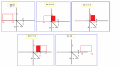
I salute you sir. i have read your comment in detail many times and have come to the following conclusion ;

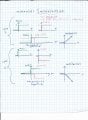
in order for it to be a convolution, it needs to take values different from zero in only and only two signs. he doesn't notice the direction and the sign. i understand this. and on top of that I think this is the step-by-step drawing of this sign. is it true, I wonder?


1751486251872.png
 

Thread Starter

circuit975

Joined Jun 13, 2024
43
I salute you sir. i have read your comment in detail many times and have come to the following conclusion ;

in order for it to be a convolution, it needs to take values different from zero in only and only two signs. he doesn't notice the direction and the sign. i understand this. and on top of that I think this is the step-by-step drawing of this sign. is it true, I wonder?


View attachment 352103
is there anyone competent to comment on whether what is here is true or not?
 

Ian0

Joined Aug 7, 2020
13,097
is there anyone competent to comment on whether what is here is true or not?
@MrAl is correct. His Post #16 is identical to my Post #12.

It is a convolution integral regardless of the numerical values involved. The result may perhaps be that (h*m)(t)=0 for all τ. It is still convolution.
The reason one looks for an overlap on the time axis, is because that is the only part of the convolution function (h*m)(t) that gives (h*m)(t)≠0
If you know the answer is zero, there is no need to do the mathmatics. If you know that the convolution is only non-zero from τ=4 to τ=5 then you do not need to calculate anything for any other value of τ.
 
Last edited:

Thread Starter

circuit975

Joined Jun 13, 2024
43
@MrAl is correct. His Post #16 is identical to my Post #12.

It is a convolution integral regardless of the numerical values involved. The result may perhaps be that (h*m)(t)=0 for all τ. It is still convolution.
The reason one looks for an overlap on the time axis, is because that is the only part of the convolution function (h*m)(t) that gives (h*m)(t)≠0
If you know the answer is zero, there is no need to do the mathmatics. If you know that the convolution is only non-zero from τ=4 to τ=5 then you do not need to calculate anything for any other value of τ.


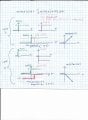
1751549976560.png


so my convolution drawing here is correct?
 
Top