MaxHeadRoom
- Joined Jul 18, 2013
- 30,772
Recently here on the outskirts of the city, the coyote's have been taking care of them evidentally.
Max.
Max.
I can't tell by the pic, but is he de-clawed?
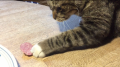
Nope, and he knows how to use his claws to snag a pork chop. That's a skill he demonstrated to my daughter once, after he got his name, Pork Chop.I can't tell by the pic, but is he de-clawed?
Now you got me hungry... my wife makes delicious beer-battered pork chops...Nope, and he knows how to use his claws to snag a pork chop. That's a skill he demonstrated to my daughter once, after he got his name, Pork Chop.
We discovered that Pork Chop, aka Porky, likes pork so much that I actually asked the vet about it, to see if I could safely indulge his cravings. You've probably heard the old wives tale that pork is bad for cats. That's mostly a lie. Raw pork used to be dangerous to cats for the same reason it was dangerous to us - trichinosis. American pork is trichinosis-free these days, so that threat is gone. (No idea of the status of Mexican pork.) The vet explained that the other threat from pork is that a cat cannot live on pork alone. It's deficient in something, an amino acid I think, maybe taurine, and cats cannot survive on exclusively pork. That's certainly not a problem for most cats! So now Porky can have ribs or al pastor tacos with me as often as he likes.Now you got me hungry... my wife makes delicious beer-battered pork chops...
Mexican pork complies with extremely stringent international health standards. So much, that nowadays there's more risk in consuming beef than in pork! ... the real health dangers are normally present when one consumes street food at improvised roadside stands... which are places that wise people normally avoid by every means possible.We discovered that Pork Chop, aka Porky, likes pork so much that I actually asked the vet about it, to see if I could safely indulge his cravings. You've probably heard the old wives tale that pork is bad for cats. That's mostly a lie. Raw pork used to be dangerous to cats for the same reason it was dangerous to us - trichinosis. American pork is trichinosis-free these days, so that threat is gone. (No idea of the status of Mexican pork.) The vet explained that the other threat from pork is that a cat cannot live on pork alone. It's deficient in something, an amino acid I think, maybe taurine, and cats cannot survive on exclusively pork. That's certainly not a problem for most cats! So now Porky can have ribs or al pastor tacos with me as often as he likes.
Food smells good until you notice the flies...the real health dangers are normally present when one consumes street food at improvised roadside stands... which are places that wise people normally avoid by every means possible
I can... and mexican beef, especially that from the state of Sonora, is world-class.I can't vouch for it's safety, but when in Mexico I do find the locally raised beef to be quite delicious.
What type of cows are they, I want to find someone withI can... and mexican beef, especially that from the state of Sonora, is world-class.
The American beef is fed high doses of corn and other high carb diet. The also get doses of bovine growth hormone. Even meat with labels that as, “contains no artificial growth hormones” because those are real, bovine hormones, not artificial. These cows grow so fast that the meet is soft, mooshy and tasteless (and wet from the water retained in the muscle from the Creatine-like supplements to add “muscle mass” which is mostly water in this case).What type of cows are they, I want to find someone with
“Guernsey, Brown Swiss or Belgian Blues”
kv
I have a pound of it in the fridge at all times. I haven't totally made the switch to grass-fed beef – I choke on the price – but I've pretty much moved on to Kerrygold for any use where you actually experience the butter.Try a block of KerryGold butter next time you’re in the grocery store.
I have a book I think you of all people would understand and like. The title is "The Plant Paradox" in it the Author explains a Mutation in some species of beef that occurred in the distant past giving those beef a A1 casing instead of a A2 casing resulting in some people not able to tolerate milk from them.The American beef is fed high doses of corn and other high carb diet. The also get doses of bovine growth hormone. Even meat with labels that as, “contains no artificial growth hormones” because those are real, bovine hormones, not artificial. These cows grow so fast that the meet is soft, mooshy and tasteless (and wet from the water retained in the muscle from the Creatine-like supplements to add “muscle mass” which is mostly water in this case).
Irish and Australian beef is delicious because it is grass fed. The Irish butter is also wonderful because the grass fed beef gives a deep naturally yellow color. Corn fed beef make white butter with no taste. Try a block of KerryGold butter next time you’re in the grocery store.
kv“About two thousand years ago, a spontaneous mutation in Northern European cows caused them to make the protein casein A-1 in their milk instead of the normal casein A-2. During digestion, casein A-1 is turned into a lectinlike protein called beta-casomorphin. This protein attaches to the pancreas’s insulin-producing cells, known as beta cells, which prompts an immune attack on the pancreas of people who consume milk from these cows or cheeses made from it.5 This is likely a primary cause of type 1 diabetes.6 Southern European cows, goats, and sheep continue to produce casein A-2 milk, but because casein A-1 cows are hardier and produce more milk, farmers prefer them. The most common breed of cows worldwide is the Holstein, whose milk contains this problematic lectinlike protein. If you think that drinking milk gives you a problem, it’s almost certainly the cow’s breed that is at fault, not milk per se. The black and white Holstein is the classic example of the A-1 cow, while the Guernsey, Brown Swiss, and Belgian Blues are all casein A-2. That’s why I recommend that if you consume dairy, you opt for[…]”
Excerpt From: Dr. Steven R. Gundry, M.D. “The Plant Paradox.” iBooks. https://itunes.apple.com/us/book/the-plant-paradox/id1135359262?mt=11
I’ve been around cattle for a long time. Ive never heard that story. Interesting and explains a lot.I have a book I think you of all people would understand and like. The title is "The Plant Paradox" in it the Author explains a Mutation in some species of beef that occurred in the distant past giving those beef a A1 casing instead of a A2 casing resulting in some people not able to tolerate milk from them.
So, in short we eat what it ate. Why would I want to eat something that is destroying the cow, I choose to eat elk, buffalo, fish, chicken grass fed of course etc.
kv
It's just a story, though. Like giant turtles carrying the Earth.I’ve been around cattle for a long time. Ive never heard that story. Interesting and explains a lot.
From that article:It's just a story, though. Like giant turtles carrying the Earth.
A review of that book by real scientists:
http://nutritionstudies.org/the-plant-paradox-by-steven-grundy-md-commentary/
A very revealing paragraph....Making a poster to display at a conference is nice, but this is a world apart from publishing actual clinical trial results in a peer reviewed journal. In other words, there is no detailed publication of his methods, his subjects, his results, or his intervention as would be commonly expected in a normal publication. His glowing description of this abstract is misleading, to put it mildly.
No wonder I’ve never heard some of this stuff before. I’m beginning to think that very little of what I read on the internet is true. Thanks helping fight the good fight for scientific truth.It's just a story, though. Like giant turtles carrying the Earth.
A review of that book by real scientists:
http://nutritionstudies.org/the-plant-paradox-by-steven-grundy-md-commentary/
| Thread starter | Similar threads | Forum | Replies | Date |
|---|---|---|---|---|
|
|
Do you have any pets at home? | Off-Topic | 39 |
| Similar threads |
|---|
| Do you have any pets at home? |