The demise of persons with electronics knowledge within the UK

ebeowulf17

Joined Aug 12, 2014
3,307
Just a pet peeve of mine, and certainly no criticism ..... Using a microprocessor or almost any thing else 'digital' as a first electronics project is not really learning electronics, it is learning to use appliances. How about building a basic audio amplifier using an actual transistor. Or how about a simple AM receiver or even a simple AM or FM transmitter? I remember putting together many interesting circuits from 'Popular Electronics'. Or here's a good one, how about using a flashlight and a photocell to transmit music across the basement? You can experiment to see if it works better with or without DC bias on the flashlight, or so how it works with an LED flash light. Then figure out why. Learn the electronics, not just how to use ones and zeros.
I agree that at some point you need to learn the fundamentals (and freely admit that I have a looooong way to go on that.)

On the other hand, I see no problem with Arduino, etc. as a gateway. My first electronics project was maybe 5-6 years ago, and it involved reading thermocouples, data logging, menu driven interfaces, and a 20x4 LCD screen. If I had to build everything from scratch, there's no way I would've ever started that project... and just blinking an LED or even making a basic radio wasn't going to grab my attention enough to get me started.

Having the Arduino and its community of support as a base gave me the tools and the confidence to try something that I wouldn't have otherwise tried. For that particular project, the only electronics knowledge I really had to gain was some understanding of thermocouples - and even there I mostly read the TC amp datasheet and followed directions very carefully. So far, not much learning electronics... but it sparked my continued interest.

I've since added pressure sensors, learned about RC debouncing, learned about power supplies and different logic levels, made 4-20mA control circuits, developed a precision analog hall effect/comparator switching system, etc.

Arduino projects pretty quickly become electronics projects if you want them to interact with the outside world. Using Arduino as a base has encouraged me to learn as I go, while giving me satisfying results early enough to keep me interested. I still have an awful lot to learn about analog fundamentals, but I know vastly more than I ever would've without an Arduino. What's so wrong with that?
 

Thread Starter

Hymie

Joined Mar 30, 2018
1,347
Even back in the 1970s, building an electronics project could not compete on price with a commercially bought item. But building it yourself allowed customisation, and most important of all – if it went wrong you could fix it.
 

Lyonspride

Joined Jan 6, 2014
137
Practical hobbies are on the decline as we have more of an admin based work culture growing across the country, young people are being taught office skills and not so much practical skills, this has a massive effect on the hobbies and interests that these generations will have in the future. Even if they go into electronics, they go to uni, they memorise a bunch of theory and then they get a desk job that may or may not be related to their qualifications.

Even car enthusiasts are different, no longer do they want to work on their own cars, they pick a mod from a catalogue and pay someone to do the work.

Society is being dumbed down to create mindless desk jockeys and pencil pushers.
 

OBW0549

Joined Mar 2, 2015
3,565
For the most part, I suspect the reason for no longer stocking the magazine is the low demand. A magazine covering say farm tractors might interest a few people, but for most people in the UK, an electronics magazine might as well be written in a foreign language – having virtually zero readership.
Low demand for the magazines would be an obvious reason for their demise, but I don't think low demand necessarily translates into a decline in interest in the subject matter. More likely, I suspect, the biggest reason is the same one that's bedeviled nearly all other "dead tree" print media in the last couple of decades: the Internet. So much information is available online these days that these magazines aren't seen anymore as the unique and valuable resource they once were.
 

Ylli

Joined Nov 13, 2015
1,092
But then why not start by learning how a coherer works or make a valve (translation: vacuum tube) amplifier?
Do you have to design and construct a microprocessor from individual transistors before you're allowed to use a PIC?
Coherer is doable, but a 'Valve' requires some special equipment.... Vacuum tube amplifier would be fine. You could use a 12AT7/12AU7 (or my favorite, the 6SN7) preamp/inverter to drive a pair of 6V6's to drive that flashlight transmitter.

Perhaps not a full processor, but it would be nice to understand a bit about logic circuits.

Again, not trying to be critical of anyone, start wherever you want. As you say, you don't have to be able to build a violin to be able to play in the band.
 

ebp

Joined Feb 8, 2018
2,332
We have become a society of pushers of buttons and changers of money, with a desperate need to be constantly in communication with everyone and everything, even if there is nowt of value to communicate.

Those of us who design tech stuff have made it harder and harder for the average person to participate as anything but end users. No longer can someone with some aptitude for analytical thought and some manual skills remove the 42 screws from the back of the the TV, pull some tubes and take them to the store to test them, buy some new ones, plug 'em in and feel some satisfaction with a job well done after the 42 screws are back home. A generation loses the ability to accomplish things with tools. The next generation never even picks up tools. Even with computers, many things are much harder. Back in the "old days" you could whip up a relatively simple circuit, hang it on a serial or parallel port of a PC, write a program in BASIC and do something. Now the rigamarole you have to go through just to get past security is daunting (I actually prefer to use Ethernet over async serial because it is simpler!). As someone else said, surface mount has created a barrier that is tough to climb - you need some good fine motor skills, and those skill are on the wane across first-world populations.

Returning to my first remark, there is an extent to which electronics has always been a bit of a solo endeavor. Amateur radio enthusiasts, as I understand it, made real efforts to spread the word and pass along skills, but outside of that I think it fairly safe to say most people who tinkered and built did it alone. Being alone seems to be a terrible, awful, unthinkable mark of a social outcast these days. Kids are evaluated on the number of friends they have on Fizzogtome.

Though I sometimes disparage what I call Ardy-Weenie, hooray for it. It is a gateway that is accessible and lets people with interest accomplish something that suits their own objectives without investing huge amounts of tedious work. It won't yield instant gratification, but it is a light at the end of a tunnel of length that seems less than infinite. All one has to do is look at the questions that crop up in these precincts to realize that lots of people pretty rapidly move from pushing buttons to wanting to understand how to actually coerce some electrons into doing their bidding. You have to start somewhere.

I am often somewhat sadden by the fact that those who enter the field for which I hold formal qualifications (about as far from electronics as you can get but still in the realm of science) do what I regard as closer to a branch of mathematics - clean and neat and no bad smells - than what I liked about the field. They've done incredible science and brought huge amounts of new knowledge. But it isn't what I liked. Things that I think are still important no longer attract very much interest. Times change.
 

AlbertHall

Joined Jun 4, 2014
12,640
Returning to my first remark, there is an extent to which electronics has always been a bit of a solo endeavor. Amateur radio enthusiasts, as I understand it, made real efforts to spread the word and pass along skills, but outside of that I think it fairly safe to say most people who tinkered and built did it alone. Being alone seems to be a terrible, awful, unthinkable mark of a social outcast these days. Kids are evaluated on the number of friends they have on Fizzogtome.
But there is the growth of MakerSpace where builders come together to share knowledge, resources and socialise. If that gets to be more widespread and dad takes child along, who knows where that might lead.
 

ebp

Joined Feb 8, 2018
2,332
in response to Albert

While outside of electronics, something that impresses me to no end is what some of the cosplay kids do. They make the most incredible costumes, many of them starting with pieces of paper printed on their computers. They make "weapons" the same way. And what they really make are extensive sets of skills in creativity and actually doing complex and demanding things with their hands. I really admire them.
 

MisterBill2

Joined Jan 23, 2018
27,998
Just a pet peeve of mine, and certainly no criticism ..... Using a microprocessor or almost any thing else 'digital' as a first electronics project is not really learning electronics, it is learning to use appliances. How about building a basic audio amplifier using an actual transistor. Or how about a simple AM receiver or even a simple AM or FM transmitter? I remember putting together many interesting circuits from 'Popular Electronics'. Or here's a good one, how about using a flashlight and a photocell to transmit music across the basement? You can experiment to see if it works better with or without DC bias on the flashlight, or so how it works with an LED flash light. Then figure out why. Learn the electronics, not just how to use ones and zeros.
The worst publication for that, pushing the arduino stuff, is Nuts and Volts. All pushing a way to connect the board and then load some code to do something. MOST of the functions could be done with $2 worth of analog or simple digital IC devices and folks would learn what was being done. But instead spend money and but the stupid board and the a computer and compiler to write some non-commented code that who knows how it actually works. So what electronics do they learn from that????
 

MrAl

Joined Jun 17, 2014
13,764
Yes, regarding electronic components and projects the bar has raised, and that's probably a let down for most beginners. But it's not just that... the platform has changed too. In the old days of vacuum tube electronics was an expensive hobby, then along came the semiconductors and brought it down to the masses. Now the pendulum has swung the other way with SMT components that are hard to make use of by the ordinary hobbyist. But the new platforms are smartphones and gaming consoles, not to mention the www, and it's not about just electronics anymore but mostly about programming skills. So I'd say that the electronics hobby has lost market to the software nerds.
Hello there,

There are still some venues that are open for hobby work where the mainstream industry didnt touch too much yet such as high voltage, but not everyone feels like doing stuff like that.

There's also the theoretical end of the hobby too. Even though much is known about circuits, it's always interesting to learn more about how to analyze them. I mean by hand or using math tools, not simulation. Simulation cant tell us everything we need to know anyway. So there is that part of the hobby too, where we simply like to calculate the circuit behaviors and come up with better or just alternate ways to do things.
Not everyone is interested in that end either though unfortunately. If they were, we'd see a magazine like, "Math and Circuits", come out soon :)
 

WBahn

Joined Mar 31, 2012
33,075
Adding my $0.02 to the common themes mentioned.

Several reasons for the demise of print magazines in the hobbyist electronics area, but probably the two biggest are (1) the ease of getting information on the Internet and (2) the strong decline in the number of people who are interested. The end result is that little can be inferred about the drop in interest due to the drop in print mag availability; that has to be sense through other means.

Regarding the appropriate place for people to start when learning electronics -- that's a very multifaceted issue with competing goals. You can make a good case that someone is better off if they start with some level of reasonable fundamentals (let's assume that some consensus on what these are could be reached, as unlikely as that would actually be) and build up from there. But is that really the case if the alternative to starting with the Arduino-type stuff is that they don't start at all. The most effective learning and skill building process is useless if you can't get people to even give it a try.

So, from a practical standpoint, we need to do a much better job of identifying what the best gateway drugs are. Lots of efforts are being made to do this in lots of different places and lots of different ways, but I don't think any of them have come close to really identifying the really effective way.

We also have to recognize that the small fraction of people that do try hobby electronics have a very broad spectrum of interests and goals. Some of them don't care about the electronics, they only care about accomplishing something completely different, such as controlling their toaster from another continent -- for them electronics is nothing more than a means to an end and they want to know as little about it as needed to reach that end. But on the other hand, some of these people will become interested in electronics along the way and will then dive in deeper (to varying depths, of course), because the toaster turned out to be their gateway drug.

This is not all that different from decades past. Many people got into electronics via ham radio, but their original reason for getting into ham radio was that they wanted to talk to people a long way away for "free". But they often discovered that while commercial equipment was too expensive for them, they could build at least some of their own stuff for much less. So they only wanted to learn enough electronics to build the widget they needed, but it turned out that the widget was their gateway drug.

What has changed is that the range of useful widgets that people can build for themselves and save some significant money in the process has really shrunk. Lots of people used to work on their cars because it was doable and it saved a lot of money over taking it to a shop. In the process, they got interested in mechanics and electrical systems and so their car was their gateway drug. Today, it is virtually impossible to do anything meaningful on a car unless you can already bring considerable skill to the table -- hence it's not a useful gateway drug.

Even the stuff that IS still reasonable to build yourself, more often than not you can buy something off the shelf that does what you want close enough and at a low enough price that there's no point in doing it unless you have already decided that you want to do it for the purpose of getting into electronics -- so you don't need a gateway drug and this can't serve as a gateway drug for someone that just wants to do whatever it is that the off-the-shelf widget will let them do.

At the same time all of this is going on, we also have a progressive erosion in basic skills in all kinds of areas, be it math or logical thinking or problem solving or common sense. This is largely because our very technological success has made it possible for increasing fractions of the population to get by without developing those skills to the same degree they needed to in past generations.

Again, just my $0.02.
 

dendad

Joined Feb 20, 2016
4,641
One thing that added to the demise here in Southern Australia, I believe, is a number of years ago, the state govenment decided all students should be equal so the technical secondary schools were all closed, forcing every student to go through the "normal" secondary schools that has virtually no techical subjects at all. This attitude seems to be reflected in society, as I noticed in a recent slashdot article, that in USA, there is a lack of plumbers and electricians as all students are trying for degrees in collage. The up side is that those who have the trade tickets are getting quite well paid.
Encourage one of your kids to become a plumber, and another an electrician ;)
 
I need to add something here which in some ways is related and in others it's not. It's because I've been involved with so many disciplines, they don't always follow the same rules.

eyeglass screws: ordered by overall length, not length of the thread for a typical machine screw.
The color RED: Usually positive. In the thermocouple world - negative,
bandages: I haven;t quite figured it out yet. Seems to be overall size and not pad size.
Pharmacy math: Take 1 tablet PO by mouth) BID (2x/day) and 1 tablet every 4 hrs PRN (as needed)
A 2 week supply would be how many tablets?
Ans #1: I thought 14 days * 24 hr/4hr (6 tablets per day)
Ans #2: The real answer: 14 * (24 hr/4 + 24/12) (8 tablets per day)
Ans #3: The pharmacy sent 30 pills.

Answer #2 is correct.

Pipe and tubing: a 3/4 plumbing elbow is the same as a 7/8 refrigeration elbow. This is the exact same part.
There is tubing and pipe and "refrigeration tubing".

White/Black: In the US, white is neutral, Black is hot. I was at a Boy Scout Explorer's post at Hewlett-Packard. What color wire (blk, wht or green) goes to the back of a 3AG fuseholder? I said black. One "instructor" said white. I ultimately won. Our team had the 1st working clock, but the second assembled. Nearly everyone had a bad 5V regulator. We had one trace missing. The PCB layout was "taped". That trace must have fell off.

You had cars with metric fasteners on engine parts and English fasteners for body parts. You had disk drives with metric and English threaded holes. More recently, I bought some shaft collars with inch openings and metric cap screws.

Cement is ordered by the yard. That "yard" is always assumed to be a "cubic yard".

In a solar cell and even power plants max power is always negative (power sourced) and so is Isc/Jsc. (short circuit current and short circuit current density). Negative is "assumed".

Then there is "conventional current" and "electron current". Sometimes it matters. Don't forget the holes and electrons where the drift velocity of a hole is smaller than the electron.

Even with computers there is big and little endian.

At the present time, I really can't believe anything anymore. I can be told the answer is A. Have it done and the answer is A. Challenge the A answer and then told the answer should be "B". So, no change in the dollar cost of previous procedures completed, but cost, in part, covered by a technicality. The procedure was started before the fiscal year ended and based on actually having it done, it wasn't covered. When i came home, i had a letter saying it was covered, but since I used up the coverage, there was no change in the dollar amount. The same procedure was covered because the docs office was supposed to submit after the procedure was complete not when it was started.

Then there is the challenge the teacher's answer on a college exam. I won. Reason given: Your not supposed to know that yet.

Then the Philosophy professor gives a true/false test and all of the answers are true.
 

gerty

Joined Aug 30, 2007
1,305
For the last 11 years of my working life I taught post secondary Industrial Electricity and Electronics Technology in a small tech school. I retired last December, my last Electronics student graduated last April. There were no other applicants for the class, so it was closed down. The last 8 months I was there I only had Electricity students.
People just don't seem to be interested in electronics anymore, and in my opinion SMD's might have had a little to do with this. Repairing a board with through hole devices is a lot easier. Parts availability is another problem if you can find the component you have to buy way more than you need.
 

dendad

Joined Feb 20, 2016
4,641
For the last 11 years of my working life I taught post secondary Industrial Electricity and Electronics Technology in a small tech school. I retired last December, my last Electronics student graduated last April. There were no other applicants for the class, so it was closed down. The last 8 months I was there I only had Electricity students.
People just don't seem to be interested in electronics anymore, and in my opinion SMD's might have had a little to do with this. Repairing a board with through hole devices is a lot easier. Parts availability is another problem if you can find the component you have to buy way more than you need.
You could be right re the surface mount parts but I find a lot of folks are scared off by SMT. In a lot of ways, it is actually easier to work on than thru hole. There are just a bit different techniques used. All my boards except a couple of simple ones are surface mount. And I find working on them not too bad. A hot air gun is a must...
https://www.ebay.com.au/itm/3in1-FO...NG-REWORK-YH/183181282856?hash=item2aa6748e28
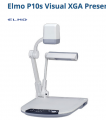
...and some time ago I purchased an Elmo Video Presenter on Ebay. The best couple of hundred dollars I have spent.
Elmo.png
It has a camera high above the work area and it can zoom in on a few IC pins. With this I can see well and solder 0.4mm pitch ICs quite well.
This is a great help as I'm a "senior citizen" now and the eyesight is down a bit!
Also, it can take photos so documenting the work is easier. There are other models that have 2 lights, one each side, and I think that would be better. Second hand Ebay ones are worth looking for.
 

MrAl

Joined Jun 17, 2014
13,764
You could be right re the surface mount parts but I find a lot of folks are scared off by SMT. In a lot of ways, it is actually easier to work on than thru hole. There are just a bit different techniques used. All my boards except a couple of simple ones are surface mount. And I find working on them not too bad. A hot air gun is a must...
https://www.ebay.com.au/itm/3in1-FO...NG-REWORK-YH/183181282856?hash=item2aa6748e28
...and some time ago I purchased an Elmo Video Presenter on Ebay. The best couple of hundred dollars I have spent.
View attachment 151460
It has a camera high above the work area and it can zoom in on a few IC pins. With this I can see well and solder 0.4mm pitch ICs quite well.
This is a great help as I'm a "senior citizen" now and the eyesight is down a bit!
Also, it can take photos so documenting the work is easier. There are other models that have 2 lights, one each side, and I think that would be better. Second hand Ebay ones are worth looking for.
Hi,

I agree SMD parts had something to do with this too. It's harder for older people to deal with, and the techniques are not as "hands on" as through hole parts because a different set of tools and even supplies are needed.
When i first started with SMD i used to solder each pin one at a time, by hand, with a very thin tip. I got tired of that really fast. Then i discovered solder past, the soldering type not the flux. I found that when heated it turns into a nice silver color that literally pulls itself right onto the pins and no so much between like it seems like it would do. I was very impressed.
I dont do much soldering of those small parts now though because i just dont have to. I used dip packages unless of course one isnt available, but then again i dont really need anything much that comes in an SMD package only these days.

But yes at first SMD can be intimidating and i think that is why they back away quickly, as i almost did. Plus repairing is very difficult without the right tools and the price per part vs success rate may not be very good for the beginner. Imaging trying to replace the CPU on a Due board :) It's not as much the part alone as it is hard to get the heat to go in the right place too and not hit other parts. Plus the cost of the new hiop vs an entire new board, that's another ratio to think about and most willl go with a new board.
That brings up another topic too that weighs in pretty heavy i think, and that is the cost for a new board vs cost of fixing one. Probably close enough in most cases so we dont want to have fix anything with SMD parts any more.

Yeah lots of factors. Makes you miss the old days of electronics.
All we can do is move forward and encourage others that are interested. Try not to mock them out because they dont know something as that will usually push them away. We can all learn something or another.

Another factor is the Radio Shacks reduced inventory and Lafayette closed up.
A plus though is internet supplies got easier to get, but only IF AND ONLY IF they know about that source. I suspect not everyone knows they can get lots of parts online.
 
Last edited:

ramancini8

Joined Jul 18, 2012
473
During the sixties there were many magazines available. There were many jobs available in all phases of electronics because hardware was built at home. The jobs have gone and so have the young ambitious readers.
 

bertus

Joined Apr 5, 2008
22,988
Hello,

When I started my job 30 years ago, you went to the custommer with a box of parts and your scope.
You could take the time to repair the machine on site, by replacing parts.

Nowerdays, we just replace complete boards, that will be send back to the factory for repair.
The fun of the electronics is almost gone.

Bertus
 

MrAl

Joined Jun 17, 2014
13,764
Hello,

When I started my job 30 years ago, you went to the custommer with a box of parts and your scope.
You could take the time to repair the machine on site, by replacing parts.

Nowerdays, we just replace complete boards, that will be send back to the factory for repair.
The fun of the electronics is almost gone.

Bertus
Hi,

Yeah what a shame, it's like a lost form of art or something.
I was lucky when i fixed one of my TV sets it was just the electrolytic caps that needed replacing. Otherwise, trash, or gut it :)
 
Top