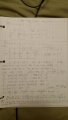
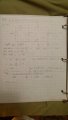
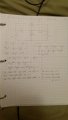
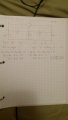
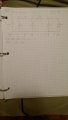
Tested my nodal analysis skills today

  • Thread starter Deleted member 343565
  • Start date
Status
Not open for further replies.

Thread Starter

Deleted member 343565

Joined Dec 31, 1969
0
I've been preparing for my circuit theory class this summer. Started with Laplace but decided to go back to basics.
I wasn't surprised when I ended up not being able to solve most of the problems, but I am determined to find the correct answers.
I took pictures that are on my gmail account, how do people like to view them?
https://goo.gl/photos/3aptJU9GWQLGznKq8 OR (I included them attached at the bottom too)

Its nodal analysis. These questions are hard IMO. Please show me where I made mistakes, and how I could have done better.
 

Attachments

WBahn

Joined Mar 31, 2012
32,942
I don't know about others, but I'm not going to download a 7+ MB file.

Also, you are asking for all kinds of confusion by trying to deal with multiple problems in one thread -- you and the people that respond are going to very quickly find it impossible to keep track of which problem a give response is even referring to and the thread of conversation is going to end up jumping all over the place. Pure chaos.

One of the most valuable things you can learn is how to check your own work -- that's one of the really nice things about most engineering problems, the correctness of the solution can usually be determined from the solution itself. You simple see if the solution is consistent with the problem. So you should get in the habit of doing this before turning to others to look over your work. That way you can have confidence that what you turn in is correct -- which can be a real point saver, especially on an exam. Even if it's not correct and you can't figure out the mistake, just checking the work and noting that the answer is wrong will often times get you serious partial credit. But it goes way beyond the classroom -- your value to an employer goes through the roof if you demonstrate the habit of verifying the correctness of your own work.

So, with that in mind, what I recommend is go through your problems and check which of your answers are correct and which aren't. Then try to find the mistakes in the ones that are wrong. Then pick one (at a time) and present your best effort on that problem.

Finally, your image uploads can almost always be under a couple hundred kilobytes. You can use Paint or Gimp or any of many other simply editors to scale your photos to a reasonable size. You also want to make sure that your images have good contrast. I checked a few of your jpg images and, while your work seems neat and well organized, the contrast is weak, particularly in the top portion of the images.

It also appears that you need to learn to properly track your units -- something which you have almost certainly NOT been taught how to do. But it can (literally) be a life saver, not to mention the significant improvement in grades that almost always results.
 

Thread Starter

Deleted member 343565

Joined Dec 31, 1969
0
Ok thanks for the tips. Should I repost better quality pictures after troubleshooting again tomorrow or should I make a new thread altogether?

I don't know about others, but I'm not going to download a 7+ MB file.

Also, you are asking for all kinds of confusion by trying to deal with multiple problems in one thread -- you and the people that respond are going to very quickly find it impossible to keep track of which problem a give response is even referring to and the thread of conversation is going to end up jumping all over the place. Pure chaos.

One of the most valuable things you can learn is how to check your own work -- that's one of the really nice things about most engineering problems, the correctness of the solution can usually be determined from the solution itself. You simple see if the solution is consistent with the problem. So you should get in the habit of doing this before turning to others to look over your work. That way you can have confidence that what you turn in is correct -- which can be a real point saver, especially on an exam. Even if it's not correct and you can't figure out the mistake, just checking the work and noting that the answer is wrong will often times get you serious partial credit. But it goes way beyond the classroom -- your value to an employer goes through the roof if you demonstrate the habit of verifying the correctness of your own work.

So, with that in mind, what I recommend is go through your problems and check which of your answers are correct and which aren't. Then try to find the mistakes in the ones that are wrong. Then pick one (at a time) and present your best effort on that problem.

Finally, your image uploads can almost always be under a couple hundred kilobytes. You can use Paint or Gimp or any of many other simply editors to scale your photos to a reasonable size. You also want to make sure that your images have good contrast. I checked a few of your jpg images and, while your work seems neat and well organized, the contrast is weak, particularly in the top portion of the images.

It also appears that you need to learn to properly track your units -- something which you have almost certainly NOT been taught how to do. But it can (literally) be a life saver, not to mention the significant improvement in grades that almost always results.
 
Status
Not open for further replies.
Top