Facebook
 Google
 GitHub
 Linkedin

Hi there,
This is not something that is easy to describe, but basically I was wondering if it's possible to control a spark gap the same way you control a transistor/ MOSFET with a pulsing frequency to turn on/off.
This is for a resonant coil and for tuning purposes. I like the idea that the solid state tesla coil (or slayer exciter) circuit uses as it is self tuning but because it uses transistors, the input is somewhat limited to lower voltage. On the other hand I also like spark gap tesla coil design because of it's limited parts, and being able to drive it at higher voltages, but the tuning looks to be a pain to get right.
For the circuit I want to make, I want to make high voltage (lets say 3kV DC +) input resonate at the same frequency as the secondary coil.
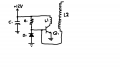
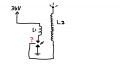
Just to give a better idea of what I'm asking I'll include 2 pictures in attachments.
Pic 1: Basic Solid State Tesla Coil
Pic 2: Spark Gap
Lets say I have the resonant frequency of the secondary coil (same approach as pic 1), is there a way to use that to time the sparks so they happen at that frequency? Is there another way to do it that's more simple? Again just to reiterate, I do not want to use an LC circuit to try to match it to the secondary coils resonant frequency, I want the circuit to a self tuning circuit instead.
Thanks : )
This is not something that is easy to describe, but basically I was wondering if it's possible to control a spark gap the same way you control a transistor/ MOSFET with a pulsing frequency to turn on/off.
This is for a resonant coil and for tuning purposes. I like the idea that the solid state tesla coil (or slayer exciter) circuit uses as it is self tuning but because it uses transistors, the input is somewhat limited to lower voltage. On the other hand I also like spark gap tesla coil design because of it's limited parts, and being able to drive it at higher voltages, but the tuning looks to be a pain to get right.
For the circuit I want to make, I want to make high voltage (lets say 3kV DC +) input resonate at the same frequency as the secondary coil.
Just to give a better idea of what I'm asking I'll include 2 pictures in attachments.
Pic 1: Basic Solid State Tesla Coil
Pic 2: Spark Gap
Lets say I have the resonant frequency of the secondary coil (same approach as pic 1), is there a way to use that to time the sparks so they happen at that frequency? Is there another way to do it that's more simple? Again just to reiterate, I do not want to use an LC circuit to try to match it to the secondary coils resonant frequency, I want the circuit to a self tuning circuit instead.
Thanks : )
Attachments
-
 105.2 KB Views: 9
 -
 89.4 KB Views: 9