Facebook
 Google
 GitHub
 Linkedin

So I designed and have submitted for a patent on a lighting system. Now I'm trying to wire it. Only electricity I've ever touched is inside a car's dashboard and all splice and solder easy stuff.
Trying to make this work:
48V-1000Watt Power Supply
Each LED = 1W, VF (3.2-3.6vdc), IF (350mA)
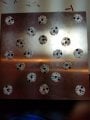
So in the instance above I have wired 4 strings (15 led in series With 15ohm/.5w resistor on the NEG end) in parallel. This lights up and runs great. Out of the 5 plates(full units) that I made, 2 of them had resistors that burnt up within 10 seconds. The other 3 plates worked as planned with no issues.
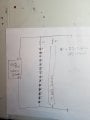
Above is the simple wiring diagram i used to wire my first version. I recalculated and determined that I could add one additional LED to make an even 48v.
So my question is: why are the resistors burning? My supply is 48 V and my 15 LED in series at 3.2v equals 48V. I have some plates that require different wattage but always in increments of 15watts so I can always use the 48V power supply.
Trying to make this work:
48V-1000Watt Power Supply
Each LED = 1W, VF (3.2-3.6vdc), IF (350mA)
So in the instance above I have wired 4 strings (15 led in series With 15ohm/.5w resistor on the NEG end) in parallel. This lights up and runs great. Out of the 5 plates(full units) that I made, 2 of them had resistors that burnt up within 10 seconds. The other 3 plates worked as planned with no issues.
Above is the simple wiring diagram i used to wire my first version. I recalculated and determined that I could add one additional LED to make an even 48v.
So my question is: why are the resistors burning? My supply is 48 V and my 15 LED in series at 3.2v equals 48V. I have some plates that require different wattage but always in increments of 15watts so I can always use the 48V power supply.