Siemen or Ohm

Thread Starter

Martino Chiro

Joined May 1, 2015
128
What is the reason some people (chemist, agronomist, biologist) prefere to measure the Conductance (or Conducibility) of a ground (or
chemical solution for example), instead to use the more traditional (for me) Resistance (or Resistivity) ?
 

Papabravo

Joined Feb 24, 2006
22,058
Conductance and res
What is the reason some people (chemist, agronomist, biologist) prefere to measure the Conductance (or Conducibility) of a ground (or
chemical solution for example), instead to use the more traditional (for me) Resistance (or Resistivity) ?
Conductance, measured in Siemens, is the reciprocal of resistance measured in ohms. In a series circuit you can add resistances together to get a total. In a parallel circuit you can add conductances together to get a total. In electronics we use both conductance and resistance depending on the problem. I don't know if this applies to your question, but it is possible.
 

OBW0549

Joined Mar 2, 2015
3,566
What is the reason some people (chemist, agronomist, biologist) prefere to measure the Conductance (or Conducibility) of a ground (or chemical solution for example), instead to use the more traditional (for me) Resistance (or Resistivity) ?
I think in most cases the choice depends on which electrical property (resistance or conductance) is the best analog for the underlying physical property sought by the measurement. Sometimes (such as when measuring temperature with a platinum RTD) resistance provides the most accurate (or convenient) representation of whatever physical quantity the user is trying to assess; other times (such as assessing soil water content), it may be conductance.

The same choice presents itself in the case of impedance vs. admittance, or capacitance vs. elastance.
 

Reloadron

Joined Jan 15, 2015
7,863
Well the former unit of conductance was the Mho which is Ohm spelled backwards. The Mho is the reciprocal of an ohm, a former unit of electrical conductance. Alas, the poor little mho is no more. The electrical unit of conductance is now called the Siemens as was mentioned. That being the system international derived unit of conductance. So while the Ohm is the unit of resistance the Siemens is the unit of conduction. They are in fact reciprocal values in thet Siemens = 1 / Ohms and Ohms = 1 / Siemens. Each is a different engineering unit, I believe best summed up above by OBW0549:
I think in most cases the choice depends on which electrical property (resistance or conductance) is the best analog for the underlying physical property sought by the measurement.

Ron
 

OBW0549

Joined Mar 2, 2015
3,566
Well the former unit of conductance was the Mho which is Ohm spelled backwards.
And likewise, the (unofficial) unit of elastance is the daraf-- farad spelled backwards. And like the venerable mho, it was denied the dignity of acceptance by the SI, which prefers the reciprocal farad, F^-1. Sad, and awkward IMO.

You almost never see elastance used in electronic work, but I used it frequently when designing capacitive displacement sensors, proximity sensors, and the signal conditioning circuitry used with them, mainly because it simplified the mathematics.
 

MrChips

Joined Oct 2, 2009
34,630
What is the reason some people (chemist, agronomist, biologist) prefere to measure the Conductance (or Conducibility) of a ground (or
chemical solution for example), instead to use the more traditional (for me) Resistance (or Resistivity) ?
There is no reason except a different way of looking at the same thing. Which you choose depends on your perspective.
Conductance is the reciprocal of resistance. Since it is easy to convert from one to another your choice is simply perspective.
As Papabravo points out, you add resistances that are in series, you add conductances in parallel.

Another example:
Period vs frequency
 

GopherT

Joined Nov 23, 2012
8,009
What is the reason some people (chemist, agronomist, biologist) prefere to measure the Conductance (or Conducibility) of a ground (or
chemical solution for example), instead to use the more traditional (for me) Resistance (or Resistivity) ?
Because the chemist, biologist, etc use the most convenient unit.
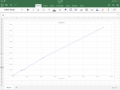
When you want a linear relationship or a proportional relationship (more dissolved solids yields a higher output), they use conductivity.


Conductivity as function of salt concentration.

E65345B6-B36D-45DF-BB98-7AC9C37BC93A.png

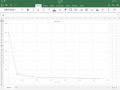
And Resistance...
Plotting it on log paper or curve fitting and determining standard error becomes a pain vs simply reporting conductivity.

D1E64E79-4693-472B-8383-11F703BB6A11.png
 

wayneh

Joined Sep 9, 2010
18,090
Because the chemist, biologist, etc use the most convenient unit.
And in those fields, conductivity is usually a convenient proxy measurement of something else of interest, like salt as you have shown. A biochemist doesn't much care about conductivity per se, but uses conductivity as a means of measuring something else that, again as you've shown, is directly proportional to conductivity.
 

MrChips

Joined Oct 2, 2009
34,630
Exactly.

Some people plot resistance versus temperature for a NTC (negative temperature coefficient) thermistor.

Plot conductance versus temperature and you get a different perspective.
 

KL7AJ

Joined Nov 4, 2008
2,229
What is the reason some people (chemist, agronomist, biologist) prefere to measure the Conductance (or Conducibility) of a ground (or
chemical solution for example), instead to use the more traditional (for me) Resistance (or Resistivity) ?
I wrote an article on this in QST a while back, "Is the glass half full or half empty?" and humorously lamented the fact that us electronics folks must be pessimistic, since we measure circuits by how BADLY they conduct. In fact, for parallel circuits, the Mho is more convenient. (By the way, the MHO was changed to the Siemens in 1971, when the SI determined that all electrical units had to be named after dead science guys).
I still prefer the MHO, because it's easy to remember that with Mo' MHO you get mo' flow!
A lot of radio science does, in fact use conductance, especially when characterizing the ionosphere.
WHY the ohm became the norm in electrical work is a bit obscure. I would say that it's probably because POWER is a much more direct calculation using resistance than conductance.
I teach all my students to learn to be comfortable with both.
 

MrChips

Joined Oct 2, 2009
34,630
Yes, we are forever applying resistance, measuring noise, distortion, non-linearity, instability, input offset, and applying lots of negative feedback to solve our problems. Psychologists would consider our lot quite a basket case.
 

MrAl

Joined Jun 17, 2014
13,668
Hi,

What sometimes makes one preferred over the other is when there is a linear relationship with one but the reciprocal will not be.

If you plot y=x over x=0 to 1 you get a linear curve, if you plot y=1/x you get a hyperbola which is more complicated to deal with and describe.

Some references still refer to the mho :)
 
Last edited:
Top