Should I expect a brushless motor to be constant?

Thread Starter

spinnaker

Joined Oct 29, 2009
7,830
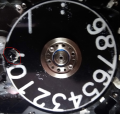
I have one of those cheap eBay brushless motor controllers driving a hard drive motor. I have a disk that I milled out of Lexan mounted on the drive. There is a magnet embedded in the disk that trips a hall sensor.

upload_2019-1-20_11-45-44.png


Every once in a while the timing chances. You should be able to see the issue in the video below. Should I expect the timing to be the same for every rotation?

Could it be the BLDC that is the issue? Or might my problem be elsewhere? How could I prove the issue is actually coming from the BLDC?


Give the video about 20 seconds. My scope is set to 2ms per division.


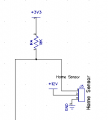
The sensor circuit is pretty simple. That connector is connected to the sensor via a 3 wires maybe 15cm or so.
upload_2019-1-20_12-5-39.png
 

MaxHeadRoom

Joined Jul 18, 2013
30,690
What are the details/nature of the controller, usually there is two methods to commutate a brushless motor, either a hall detector for each winding, or one signal that is read by the controller and from then on the BEMF is used to synchronise.
I have never experimented with HD motors.
Max.
 

Thread Starter

spinnaker

Joined Oct 29, 2009
7,830
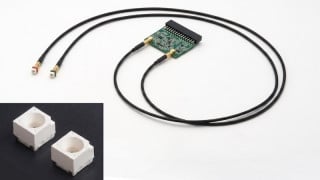
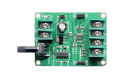
I don't know anything about the controller. As I mentioned it is one of those cheap controllers on eBay. Finally found a photo.

upload_2019-1-20_12-58-10.png
Here is the description LOL. ;)

  • The driver board can drive hard disk brushless motors ,CD-ROM brushless motor and so on , the Mini 3-wire or 4-wire without hall brushless motor ,it's have reverse voltage protection , Over current protection , Phase inversion control
  • driver voltage : DC5-12v
  • working voltage : less than equal 1.8A
  • speed adjust :0%-100%
  • note : Brushless motor line of receiving terminal drive plate must be pressed sturdiness, poor contact will lack of phase operation and burn out the chip.Board terminals fixed screw clearance, please use coarser line connected to the board.

U1 is a TI chip
18873
73IG4
A4Re

U2 has no number or label
 

Thread Starter

spinnaker

Joined Oct 29, 2009
7,830
There are only 4 wires coming from the motor. They are all going to windings. Would that mean there are no sensors in the motor?
 

MaxHeadRoom

Joined Jul 18, 2013
30,690
Sounds that way, either a 2ph motor or 3ph with star point?
Assuming it is not the same as a BLDC fan motor and has an internal controller IC which senses the magnet?.
Max.
 

Thread Starter

spinnaker

Joined Oct 29, 2009
7,830
Sounds that way, either a 2ph motor or 3ph with star point?
Assuming it is not the same as a BLDC fan motor and has an internal controller IC which senses the magnet?.
Max.

It is a hard drive motor. I know nothing about them. There is no controller unless it is encased inside the motor housing.

I am beginning to think part of my issue was trigger level. I am still seeing a very slight fluctuation but not near as bad as the video.
 

ian field

Joined Oct 27, 2012
6,536
I have one of those cheap eBay brushless motor controllers driving a hard drive motor. I have a disk that I milled out of Lexan mounted on the drive. There is a magnet embedded in the disk that trips a hall sensor.


View attachment 168291


Every once in a while the timing chances. You should be able to see the issue in the video below. Should I expect the timing to be the same for every rotation?

Could it be the BLDC that is the issue? Or might my problem be elsewhere? How could I prove the issue is actually coming from the BLDC?


Give the video about 20 seconds. My scope is set to 2ms per division.


The sensor circuit is pretty simple. That connector is connected to the sensor via a 3 wires maybe 15cm or so.

View attachment 168292
HDD platter motors should be pretty constant because the format is more or less soft sectored. Older types have hall sensors on the stator, but I've hears some are now using reactance position sensing. Some "energy star" types may have an idle RPM mode that allows housekeeping access at low power for a seek rate penalty - a floating speed pin could cause a few antics.
 

Thread Starter

spinnaker

Joined Oct 29, 2009
7,830
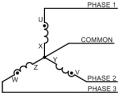
I am wondering if I have it connected correctly. There are 4 terminals.

Common
W
V
U

Certainly common is common. ;)

Does W, V and U mean anything to anyone? If so how do I determine those on the hard drive?
 

Danko

Joined Nov 22, 2017
2,173
Does W, V and U mean anything to anyone? If so how do I determine those on the hard drive?
You do not need to determine them. For change rotating direction you can swap any two wires from U, V, W.
upload_2019-1-21_10-15-32.png
There are only 4 wires coming from the motor. They are all going to windings. Would that mean there are no sensors in the motor?
There are no sensors in motor.
Should I expect the timing to be the same for every rotation?
Yes. It is guaranteed by rotor design.
 
Last edited:

Danko

Joined Nov 22, 2017
2,173
But what about the controller? Wooldn't a poor design cause that jitter? How can I verify the proper operation of the controller?
Scope voltage pulses on any winding and check stability.
EDIT:
Speed of rotating can not jump anyway because of rotor inertia. It can change slowly and smoothly only, after frequency changing by controller.
Gap between magnet and Hall sensor should be very stable and sensor need to be hard mounted on motor case.
 
Last edited:

MisterBill2

Joined Jan 23, 2018
27,664
So what is the hall effect output connected to? And what is the scope synch signal? If the drive is running open loop and the pickup is going to the scope and not the board then it is a scope synch issue not a motor issue. U, V, W are standard 3-phase notations, different than R,S, and T, the commonest 3-phase notations. And it is certainly a 3-phase motor because a 2-phase can start and run in either direction, and the controller photo shows a direction selection connection. If nothing is connected there then the controller may be getting confused occasionally. That happens with stuff some times, especially CMOS inputs.
 

Thread Starter

spinnaker

Joined Oct 29, 2009
7,830
Sensor is connected to a pic. I mentioned above that I was wondering if the issue I am seeing is a trigger issue. I will augment that and say it might be software too.

The other thing that just hit me is the sensor itself. I wonder if the vibration of the drive is causing the sensor to move slightly. I only have it glue gunned down. I might try epoxing it down. That glue gun glue is a bit rubbery. I suppose the sensor can move just a bit through vibration. That sensor moving in relation to the magnet could cause that jumping.
 

ian field

Joined Oct 27, 2012
6,536
So what is the hall effect output connected to? And what is the scope synch signal? If the drive is running open loop and the pickup is going to the scope and not the board then it is a scope synch issue not a motor issue. U, V, W are standard 3-phase notations, different than R,S, and T, the commonest 3-phase notations. And it is certainly a 3-phase motor because a 2-phase can start and run in either direction, and the controller photo shows a direction selection connection. If nothing is connected there then the controller may be getting confused occasionally. That happens with stuff some times, especially CMOS inputs.
Hall sensors were traditionally mounted on the stator and served the purpose of "commutating" electronically as opposed to the armature presenting the right commutator segment to the brush at the right time. Back emf sampling is increasingly taking over as the means to measure various motor parameters.
 

shortbus

Joined Sep 30, 2009
10,049
Hall sensors were traditionally mounted on the stator and served the purpose of "commutating" electronically as opposed to the armature presenting the right commutator segment to the brush at the right time.
Think you meant rotor not stator. It's the rotor that needs to be in the correct position when the stator is turned on. And it's a BLDC so where does a brush come into this? The Halls or some use opto interrupters, take the place of brushes and commutator bars.
 

MisterBill2

Joined Jan 23, 2018
27,664
Think you meant rotor not stator. It's the rotor that needs to be in the correct position when the stator is turned on. And it's a BLDC so where does a brush come into this? The Halls or some use opto interrupters, take the place of brushes and commutator bars.
The sensors are installed someplace on the stator and they detect the position of a magnet on the rotor. Putting the hall sensors on the rotor will quickly result in terribly twisted wires.
 

MisterBill2

Joined Jan 23, 2018
27,664
The explanation about how brushless motors work when they are operated in an open loop mode is that they run like synchronous motors, with the rotor permanent magnet poles following the stator's rotating magnetic poles. The following will usually be quite good if the load is steady and the torque requirement does not cause any slip. Under stable conditions the rotation will be as stable as the oscillator feeding the sequencing circuit. But if the voltage driving the coils jumps around then there may be some variations..
 

MaxHeadRoom

Joined Jul 18, 2013
30,690
The sensors are installed someplace on the stator and they detect the position of a magnet on the rotor. Putting the hall sensors on the rotor will quickly result in terribly twisted wires.
Modern BLDC servo motors now have commutation tracks on the encoder. Considered more precise than physical Hall sensors.
Motors such as ECM used in HVAC use the initial excitation and rotor sense method. Hence the initial slight oscillation of the rotor when starting.
Max.
 

Attachments

MisterBill2

Joined Jan 23, 2018
27,664
Modern BLDC servo motors now have commutation tracks on the encoder. Considered more precise than physical Hall sensors.
Motors such as ECM used in HVAC use the initial excitation and rotor sense method. Hence the initial slight oscillation of the rotor when starting.
Max.
It is certainly true that a current production BLDC motor could have an encoder with added commutation outputs, but this motor only has 4 wires, all going to coils. And no encoder is mentioned anywhere except in your posts. so in this case there is no encoder or hall pickup involved in the motor operation, only the three coils. The motor presented is running in a synchronous motor mode. In a HVAC system the load is variable and so must the speed be variable, both for efficiency and functioning. HVAC is a quite different application from a hard disc drive.
 
Top