Reworking a BGA

Thread Starter

TechWise

Joined Aug 24, 2018
151
I have a pair of Texas Instruments F28379D controlCARDs, link here: http://www.ti.com/tool/TMDSCNCD28379D

Both have failed on me, with the microprocessor becoming very hot, I assume I have accidentally injected something nasty into one of the GPIO pins. The cost of the complete board is around £160 however the cost of the actual microprocessor is only £18. If, for argument's sake, the MCU could be desoldered and replaced this would represent a saving of £280 compared with two new boards.

It is a NFBGA-337 package, link here: http://www.ti.com/product/TMS320F28...arch=Search-EN-everything&usecase=part-number

What is the feasibility of replacing a package like this by hand? The tools at my disposal are:
  1. Various soldering irons and tips.
  2. Hot air gun with wide nozzle.
  3. Hot air pencil with narrow nozzle.
  4. Proper reflow oven which can have custom set profiles, not an Arduino and Sandwitch toaster hybrid ;)
  5. Various fluxes, solder pastes, solders and desoldering wicks.
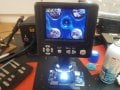
  6. Basic magnifying equipment (and a microscope that leaves much to be desired)
  7. Just about all the snips, pliers and tweezers you could ever want.

My skill level is that I have extensive experience in through hole and SMD assembly and rework (just not with BGA), a pretty steady hand and good eyesight. Doing a PhD in Power Electronics and keen to learn! :)
 

dl324

Joined Mar 30, 2015
18,321
Working with BGA is not for a DIYer. Even commercial manufacturers allow for a certain amount of rejects.

If you have access to commercial equipment, that changes things.
 

AlbertHall

Joined Jun 4, 2014
12,625
In a previous life one of my tasks was to support BGA rework, setting profiles and stencils, repairing the vacuum pump and the like. There was one chip which I could not replace successfully no matter what I did. We sent some boards and chips to the manufacturer of the equipment so they could tell us how to do it, and they couldn't get it to work either! We had one of the best toys I've played with to help with this work. It was a camera which looked down a narrow prism so you could see underneath the chip and understand why it didn't work.

Given the difference in price it is probably worth a go at DIY - once.
 

Thread Starter

TechWise

Joined Aug 24, 2018
151
We don't have an actual BGA rework station but we are fairly well equipped apart from that. Certainly YouTube would suggest that a preheater and a hot air gun is all that is required to successfully remove the old component and we have both of those things. I have nothing to lose by pulling the old component off and seeing what condition the pads are in. It then looks as though the replacement can be fitted in the reflow oven.

Do new BGAs come with the solder preballed?
 

ErnieM

Joined Apr 24, 2011
8,415
Reballing is also not a DIY project.
Reballing isn't that difficult. I did it a few times, but it helped I had a belt furnace to use to reflow.

Basically you wick off the old solder, flux, and add solder balls (purchased not made). Tweezers get them close to position, and surface tension does the rest.
 

Thread Starter

TechWise

Joined Aug 24, 2018
151
The new MUCus, can you program them before/after recalling?
I am not quite sure what you are asking. I am assuming that if I buy the new MCU as a single IC and replace it on the PCB then I will be able to program it like the old one from my PC. I am assuming there is nothing preloaded on the IC that I will need to flash the new one with.
 

Thread Starter

TechWise

Joined Aug 24, 2018
151
Reballing isn't that difficult. I did it a few times, but it helped I had a belt furnace to use to reflow.

Basically you wick off the old solder, flux, and add solder balls (purchased not made). Tweezers get them close to position, and surface tension does the rest.
I have now looked into this and I am roughly familiar with what this would involved. If the new ICs are preballed then hopefully it's not something I need concern myself with.
 

atferrari

Joined Jan 6, 2004
5,011
I am not quite sure what you are asking. I am assuming that if I buy the new MCU as a single IC and replace it on the PCB then I will be able to program it like the old one from my PC. I am assuming there is nothing preloaded on the IC that I will need to flash the new one with.
I was presuming the opposite. Good for you.
 

Thread Starter

TechWise

Joined Aug 24, 2018
151
I have removed the old IC today. Loads of flux, preheat from underneath and then heated all over the top of the package with hot air. Heated all over for a few seconds and then lifted with tweezers. No pads have been ripped from the PCB, and all the pads look to be in good condition.

I gave it a good clean up with loads of flux and solder wick then cleaned up with a flux remover. I have studied it under the microscope and all looks well. The solder mask has come away in places next to a couple of vias but it doesn't look like this will be a problem unless the alignment of the new part is so far out that surface tension pulls it into one of these bare areas instead of onto the pad.
 

Attachments

Thread starter Similar threads Forum Replies Date
M Digital Design 3
Top