Resistor Advice

Thread Starter

Bamacruiser98

Joined Aug 11, 2025
5
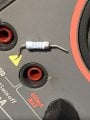
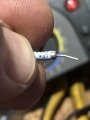
Hello all, I’ve worked on my own stuff for years now but I’ve just dived into the electronics aspect of it all in the last couple years so I still have a lot to learn. I’m just about finished rebuilding my abs unit for my 98 land cruiser aside from switching out a few resistors. So the unit has a total of seven resistors. The three that need replacing are labeled 330J 1W .81, all three of them tested right around 35ohms so that’s bad right? I’m pretty sure they control the anti lock brake/skid etc. One had been soaked with brake fluid for no telling how long. Went to junk yard to check the Toyotas/Lexus vehicles from around that same year, found some but they all tested 35ish too. I’m obviously missing something obvious I’m sure or do these type resistors degrade after a couple decades? So my main question is what new modern resistor could I solder in their places. Again they read 330J 1W .81.
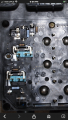
I’ll attach pictures as well but I’m hoping someone can help bc I’ve tried to run new ones down with no luck. Thank you
 

Attachments

Thread Starter

Bamacruiser98

Joined Aug 11, 2025
5
That should be 330 Ohm with +/- 5% tolerance.
Ok, couple questions, what is the .81 and why do you think all the other resistors from other Toyotas at the junk all read around 35ohms? My only guess is they only really last 20 or so years bc I tested around 8 that I took out of other vehicles, all the same.
 

dl324

Joined Mar 30, 2015
18,234
The three that need replacing are labeled 330J 1W .81, all three of them tested right around 35ohms so that’s bad right?
If the labeling is reflective of the color code that would be used, 330 would be 33 ohms. Have no ideal what the .81 means...
Went to junk yard to check the Toyotas/Lexus vehicles from around that same year, found some but they all tested 35ish too. I’m obviously missing something obvious I’m sure or do these type resistors degrade after a couple decades? So my main question is what new modern resistor could I solder in their places. Again they read 330J 1W .81.
33 ohms.

Were you measuring the resistors in-circuit? Or with one, or both, leads removed? The former can give questionable results.
 

Thread Starter

Bamacruiser98

Joined Aug 11, 2025
5
If the labeling is reflective of the color code that would be used, 330 would be 33 ohms. Have no ideal what the .81 means...
33 ohms.

Were you measuring the resistors in-circuit? Or with one, or both, leads removed? The former can give questionable results.
Thanks, no def out of circuit. I figured most of them were bad but apparently not. Look it I’m obviously pretty ignorant when it comes to this so I even looked up what these resistors should show on ohms so that’s why I thought they were all bad. I read that they should be showing around 330 ohms of resistance but you all corrected that for me so that’ll def help speed this repair up.
 

MrChips

Joined Oct 2, 2009
34,656
The resistor is 33 Ω 1 W.
Nothing wrong with them.

Measuring in-circuit or out-of-circuit does not matter in this case. If there were other things in-circuit, your measured resistance would be lower, not higher.
 

dl324

Joined Mar 30, 2015
18,234
I even looked up what these resistors should show on ohms so that’s why I thought they were all bad. I read that they should be showing around 330 ohms
Where was it that indicated 330 ohms? It's more typical for resistors with numbers referring directly to ohms to have the Ω character present. Without it, one would assume that it was a numerical representation of the typical color code. 3-3-0 would be 33 X 10^0 ohms.
 

Jon Chandler

Joined Jun 12, 2008
1,564
Nobody has actually explained what "330" means.

The first 2 digits are the value of the resistor. The third digit is the number of zeros to add.

330 = 33 plus no zeros =: 33 ohms

331 = 33 plus 1 zero = 330 ohms

333 = 33 plus 3 zeros = 33,000 = 33k ohms.

So your 35 ohm reading is perfectly normal and ok.


A note about measuring resistors in circuit – other components may be in a series/parallel arrangement with resistor being measured. These other components may make the measured resistance lower than expected but never never greater than expected.
 

panic mode

Joined Oct 10, 2011
4,887
true but without datasheet one can only guess if this is meant to be 33 or 330 Ohm. since there is few of them and they all show the same reading, pretty sure it is 33 Ohm.
 

MisterBill2

Joined Jan 23, 2018
27,236
That should be 330 Ohm with +/- 5% tolerance.
NO, not 330 ohms. 330 means 33 times ten to the zero power, which equals one. So the marked value is 33 ohms. And 35 is close enough.
Next question: What sort of problem made you check the resistors, ?? They certainly do not look damaged.
So what is the complaint that has you checking the ABS system?? Usually the failure is in the wheel speed sensing connections. Those connections are subject to constant flexing and road dirt and nasty water abuse. The wheels part of the vehicle gets the most abuse of any portion..
 

activerfid

Joined May 30, 2020
31
The white resistors in your photos appear to be flameproof metal-oxide 33 Ohm +/- 5%. The .81 may be the derating temperature (81C). Possibly Koa Speer Electronics manufactured, though we can't see the brand marking.
 

MisterBill2

Joined Jan 23, 2018
27,236
REALLY!! If the ABS system is failing to operate as expected, the very first thing to check is the "ABS Disable" switch, and then the power fuses, because they are easy to check. Then check the brake fluid level. After the easy checks, then check the wheel sensors. A resistance check of each wheel sensor at the ABS controller should not be that difficult with an ohm meter.
When it gets to checking the actual electronics module, while the resistors are the easiest to check, they are the components least likely to fail.
 
Top