RC-Coupled BJT Amplifier

Thread Starter

StellWalker

Joined Dec 12, 2016
7
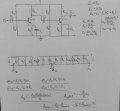
I want to design RC-Coupled BJT Amplifier. Voltage gain for 1st stage has to be 20, for 2nd stage is 10. (beta=125(1st stage),beta=50(2nd stage)). Vcc is 20V for both of them. I want to find resistors values.
 

MrAl

Joined Jun 17, 2014
13,672
I want to design RC-Coupled BJT Amplifier. Voltage gain for 1st stage has to be 20, for 2nd stage is 10. (beta=125(1st stage),beta=50(2nd stage)). Vcc is 20V for both of them. I want to find resistors values.
Hi,

Well you have to show some work of your own first, and how you attempted to solve this. That's the way we roll in the shire of the homework section :)

Actually this helps people here help you better because then they know what you and/or your course instructor is expecting by way of an answer and method.
 

MrAl

Joined Jun 17, 2014
13,672
Hello again,

It looks like you are attempting to solve this, which is good :)

One slightly unusual aspect of this problem is that there does not seem to be any output impedance specification, and i also dont see any input impedance specification. That does make it easier though.
One way you can do this is to start with the output stage, selecting collector and emitter resistances to suite the gain requirement, bias that stage, then figure out what the input impedance is and design the first stage to drive that properly while getting the right gain for the first stage also.
If you want to do it all in one shot then you have to set up a simultaneous equation to calculate any unknown resistors all at the same time. I mention this because it looks like you are starting to try that method first. You can do a lot once you have the transfer function of the whole amplifier, but since you have individual stage gain requirements you also need to calculate the gain of each stage anyway.

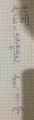
Just one question, when you write something like Rc/re which usually means the collector resistor divided by the internal re of the transistor, or do you mean Rc/RE which would usually mean the collector resistor divided by the external (circuit) emitter resistor?
Or alternately, are you considering each emitter capacitor a virtual short so that you only want to consider re and not RE? In that case we would be assuming a high frequency relative to the capacitor impedances, which is typical.
 
Last edited:
Top