Radiation analyzer - comparator excites amplifiers

Thread Starter

Zuavirr

Joined Dec 28, 2017
25
Hello,
I am trying to finish the assembly of the semiconductor radiation analyzer that I described here:

https://hackaday.io/project/159909-gamma-pin-semiconductor-radiation-detector
Unfortunately there appears to be a problem with the crosstalk in my project.

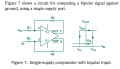
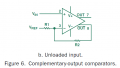
The comparator circuit is designed to detect positive pulses. The 3-stage preamplifier conditions the signal, while the last op amp is used as a voltage subtractor. By driving the subtractor with an DAC I set noise level to be just below the ground so that only the pulses generated by radiation are measured. Then the signal is delivered to the comparator which should trigger the clamp of the peak detector, but instead of single pulses the comparator starts to generate a rectangular wave. The whole circuit is very sensitive to any signals and goes nuts.

I used Tina-TI simulations to get the hysteresis loop of about 1mV. Increasing the hysteresis in reality leads only to change of the oscillation frequency. I have checked it with a source, and even with the signal level set quite low a single pulse still triggers the comparator to oscillation.

Is there a solution to this problem or it has to do something with the board design?
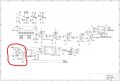

InkedSch_LI.jpg
 

Thread Starter

Zuavirr

Joined Dec 28, 2017
25
Ahhh, thanks to your suggestion I took a second look at the note I took this solution from:
http://www.analog.com/media/en/anal...ng-comparator-instability-with-hysteresis.pdf
It appears that I forgot about the dual supply of the comparator.


upload_2018-9-14_16-37-15.png


The solution is to remove the R29 and it should work fine. Just like that:
upload_2018-9-14_16-41-4.png

Thank you !

I have tested the solution without R29 but still the comparator excites the amplifiers and nothing has changed for the better. How come it still doesn't work the right way, is too sensitive? Maybe I should have added more power filtering capacitors close to each IC?
 
Last edited:

KeithWalker

Joined Jul 10, 2017
3,607
Ahhh, thanks to your suggestion I took a second look at the note I took this solution from:
http://www.analog.com/media/en/anal...ng-comparator-instability-with-hysteresis.pdf
It appears that I forgot about the dual supply of the comparator.


View attachment 159886


The solution is to remove the R29 and it should work fine. Just like that:
View attachment 159888

Thank you !

I have tested the solution without R29 but still the comparator excites the amplifiers and nothing has changed for the better. How come it still doesn't work the right way, is too sensitive? Maybe I should have added more power filtering capacitors close to each IC?
You have removed the positive feedback on the positive input but you still have it on the negative one so it will still be unstable.
 

Thread Starter

Zuavirr

Joined Dec 28, 2017
25
But I need the positive feedback on the subtracting input to keep even the lowest hysteresis loop to prevent the comparator from multiple switching during single pulse detection. Maybe it is also important that earlier I had the same problem with the 4-stage op amp circuit. I had to reduce the amplification from 1000x to about 100x because the output signal was affecting the input and it began to oscillate too.
I will increase the capacitances in the op amp stages from 1pF to 100pF and see if it changes anything.
 

KeithWalker

Joined Jul 10, 2017
3,607
But I need the positive feedback on the subtracting input to keep even the lowest hysteresis loop to prevent the comparator from multiple switching during single pulse detection. Maybe it is also important that earlier I had the same problem with the 4-stage op amp circuit. I had to reduce the amplification from 1000x to about 100x because the output signal was affecting the input and it began to oscillate too.
I will increase the capacitances in the op amp stages from 1pF to 100pF and see if it changes anything.
I don't understand why you are trying the make the hysteresis of the comparator so low. What is the minimum size of the pulses at the comparator input that you are trying to detect? The comparator has very high gain and low offset so even a small amount of positive feedback will cause instability. If you want to eliminate multiple triggering from a single input pulse, you should be adding hysteresis, not reducing it.
 

Thread Starter

Zuavirr

Joined Dec 28, 2017
25
I don't understand why you are trying the make the hysteresis of the comparator so low. What is the minimum size of the pulses at the comparator input that you are trying to detect? The comparator has very high gain and low offset so even a small amount of positive feedback will cause instability. If you want to eliminate multiple triggering from a single input pulse, you should be adding hysteresis, not reducing it.
I wanted to keep the resolution as high as possible so the hysteresis value was set to be about 0,5mV which is a value of a single bit in my ADC.
It will be increased to about 10mV to possibly enhance stability
Note the resistor (R2) on the application note connected to 0v. There is no such connection in your circuit.
Also see:
http://www.ti.com/lit/ug/tidu020a/tidu020a.pdf
I have looked at every R2 in the AD application note and still can't find the one you mentioned - R2 connected to 0V or GND.
Could you clarify or highlight which one you had in mind?
 

marcf

Joined Dec 29, 2014
300
Note the junction point of R3,R4 and R2 is connected to AR8561 Pin 2. Note R2 is connected to GND. Without R2 the circuit just has an uncontrolled amount of feed back. R2 controls this. Note the "SETS Hysteresis " note on R4. The value of R4 and R2 determines how much hysteresis the circuit has.
 

Attachments

Top