Hello,
I'm a micro-newbie. I have few questions please!
Is it preferable to write C instead of Assembly for such a newbie or pure Assembly/C?
Is it Ok to mix C and Assembly in 1 source code?
Hello,
I'm a micro-newbie. I have few questions please!
Is it preferable to write C instead of Assembly for such a newbie or pure Assembly/C?
Is it Ok to mix C and Assembly in 1 source code?
Yes, it is okay to mix C and assembly, just be sure to know what you are doing...
As far as language choice, it depends. For timing critical requirements, I use assembly, but for the most part, and so others understand what you are doing, C is the preferred choice.
There is absolutely no compelling reason to ever learn assembly, no less learn it before any other programming language.
C is obtuse enough all by itself, though it so useful that can be overlooked.
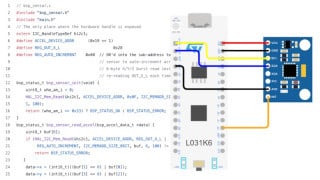
Several C compilers allow you to define assembly instructions "inline," or within a C file, but for anything complex I would consider keeping the assembly by itself and letting the linker merge things. (A linker is a program that stitches several code files together to make one final executable file.)
C on purpose is designed to give 95% the freedom of assembler once you properly understand pointer arithmetic. It however isolates such arithmetic from the hardware implementation (that is, various addressing modes).
You still have to be aware the banking, RAM, ROM, etc., but the compiler will generate the sequences automatically.
If you copy using a pointer and an index plus postincrement, to a structure with an index as well, you need quite a number of assembler instructions, not to speak of register reloading, and what is worse, register backup.
Tell me a language that implements complex addressing and is not obtuse.
In C you can spell many times deeper expression within a single line- to a degree which would be impossible to maintain in assembler. That is why you normally would forget about assembler.
If you use assembler, you need to use special addressing modes, for instance linear address space, this makes things a bit easier, but is NOT present on some MCU models.
In C on the other hand, you prefer to even minimize the number of lines further to keep the total size of the source manageable. And you'd pay a tradeoff that the resulting assembler source will be less efficient than assembler. Potentially. But, you can change and edit C so quickly, that you are often able to redesign the addressing the algorithm is using. In assembler, once it works, you are happy, and never touch it anymore (speak, very hard to change or maintain).
Hello,
I'm a micro-newbie. I have few questions please!
Is it preferable to write C instead of Assembly for such a newbie or pure Assembly/C?
Is it Ok to mix C and Assembly in 1 source code?
It makes no difference. The C compiler will emit assembler in the end anyway. Each time you use assembler, you tie that source to a specific MCU (except trivial stuff that you could code in C easily).
As long as your program is small, and you do not plan to reuse the code, or to extend, change and maintain it, it does not matter much.
Typically, there will be 2 or 3 smaller sections containing assembler. For instance if you want to implement a software USART, you would prefer assembler to control the timing.
But once you have a small network of let say 10 or so functions containing assembler, let say for I2C, and want to reuse it for a different PIC, you will encounter problems.
So, people normally live with a speed tradeoff, or they use hardware USART.
For a newbie, mix C and assembler like you wish, use whatever is easier for a particular section of the program. Later, change to C whatever you can.
The absolute variables allocation and the reloctable allocation as well (for assembler) are both a pain. This is one very big advantage of C. You only declare the variables inside the function, they will be allocated automatically.
If you copy using a pointer and an index plus postincrement, to a structure with an index as well, you need quite a number of assembler instructions, not to speak of register reloading, and what is worse, register backup.
While you may have needed that once as a work around for some well known errors in one version of one compiler, generally (and even with the C8 compiler under version 1.10) you no longer need such dramatic work-arounds and can write statements such as:
to copy a buffer from one RAM location to another.
And it is precisely statements such as "while (*Dest++ = *Source++);" which will copy the entire contents of one zero terminated string from one buffer to another, including the zero termination that lead me to call C "obtuse"to a newbie. There is a lot of work going on in a seemingly small statement.
And you lose the advantage of knowing exactly how long each instruction takes. What if you have 20 instruction cycles to process an interrupt in your ISR? Do you simply hope your compiler will give it to you?
As we discussed in a previous thread , yes, a FPGA would probably used in a professional setting, however, even if you are using an ARM processor and your ISR has to be as fast as possible, you will be expected to optimize your code in assembly.
As we discussed in a previous thread , yes, a FPGA would probably used in a professional setting, however, even if you are using an ARM processor and your ISR has to be as fast as possible, you will be expected to optimize your code in assembly.
If you squeese a device for the max. possible in terms of optimizing instructions to use the least of clock cycles, ask yourself if you are really on the right track.
If you squeese a device for the max. possible in terms of optimizing instructions to use the least of clock cycles, ask yourself if you are really on the right track.
Most of the programs I write don't really need optimization. Also C code can be optimized. I mean download some of the zip's from that site, and examine it.
Would you like to go down that road?
Normally professional software is not so much optimized these days.
Either a more powerful chip is used, or parallel computing.
It is OK to give it a try and see if the C code can be spelled differently. It is OK to use some small assembler constructs. But doing programming work using these instruction cycle timing charts, to me these days seem to be over.
Either CPLD, more powerful chip, or parallel computing are the solutions.
Even if it is possible (on Atmel controllers) to do USB in software. I have looked at such a source code.

 Facebook
 Google
 GitHub
 Linkedin



 , yes, a FPGA would probably used in a professional setting, however, even if you are using an ARM processor and your ISR has to be as fast as possible, you will be expected to optimize your code in assembly.