Purchase Of 4XXX Series CMOS Chips

Thread Starter

elec_newbie

Joined Oct 19, 2023
21
Hi:

I received a mail order containing a lot of 4XXX Series CMOS Chips. They are in
plastic tubes. Is this a safeway to ship such items? How should I store these chips
so that they don't get zapped. The problem is that there is a mixture of devices
in each tube so it is necessary to remove them. Please advise.
 

nsaspook

Joined Aug 27, 2009
16,503
A representative image of the plastic shipping tube would be nice. I get tons of parts shipped in anti-static tubes that are usually marked.
1699307825859.png
I would worry more about removing the chips from the tube. That's when it's more likely to get bit by static discharge.
 

Thread Starter

elec_newbie

Joined Oct 19, 2023
21
A representative image of the plastic shipping tube would be nice. I get tons of parts shipped in anti-static tubes that are usually marked.
View attachment 306930
I would worry more about removing the chips from the tube. That's when it's more likely to get bit by static discharge.
Great. 1 tube says "Antistatic", one says "Conductive" and the other four say zip. I suppose the
chips are garbage. I have an antistatic wrist strap that they sent gratis. What should I clip the
thing to? Is it even worth keeping them now?
 

dl324

Joined Mar 30, 2015
18,491
I received a mail order containing a lot of 4XXX Series CMOS Chips. They are in plastic tubes.
It's common for them to be shipped in the original antistatic tubes the manufacturer ships them in. Be careful if they aren't labeled antistatic because some devices don't require them, so the manufacturer might not use them.
How should I store these chips so that they don't get zapped.
In the original packaging from the seller.
The problem is that there is a mixture of devices in each tube so it is necessary to remove them.
You can cut the tubes so you can store them by type. You can also store them in black antistatic foam, but be careful if you plan to store them for a long time. I have some foam that caused lead corrosion after 40-50 years.

If you cut them, be aware that some tubes are more brittle than others.
 

Thread Starter

elec_newbie

Joined Oct 19, 2023
21
It's common for them to be shipped in the original antistatic tubes the manufacturer ships them in. Be careful if they aren't labeled antistatic because some devices don't require them, so the manufacturer might not use them.
In the original packaging from the seller.
You can cut the tubes so you can store them by type. You can also store them in black antistatic foam, but be careful if you plan to store them for a long time. I have some foam that caused lead corrosion after 40-50 years.

If you cut them, be aware that some tubes are more brittle than others.
They are in the tubes, all mixed up so I can't even cut them.
 

BobTPH

Joined Jun 5, 2013
11,666
I do nothing to alleviate static problems, and I cannot think of a single failure that I could attribute to anything other than applying the wrong voltage or reverse voltage or shorting something while testing. Anti-static protection is way over hyped. It might make sense in a production environment, but for a hobbyist? Don’t worry, be happy.
 

schmitt trigger

Joined Jul 12, 2010
2,276
Based on a looooooooong experience in the electronics manufacturing sector, antistat tubes are the best way to preserve ICs.

BTW, where did you purchase them? I am actually looking for several CD40xx in PDIP package.
The major distributors have ceased to carry most of them.
 
Last edited:

dl324

Joined Mar 30, 2015
18,491
They are in the tubes, all mixed up so I can't even cut them.
As you acquire more parts, you'll get more antistatic packaging to reuse.

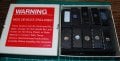
Antistatic foam in non-antistatic containers:
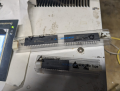
antistaticFoamInPlasticBox2.jpgantistaticFoamInCardboardBox.jpgantistaticFoamInPlasticBox.jpgnewarkPinkAntistaticFoam.jpg
The pink foam packaging was from Newark. Note that all pink foam might not be antistatic.

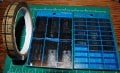
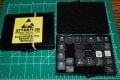
Antistatic foam in antistatic containers:
bugBoxesAntistaticTape.jpgantistaticFoamInAntistaticBox.jpglargeAntistaticBoxWithFoam.jpg
The blue boxes are called bug boxes and they're antistatic. I bought them on eBay and the original owner was a suspenders and belt type of person and used antistatic foam. The roll of tape to the left is antistatic.

Pink antistatic bag:
pinkAntistaticBag.jpg

Pink antistatic foam:
pinkAntistaticFoam.jpg
 

nsaspook

Joined Aug 27, 2009
16,503
I do nothing to alleviate static problems, and I cannot think of a single failure that I could attribute to anything other than applying the wrong voltage or reverse voltage or shorting something while testing. Anti-static protection is way over hyped. It might make sense in a production environment, but for a hobbyist? Don’t worry, be happy.
I'm basically with you on that but I know better than to tempt Murphy by saying it. Some of the early CMOS was very sensitive to static because pin protection was 'extra' die space wasted. Just about anything from the 80's on has much better immunity.
 

dl324

Joined Mar 30, 2015
18,491
the other four say zip. I suppose the
chips are garbage
If they're whole tubes, they're not antistatic. If they're cut offs, they might not have gotten any of the antistatic labeling.
I have an antistatic wrist strap that they sent gratis. What should I clip the
thing to?
I clip mine to earth ground. Or to my antistatic mat if I'm using it and the mat isn't grounded.
Is it even worth keeping them now?
I have some CMOS parts that someone gave me. The person didn't know how to store them properly, so they're all suspect now. I marked them with nail polish. You can see some in the large antistatic box with foam. I'll use them in breadboards because I can find bad ones using normal troubleshooting methods. I won't use them in any more permanent circuit.

BTW, I got some CMOS IC's from Newark that hadn't been handled properly. Some parts in cut down antistatic tubes had mangled leads. They gave me a refund for those parts because they were closeouts and I bought all of their remaining stock.
 

crutschow

Joined Mar 14, 2008
38,913
The old CD4000 series CMOS devices are reasonably resistant to static, since they have large gates with relatively high capacitance and thick oxides.
Newer, higher frequency CMOS devices, such as the 74HC series are smaller gates, and likely thinner oxides, so I would be more careful with those.
As long as you wear a wrist-strap and work on a grounded or non-static table or mat, you should be okay.
 

MrChips

Joined Oct 2, 2009
35,279
Wear anti-static wrist strap, follow anti-static procedures, and transfer the chips to anti-static containers.
Then sleep well.
 

Ian0

Joined Aug 7, 2020
13,310
I do nothing to alleviate static problems, and I cannot think of a single failure that I could attribute to anything other than applying the wrong voltage or reverse voltage or shorting something while testing. Anti-static protection is way over hyped. It might make sense in a production environment, but for a hobbyist? Don’t worry, be happy.
I completely agree, but some of you may live somewhere with a drier climate than Britain!
(But always remember to disconnect the supply before you decide to remove excess flux with a wire brush)
 

Audioguru again

Joined Oct 21, 2019
6,826
Cold winter temperatures cause the furnace to dry the air causing static electricity.
Here in Canada it gets very cold in winter but my home has a humidifier then there is no static electricity.
So I do not need a grounded wrist strap at home.
 

ElectricSpidey

Joined Dec 2, 2017
3,362
I've never used a wrist strap when working with MOS devices, but I do ground myself before handling them.

I sure as hell would never walk across a carpeted floor, snatch off my shirt then proceed to handle them.

There is no carpet on the floors where I do my work.
 
Thread starter Similar threads Forum Replies Date
Jon Chandler General Electronics Chat 5
Top