Pulsing noise in the phone speakers?

Audioguru again

Joined Oct 21, 2019
6,826
Speakerphones long ago or very cheap ones used a press-to-talk button that disconnected the speaker to avoid acoustical howling feedback sounds. Newer speakerphones from about 30 years ago used an electronic switch that disconnected the speaker when there is a sound in the microphone and disconnected the mic when there was a sound in the speaker which your circuit uses. Recent speakerphones from 20 years ago use a "echo-canceller IC" that makes a model of acoustical feedback in the speakerphone and all the sound reflections in the room then it cancels the sounds.

You made a rubbing noise that cutoff the speaker's pulsing sounds. I think the pulsing sounds are made by the speaker's amplifier or its power supply from a phone line that is too long. Reducing the microphone gain will not fix the pulsing sounds.
 

Thread Starter

xchcui

Joined May 12, 2014
309
If reducing the microphone gain won't fix this issue,Can i do something with the speaker's amplifier?(though reducing the volume,didn't stop it).
I don't think that there is a problem with the phone line(power supply),
i checked the voltage and other phones works fine.
I would like to mention that while i am speaking to the microphone,the
speaker doesn't disconnected as you said.I mean that i can speak to the microphone while in the same time the person on the other side of the line
can talk.So,the speaker doesn't cutoff when the microphone sense noises
,as i saw it.As far as i understand,my telephone is full-duplex and not
half-duplex.
May you clarify this?since this make me confused about the source and the
reason of those pulsing noises.
 

Audioguru again

Joined Oct 21, 2019
6,826
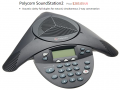
All cheap speakerphones I have seen that use one ordinary wired phone line are half-duplex. Very expensive Polycom phones use two phone lines or one phone line plus an echo-canceller IC. Please post the make and model of your full-duplex phone.
Here is a discontinued Polycom phone at a reduced price:
 

Attachments

My cordless phone has a speaker in the front (normally goes to the ear in handset mode).
A mic in the front.
A speaker facing the rear.

Handset mode uses the front speaker and the microphone, not very loud,

Speaker mode uses the rear facing speaker loud and the front mic.

Two speaker phones in the same room and a telephone conversation will cause a squeal until the mic is muted on one of them.
 

Audioguru again

Joined Oct 21, 2019
6,826
In my experiments 30 years ago trying to make a full-duplex phone, I could have the distant end with a handset but my end had both the mic and speaker active with a cancellation circuit. If both ends had mics and speakers active then there was long distance feedback.
 

Thread Starter

xchcui

Joined May 12, 2014
309
All cheap speakerphones I have seen that use one ordinary wired phone line are half-duplex. Very expensive Polycom phones use two phone lines or one phone line plus an echo-canceller IC. Please post the make and model of your full-duplex phone.
Here is a discontinued Polycom phone at a reduced price:
Maybe i didn't understand the full meaning of half/full duplex.
After you used this phrase,i checked in wikipedia and i read there,
that half-duplex is like a walkie talkie and if me and the other person
in the other side can talk in the same time,so it is full duplex.
In my case,i can talk through the microphone,while in the same time,i
can hear the person on the speaker.(In fact,it is the same with all the phones
that i used before)but,again,maybe i didn't understood this phrase.
In regard to the model of the telephone,if it was helpful,i would provide the model of the phone in my first post,but it would not help,since the problem is that this phone is made in china and the brand+model of the phone are set by the importers.Each country gives the phone a different trivial brand name and model and you can't find any data sheet for it.Its not like panasonic brand etc.
Anyway,i would like to focus on the problem.
Since you said,that changing the microphone gain will not help.
Will changing the speaker's gain will fix the problem?
I didn't understand yet,why do the pulsing noises gone when i covered
the microphone,while the pulsing noise gone,also,when i make a continuous
sound(rubbing the plastic near the microphone)?two completely different situation make the pulses stop.May you explain,please?
 

Audioguru again

Joined Oct 21, 2019
6,826
An ordinary wired telephone handset is full duplex because the mic cannot hear the earphone. A speakerphone produces acoustical feedback howling when its mic can hear its speaker or when a sound goes in your mic and is produced by the speaker at the distant end and its mic hears it and sends the sound back to your speaker. Then it repeats over and over.

Something must switch between transmitting and receiving or a cancellation circuit is needed.
 

Thread Starter

xchcui

Joined May 12, 2014
309
Okay,i understand that the full duplex was referred to the wired
handset(earphone+mic) and not to the speakerphones.
This may explain why the pulsing noises are gone while i made a rubbing
noises near the microphone-the speaker was turned off,but why the pulsing noises are gone when i cover the microphone?the microphone doesn't receive any noise,so the speaker has no reason to be turned off.
How do you explain that?
 

Audioguru again

Joined Oct 21, 2019
6,826
A half-duplex speakerphone either has its mic turned on and its speaker turned off or it has its mic turned off and its speaker turned on. Yours is defective or designed wrong causing it to alternate switching making pulsing sounds.
 

Thread Starter

xchcui

Joined May 12, 2014
309
A half-duplex speakerphone either has its mic turned on and its speaker turned off or it has its mic turned off and its speaker turned on. Yours is defective or designed wrong causing it to alternate switching making pulsing sounds.
I am sorry,but i don't understand.
You said that the speaker's amplifier may creating a pulse sound that is picked up by the mic. Then the half-duplex cuts off the speaker making another pulse etc.This sound like the pulsing should be heard all the time and don't stop if i cover the mic.
So,why does the pulsing noises are gone when i covered the mic?
You haven't explained that yet.
I measure the voltage and current and everything is fine.
Of course,the phone might be defective or bad design,this is
the reason why i asked my question here,to understand what is the
problem and if i can fix it.
 
Last edited:

Audioguru again

Joined Oct 21, 2019
6,826
You need to find what causes the speaker to produce a pulse sound that is heard by the mic, maybe it is the half-duplex switching circuit causing it. If you cover the mic then it does not hear the speaker so the pulses do not repeat over and over.
 

Thread Starter

xchcui

Joined May 12, 2014
309
Try the phone elsewhere.
Yes,i had already tried the phone at other line and even at
other company telephone line,but i guess that the phone
is the problem.
You need to find what causes the speaker to produce a pulse sound that is heard by the mic, maybe it is the half-duplex switching circuit causing it. If you cover the mic then it does not hear the speaker so the pulses do not repeat over and over.
Okay,i understand that this fault need to be inspected more
carefully and changing the gain of the speakers or the mic.
won't solve the problem.
I would like to add some measurements that i did.
The voltage of this phone when OFF-HOOK is 13.6V with
25mA,while the voltage of a simple phone(without lcd screen,phone speakers etc.see
attached photo)when OFF-HOOK is 8V with also 25mA.
Are these details indicating on any fault?
As far as i understand,the higher voltage(13.6v)of the new one is
as result of a component in the telephone that boost the voltage
to 13.6v in order that the electronic components will work properly,
Am i right?or it is indicating on a fault?


corded phone old.jpg
 

Thread Starter

xchcui

Joined May 12, 2014
309
Measurements where taken with what?
Trust me,the measurements are right and accurate.
They were taken from the telephone cable(the cable that
is connected to the jacks in the wall and the phone)
With a multi-meter.
The more important is if the 13.6VDC(off-hook)
is considered okay for this kind of telephone or it is
indicating on a some kind of a fault.
 
Last edited:

Thread Starter

xchcui

Joined May 12, 2014
309
13.6V at the off-hook phone is fine and does not need to be boosted. Something in the speakerphone circuit is defective or is designed wrong (the main filter capacitor?).
To prevent any confusion,i corrected the word"on-hook"(which i wrote
by mistake)to "off-hook"in my post number #36.

Audioguru,why on the same telephone line,
the lcd screen telephone is 13.6vdc off-hook,
while the more simple telephone(the photo on post #34-red phone)
is only 8vdc off-hook?
 

Audioguru again

Joined Oct 21, 2019
6,826
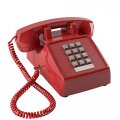
The red phone is very old with a high current carbon mic. Modern phones use a low current electret mic and a low current LCD display.
I have two corded speakerphones that use four AA batteries for the speaker amplifier and LCD display.
 

Thread Starter

xchcui

Joined May 12, 2014
309
That only depends of the load each phones present to the loop.
The red phone is very old with a high current carbon mic. Modern phones use a low current electret mic and a low current LCD display.
I have two corded speakerphones that use four AA batteries for the speaker amplifier and LCD display.
When i measured the DC current in both telephones,on the same
telephone line,i got a current of 25mA(off-hook)on both telephones.
When i use ohm law,it turns-out that the modern telephone has
higher impedance and higher consumption than the old one,
while them both consume the same current.
When i measured the currents while the handset on-hook,i got
20uA on both telephones.I can understand why the modern phone consume 20uA current(on-hook),it needs to power the Lcd screen,but why does the
old phone consume exactly the same 20uA current(on-hook)?
For what electronic components does the old phone need this current?
 

Audioguru again

Joined Oct 21, 2019
6,826
20uA of current is almost nothing. The hook switch of an old phone disconnects its DC parts from the phone line but its ringer is still connected through a series capacitor. Maybe the very old capacitor leaks 20uA of DC current?
 

Thread Starter

xchcui

Joined May 12, 2014
309
20uA of current is almost nothing. The hook switch of an old phone disconnects its DC parts from the phone line but its ringer is still connected through a series capacitor. Maybe the very old capacitor leaks 20uA of DC current?
You says that in the old phone,the hook switch disconnects its DC parts from
the phone line,besides the ringer.In the modern phone,does the hook switch
also disconnects its DC parts from the phone line,while only the lcd screen
and its ringer gets power or there are other components that gets power?
 

Thread Starter

xchcui

Joined May 12, 2014
309
To be certain you would need to open up your phone.
I have already mentioned that the telephone is a brand new
and i am not keen,to say at least, on disassembling a brand new phone.
Since as you can see,i am not an expert like you are and there is
always the chance to cause more damage than repair.
If it was old,i would certainly open it up and make some tests.
Refer to my last question,i don't expect to get an exact answer
about what components get powered,while on-hook,in my specific corded phone.I expect that,from your experience and knowledge,you may answer
my question with reference to modern corded telephone that looks like my.
 
Top