Facebook
 Google
 GitHub
 Linkedin
Hi All,
I was recently looking at the Texas Instruments datasheet for the lm324. What I was interested in was the PSRR vs Frequency. I am familiar with the PSRR and its relevance, however the figure below I am seeking further clarification.
The way I am interpreting the figure, is that the PSRR on the negative rail is only good for 80 dB at approximately 200Hz, while the positive rail is effective up to 10kHz at the same dB level.
For power supply decoupling, does this mean that you would size the components in the low-pass filter to attenuate interference frequencies above 200Hz assuming you wanted to maintain 80dB rejection?
Also, if that is the case for consistency, would you make the low-pass filter on the positive rail the same even though it can reject interference frequencies above 10KHz for the same attenuation value?
In the past I'm sure I have seen decoupling circuits with the same component values, but based on the figure it appears that this does not have to be the case.
Interested to hear your thoughts and feedback.
Dan
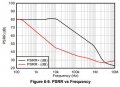
I was recently looking at the Texas Instruments datasheet for the lm324. What I was interested in was the PSRR vs Frequency. I am familiar with the PSRR and its relevance, however the figure below I am seeking further clarification.
The way I am interpreting the figure, is that the PSRR on the negative rail is only good for 80 dB at approximately 200Hz, while the positive rail is effective up to 10kHz at the same dB level.
For power supply decoupling, does this mean that you would size the components in the low-pass filter to attenuate interference frequencies above 200Hz assuming you wanted to maintain 80dB rejection?
Also, if that is the case for consistency, would you make the low-pass filter on the positive rail the same even though it can reject interference frequencies above 10KHz for the same attenuation value?
In the past I'm sure I have seen decoupling circuits with the same component values, but based on the figure it appears that this does not have to be the case.
Interested to hear your thoughts and feedback.
Dan