Facebook
 Google
 GitHub
 Linkedin
Hi,
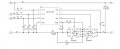
I am experiencing a small issue with a 12.6V Li-ion battery we are using. If, for any reason, we consciously discharge the battery, it can reduce the voltage down to around 8.5V (approximately 2.86V per cell). At this point, the protection circuit(Included in the batttery), as shown in the screenshot below, should stop any further current from being drawn.
However, I have encountered instances where the battery voltage has depleted to below 2.8V per cell, which causes issues with my battery charger (LTC4162) since it requires a minimum voltage of 2.7V per cell to initiate the charging process. To address this, I applied 12V at a very low current until the battery reached 9V (approximately 3V per cell), after which the charger functioned correctly.
Would it be advisable to implement an additional load switch between my load (circuit) and the battery/charging circuit, with an enable pin set to disable the load switch if the voltage drops below 9V? As the protection circuit would not be able to isolate only the battery and charging current, any current draw from the circuit would also be included
I have implemented a solution using the LTC4162's ADC, where I monitor the voltage and enable my circuit accordingly. However, this requires frequent polling of the ADC and can still lead to some battery drain due to any pull-down resistors in the circuit, which could further deplete the battery at low capacities. I am therefore seeking a hardware-based solution to provide additional assurance against deep discharge.
Thanks!
I am experiencing a small issue with a 12.6V Li-ion battery we are using. If, for any reason, we consciously discharge the battery, it can reduce the voltage down to around 8.5V (approximately 2.86V per cell). At this point, the protection circuit(Included in the batttery), as shown in the screenshot below, should stop any further current from being drawn.
However, I have encountered instances where the battery voltage has depleted to below 2.8V per cell, which causes issues with my battery charger (LTC4162) since it requires a minimum voltage of 2.7V per cell to initiate the charging process. To address this, I applied 12V at a very low current until the battery reached 9V (approximately 3V per cell), after which the charger functioned correctly.
Would it be advisable to implement an additional load switch between my load (circuit) and the battery/charging circuit, with an enable pin set to disable the load switch if the voltage drops below 9V? As the protection circuit would not be able to isolate only the battery and charging current, any current draw from the circuit would also be included
I have implemented a solution using the LTC4162's ADC, where I monitor the voltage and enable my circuit accordingly. However, this requires frequent polling of the ADC and can still lead to some battery drain due to any pull-down resistors in the circuit, which could further deplete the battery at low capacities. I am therefore seeking a hardware-based solution to provide additional assurance against deep discharge.
Thanks!
Attachments
-
613 KB Views: 1