Power safe class C batteries

Thread Starter

yukojax

Joined Jun 16, 2017
2
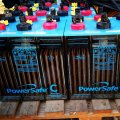
IMG_20170616_003238_995.jpg I recently bought four (4) power safe 3cc-9m batteries to power my RV when not connected to shore power. Can anyone give me any info on these batteries? Will they suffice for my needs? Can I use them for 20 years like I've heard could be done. The old battery system didn't power everything in the RV, if I rewire everything to allow the batteries to power 100%
 

Thread Starter

yukojax

Joined Jun 16, 2017
2
View attachment 129062 I recently bought four (4) power safe 3cc-9m batteries to power my RV when not connected to shore power. Can anyone give me any info on these batteries? Will they suffice for my needs? Can I use them for 20 years like I've heard could be done. The old battery system didn't power everything in the RV, if I rewire everything to allow the batteries to power 100%
The Remainder of my question is, could I use these batteries to power 100% of the equipment in the RV, including AC units?
 

EM Fields

Joined Jun 8, 2016
583
The Remainder of my question is, could I use these batteries to power 100% of the equipment in the RV, including AC units?
It seems to me that the legwork needed to get all of these questions answered should have been done before you bought the batteries.

On top of that, we know nothing about your RV's electrical requirements, so how are we supposed to advise you about what to do, now that it's too late?
 
Last edited:

tcmtech

Joined Nov 4, 2013
2,867
I had a bunch of near identical batteries like that about 20 years ago that were made by Exide.

They were 6 volt ~220 amp hour rated and gave about 1200 usable watts on a 8 hour discharge curve without taking them down too far on charge.
 

tcmtech

Joined Nov 4, 2013
2,867
Batteries like that can handle moderate discharge work and sitting at a low state of charge for days at a time without too much problems.

Mine had no major observable issues from taking 30 - 50 amp discharges down to 10- 15% charge in one shot then sitting like that for a few days before being recharged. The plates are extremely thick and heavy compared to most automotive and such starting and deep cycle batteries.

Getting ran near dead flat and freezing one winter is what killed mine.
 

ian field

Joined Oct 27, 2012
6,536
Batteries like that can handle moderate discharge work and sitting at a low state of charge for days at a time without too much problems.

.
A few days is about where its at for regular batteries - substantially discharged and left much more than a week will at least impair capacity.
 

tcmtech

Joined Nov 4, 2013
2,867
A few days is about where its at for regular batteries - substantially discharged and left much more than a week will at least impair capacity.
These particular types are not in the same working or deign class as regular LA batteries. Even if marginally treated and maintained they have service lives rated bey decades.

They shrug off treatment and actions that would kill a normal battery.

If the batteries he has in the picture are the same basic size as mine each of those 6 white lines are the plates for just one cell and are ~ 1/4" - 5/16" thick compressed lead powder unlike the ones in a normal starting or deep cycle battery which are like thick paper or thin cardboard.

They don't do high amp draws for more than a few tens of seconds or a minute or so before their voltages drop way off but they make up for it in sheer physical robustness. Mine when brand new would barely pass a common deep cycle amp draw test at 150 - 200 amps for 5 - 10 seconds but in trade they could take 30 - 50 amps until near stone dead and do cycle like that day in and day out for years.

The fact mine froze solid and broke their cases said they had to have sat flat dead for months or longer without me noticing. Even then there was no discernible sulfation on any of the plates.
 

nsaspook

Joined Aug 27, 2009
16,321
These particular types are not in the same working or deign class as regular LA batteries. Even if marginally treated and maintained they have service lives rated bey decades.

They shrug off treatment and actions that would kill a normal battery.
For the designed service (standby-power battery) they will last decades but for bulk energy storage for a home or RV a good traction battery (high capacity and long life) is a much better choice. I've got a set of cheap Costso golf-cart batteries that love deep discharges and you can recharge them at rates that could smoke a typical deep cycle battery.

http://evbatterymonitoring.com/batterybook2/Types_of_Lead-Acid_Batteries.htm
 
Last edited:

tcmtech

Joined Nov 4, 2013
2,867
For the designed service (standby-power battery) they will last decades but for bulk energy storage for a home or RV a good traction battery (high capacity and long life) is a much better choice. I've got a set of cheap Costso golf-cart batteries that love deep discharges and you can recharge them at rates that could smoke a typical deep cycle battery.
Interesting.

Mine got ran hard for some time when I was playing with wind power before I came up with a solid reliable Grid Tie Inverter design so that I could just dump the wind generator power right back on the home AC power system bypassing the battery bank and dedicated inverter stuff all together.

I never really saw a problem with my batteries in that application but I didn't have them in a mobile one either where they would have gotten bumped around.
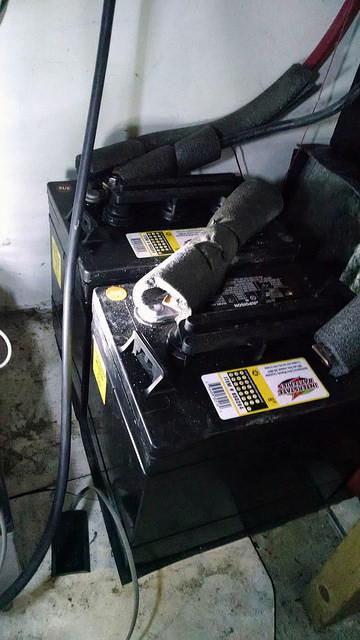
Thinking back I would have been hesitant to use them that way due to the largely open cap design. Too easy to spill that way. As is cable corrosion from venting was an issue right from the start.
I redid the cables several times for massive corrosion issues before ending up with covering the exposed ends in a thick layer of battery cable grease. That kept the cables and connection points cleaner but the grease accumulated dust terrible and everything metal around battery bank still picked up surface corrosion after a year or two from the sulfur fumes they gave off even when not being used.

Even after that they sat largely unused for several years without issue until I moved them to a new location and then they were fine for a long time with only getting a top off charge maybe 1 -2 time a year, if I remembered ,until they froze. Best guess they were maybe 15 years old at that point and still looked brand new inside with barely any sulfate or other plate debris in the bottom of any of them.

A shame they got froze but I couldn't find anyone who wanted them for more than scrap and if they were getting scrapped I was getting the money for it. After freezing and busting at least 1 - 2 cells in every battery that's where they went. 12 of them at something like 1500 pounds drained of most of their acid.

I got them new military surplus still in the crates for $15 a piece so they more than gave me my monies worth! ;)
 
Top