Postage stamp Watermark finder

Thread Starter

steamseadog

Joined Nov 16, 2012
11
Gooday,
Has anyone made up an electronic watermark finder for postage stamps?
They can be purchased for > $500!!!.
Where I am up to only works some of the time.
Basic setup is an electronic microscope looking at stamps with high intensity and various coloured leds shining through the stamp.
There are 3 basic coloured leds in use. I've tried using many gel colour filters to no avail.
I've also tried using uvc and uva leds but these don't do much.
Strange to say 1840 (year) Queen Victoria stamps watermarks show up better than 1952 QE2 ones !
Any advice would be well received
 

wayneh

Joined Sep 9, 2010
18,096
I have no idea if it would work but you might consider a film scanner, as you would use to scan 35mm slides or negatives. These devices are purpose-built to look at a stamp-sized area (a frame of 35mm film) and recover all the available visible data in the light that passes thru. Of course then it's up to a human viewing the scan file to see if they can identify a watermark. If you need UV excitation, it probably won't work.
 

Thread Starter

steamseadog

Joined Nov 16, 2012
11
I have no idea if it would work but you might consider a film scanner, as you would use to scan 35mm slides or negatives. These devices are purpose-built to look at a stamp-sized area (a frame of 35mm film) and recover all the available visible data in the light that passes thru. Of course then it's up to a human viewing the scan file to see if they can identify a watermark. If you need UV excitation, it probably won't work.
Thanks for the reply. I'll give it a go. Since my thread I've had a bit of a win. Using the Chinese microscope, feeding the signal onto the computer screen. This produced a vague image. Taking a photo of the image on the screen with a mobile phone I ended up with a very very red clear watermark photo! I have no explanation of how this all works.!
 

Ya’akov

Joined Jan 27, 2019
10,226
Welcome to AAC.

Watermark detection relies on differences in density and light transmittance/absorption in the areas that are watermarked.

These areas can be distinguished visually by the contrast observed when viewing the specimen under different wavelengths of light—principally longwave UV (365nm) and IR (850nm or 940nm). It is possible that some watermarks will be very clear with just one of these, particularly when digitally subtracting it from a white light image.

The UV light is reflected from the specimen. The returned light is not UV, it is visible light, so any camera will work. On the other hand the IR must be passed through the specimen because it is differences in transmission that detect the watermark's presence. This needs a relatively powerful and diffuse IR source but that's not a challenge since night vision on cheap surveillance cameras has made such things readily available, cheap.

The challenge is the camera. Almost all cameras you buy will have an IR cut filter fitted. This is usually a small glass plate attached to the face of the sensor. It can be removed but it is risky if you are inexperienced. On the other hand, there are cameras that make it a lot easier like the ubiquitous Arducam line.

There are models that use standard UVC drivers* and USB connections making them very easy to use. Two possibilities are a model like the OV9281 that has no IR cut filter out of the box. However it is somewhat pricey at ~$50USD because it has other features that aren't needed for your application such as high frame rate and a global shutter.

*This "UVC" is not the ultraviolet spectrum, It stands for USB Video Class. All major operating systems have in-built drivers for UVC compliant cameras make them plug-and-play with no driver installation hassle.

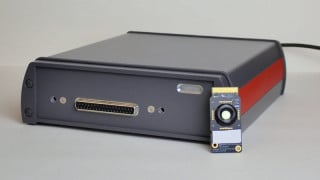
The B0205 is another option. This board has a deployable IR cut filter that the camera automatically moves in and out according to lighting conditions. It has a set of six on-board IR less and switches to "night vision mode" automatically, based on ambient lighting conditions.

The IR emitters can easily removed and repositioned behind the stamp. A PMMA (Plexiglass, Perspex) or clear PS (polystyrene) holder for the specimen will not materially affect the IR backlighting. The ambient light switching which is entirely on-board can be easy modified for manual operation.

The board uses an LDR (Light Dependent Resistor) to detect darkness. This can be replaced with a pair of fixed resistors and a SPDT switch that will choose whether the filter is in place or not.

The camera has an M12 lens mount, which is a common standard. A cheap replacement lens, like this 12mm, could help improve image quality by using more of the sensor for the specimen. It may or may not be needed. The sensors 2MP resolution and 1m minimum focus might be good enough.

Alternatively, for somewhat more, a varifocal (zoom) lens like this one would make the setup more flexible.

The practical method for using this setup is simple enough. You would image the specimen with reflected UV, transmitted IR, and white light, then using any of many free image processing applications, you would add or subtract the various versions to maximize the watermark visibility. Sometimes, you would probably find a single non-white light image was good enough—in other cases some combination of two or three will get the best result.

DISCLAIMER: This explanation is in principle. I have used all the parts in this description and have an understanding of the principles of watermarks detection, but I have never built a watermark detector. I have a >80% confidence level in these suggestions, and this is how. would approach it myself (probably adding an MCU and/or PC-side software to automate the capture process—though this is not necessary to make it work).
 

wayneh

Joined Sep 9, 2010
18,096
Thanks for the reply. I'll give it a go. Since my thread I've had a bit of a win. Using the Chinese microscope, feeding the signal onto the computer screen. This produced a vague image. Taking a photo of the image on the screen with a mobile phone I ended up with a very very red clear watermark photo! I have no explanation of how this all works.!
Odd that a photo of an onscreen image looks different than what you see with your eyes, which have a wider gamut. But if it works, that's all you need to know.
 

Thread Starter

steamseadog

Joined Nov 16, 2012
11
Welcome to AAC.

Watermark detection relies on differences in density and light transmittance/absorption in the areas that are watermarked.

These areas can be distinguished visually by the contrast observed when viewing the specimen under different wavelengths of light—principally longwave UV (365nm) and IR (850nm or 940nm). It is possible that some watermarks will be very clear with just one of these, particularly when digitally subtracting it from a white light image.

The UV light is reflected from the specimen. The returned light is not UV, it is visible light, so any camera will work. On the other hand the IR must be passed through the specimen because it is differences in transmission that detect the watermark's presence. This needs a relatively powerful and diffuse IR source but that's not a challenge since night vision on cheap surveillance cameras has made such things readily available, cheap.

The challenge is the camera. Almost all cameras you buy will have an IR cut filter fitted. This is usually a small glass plate attached to the face of the sensor. It can be removed but it is risky if you are inexperienced. On the other hand, there are cameras that make it a lot easier like the ubiquitous Arducam line.

There are models that use standard UVC drivers* and USB connections making them very easy to use. Two possibilities are a model like the OV9281 that has no IR cut filter out of the box. However it is somewhat pricey at ~$50USD because it has other features that aren't needed for your application such as high frame rate and a global shutter.

*This "UVC" is not the ultraviolet spectrum, It stands for USB Video Class. All major operating systems have in-built drivers for UVC compliant cameras make them plug-and-play with no driver installation hassle.

The B0205 is another option. This board has a deployable IR cut filter that the camera automatically moves in and out according to lighting conditions. It has a set of six on-board IR less and switches to "night vision mode" automatically, based on ambient lighting conditions.

The IR emitters can easily removed and repositioned behind the stamp. A PMMA (Plexiglass, Perspex) or clear PS (polystyrene) holder for the specimen will not materially affect the IR backlighting. The ambient light switching which is entirely on-board can be easy modified for manual operation.

The board uses an LDR (Light Dependent Resistor) to detect darkness. This can be replaced with a pair of fixed resistors and a SPDT switch that will choose whether the filter is in place or not.

The camera has an M12 lens mount, which is a common standard. A cheap replacement lens, like this 12mm, could help improve image quality by using more of the sensor for the specimen. It may or may not be needed. The sensors 2MP resolution and 1m minimum focus might be good enough.

Alternatively, for somewhat more, a varifocal (zoom) lens like this one would make the setup more flexible.

The practical method for using this setup is simple enough. You would image the specimen with reflected UV, transmitted IR, and white light, then using any of many free image processing applications, you would add or subtract the various versions to maximize the watermark visibility. Sometimes, you would probably find a single non-white light image was good enough—in other cases some combination of two or three will get the best result.

DISCLAIMER: This explanation is in principle. I have used all the parts in this description and have an understanding of the principles of watermarks detection, but I have never built a watermark detector. I have a >80% confidence level in these suggestions, and this is how. would approach it myself (probably adding an MCU and/or PC-side software to automate the capture process—though this is not necessary to make it work).
Thank you for your advice. I will go ahead and purchase the items required. As soon as they arrive I will follow your guidelines and get back to you with the result.
 

Thread Starter

steamseadog

Joined Nov 16, 2012
11
Welcome to AAC.

Watermark detection relies on differences in density and light transmittance/absorption in the areas that are watermarked.

These areas can be distinguished visually by the contrast observed when viewing the specimen under different wavelengths of light—principally longwave UV (365nm) and IR (850nm or 940nm). It is possible that some watermarks will be very clear with just one of these, particularly when digitally subtracting it from a white light image.

The UV light is reflected from the specimen. The returned light is not UV, it is visible light, so any camera will work. On the other hand the IR must be passed through the specimen because it is differences in transmission that detect the watermark's presence. This needs a relatively powerful and diffuse IR source but that's not a challenge since night vision on cheap surveillance cameras has made such things readily available, cheap.

The challenge is the camera. Almost all cameras you buy will have an IR cut filter fitted. This is usually a small glass plate attached to the face of the sensor. It can be removed but it is risky if you are inexperienced. On the other hand, there are cameras that make it a lot easier like the ubiquitous Arducam line.

There are models that use standard UVC drivers* and USB connections making them very easy to use. Two possibilities are a model like the OV9281 that has no IR cut filter out of the box. However it is somewhat pricey at ~$50USD because it has other features that aren't needed for your application such as high frame rate and a global shutter.

*This "UVC" is not the ultraviolet spectrum, It stands for USB Video Class. All major operating systems have in-built drivers for UVC compliant cameras make them plug-and-play with no driver installation hassle.

The B0205 is another option. This board has a deployable IR cut filter that the camera automatically moves in and out according to lighting conditions. It has a set of six on-board IR less and switches to "night vision mode" automatically, based on ambient lighting conditions.

The IR emitters can easily removed and repositioned behind the stamp. A PMMA (Plexiglass, Perspex) or clear PS (polystyrene) holder for the specimen will not materially affect the IR backlighting. The ambient light switching which is entirely on-board can be easy modified for manual operation.

The board uses an LDR (Light Dependent Resistor) to detect darkness. This can be replaced with a pair of fixed resistors and a SPDT switch that will choose whether the filter is in place or not.

The camera has an M12 lens mount, which is a common standard. A cheap replacement lens, like this 12mm, could help improve image quality by using more of the sensor for the specimen. It may or may not be needed. The sensors 2MP resolution and 1m minimum focus might be good enough.

Alternatively, for somewhat more, a varifocal (zoom) lens like this one would make the setup more flexible.

The practical method for using this setup is simple enough. You would image the specimen with reflected UV, transmitted IR, and white light, then using any of many free image processing applications, you would add or subtract the various versions to maximize the watermark visibility. Sometimes, you would probably find a single non-white light image was good enough—in other cases some combination of two or three will get the best result.

DISCLAIMER: This explanation is in principle. I have used all the parts in this description and have an understanding of the principles of watermarks detection, but I have never built a watermark detector. I have a >80% confidence level in these suggestions, and this is how. would approach it myself (probably adding an MCU and/or PC-side software to automate the capture process—though this is not necessary to make it work).
I followed your good information and had 80% good success as you suggested.

I used a ring of IR leds from an old security camera and have the option of UV leds or coloured leds sitting under the middle of the IR ring.

The Chinese microscope without an IR filter gave an image where it was easy to see the watermarks on the computer screen.

This has made my study of watermarks a lot easier as I have many to do. Thank you
 

Ya’akov

Joined Jan 27, 2019
10,226
I followed your good information and had 80% good success as you suggested.

I used a ring of IR leds from an old security camera and have the option of UV leds or coloured leds sitting under the middle of the IR ring.

The Chinese microscope without an IR filter gave an image where it was easy to see the watermarks on the computer screen.

This has made my study of watermarks a lot easier as I have many to do. Thank you
I'm very happy to hear about your success.
 
Top