Polarise a BJT

Thread Starter

Amin17

Joined Jun 3, 2019
3
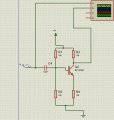
Hi, I am a new electronics student and I have a quick home work/project, I have a Sin signal at 30Khz and I want to use a simple Class A amplifier but I don t know how to polarise it, I have to determine the values of R1,R2, R3 and R4, I solved a lot of examples I know too much theories about it but praticly I don t know how to start. Also I want a second methode if possible, I want to use proteus to determine the values using Potentiometers.
I will be really thankful.
 

Attachments

Zeeus

Joined Apr 17, 2019
616
Hi, I am a new electronics student and I have a quick home work/project, I have a Sin signal at 30Khz and I want to use a simple Class A amplifier but I don t know how to polarise it, I have to determine the values of R1,R2, R3 and R4, I solved a lot of examples I know too much theories about it but praticly I don t know how to start. Also I want a second methode if possible, I want to use proteus to determine the values using Potentiometers.
I will be really thankful.
Hi A..Please what do you mean by polarize it?
Can you tell what the gain of your circuit will be?

Also, please what can theory tell you about this gain at 30khz?
And normally, think to start by placing the output dc voltage at half the supply

Btw, what is circuit for : what you expecting output to look like
 

Thread Starter

Amin17

Joined Jun 3, 2019
3
Hi, thank you for your reply,
I think I wrote the word wrong, by polarise I mean the biasing of the transistor.I have an NPN Transistor and a DC voltage of 9V, I have a Sin signal of 30Khz at the Input and I want to amplify it without distortion, and since this is my first time doing pratical electronics I don t know how to do the work (I added an image of the circuit in the attached files), I have four resistors that I have to find their values, the transistor I use is BC547, so I want to learn how to calculate the resistors values and if I am not mistaken this process is called polarisation of the transistor.
 
Last edited:

Zeeus

Joined Apr 17, 2019
616
Hi, thank you for your reply,
I think I wrote the word wrong, by polarise I mean the polarisation of the transistor.I have an NPN Transistor and a DC voltage of 9V, I have a Sin signal of 30Khz at the Input and I want to amplify it without distortion, and since this is my first time doing pratical electronics I don t know how to do the work (I added an image of the circuit in the attached files), I have four resistors that I have to find their values, the transistor I use is BC547, so I want to learn how to calculate the resistors values and if I am not mistaken this process is called polarisation of the transistor.
Want to recommend this for you to read :
https://ia802801.us.archive.org/22/items/TheArtOfElectronics3rdEd2015/The Art of Electronics 3rd ed [2015].pdf

but will take you a while for sure... Wanted to recommend this site's common emitter but not looking like what you need

http://www.learnabout-electronics.org/Amplifiers/amplifiers12.php
 
Last edited:

shteii01

Joined Feb 19, 2010
4,644
Your lowest voltage is 0 volts.
Your highest voltage is 9 volts.

Your input signal will be distorted when you go below 0 volts and when you go above 9 volts.

Assuming you want maximum amplification without distortion, then you need to bias input signal at 4.5 volts. This way sinusoidal signal will oscillate between 0 and 9 volts.

You really did not provide much of meaningful information. Probably language problem. You also claim that you have done a bunch of examples, I don't see any evidence of that.
 

Ylli

Joined Nov 13, 2015
1,092
Were you given any other information? What gain do you need? What collector current do you want to design for?
 
Top