Facebook
 Google
 GitHub
 Linkedin

1- Two different counters must be configured (not CNT, simple binary counters achieved with ++),
2- One of these counters should count in every scan-time and should swing between 0-1000,
3- Just like the first counter, the second counter should count in the same manner and should swing between 0- 1000 but it should get cleared with the rising edge of 0.00,
4- When a rising edge occurs on 0.00 input, the current value of the first and second counter must be collected (second counter must be cleared after collecting the second counter value),
5- Two counter values collected must be multiplied and be careful that the value obtained can be higher than 65535 (you must keep it on a 32-bit area),
6- Then square root of this value must be obtained, and the randomized value is the result of this operation,
7- This value must appear on the output of PLC (address 1) in BCD format and should not change until a new rising edge occur on 0.00 input
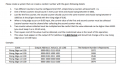
2- One of these counters should count in every scan-time and should swing between 0-1000,
3- Just like the first counter, the second counter should count in the same manner and should swing between 0- 1000 but it should get cleared with the rising edge of 0.00,
4- When a rising edge occurs on 0.00 input, the current value of the first and second counter must be collected (second counter must be cleared after collecting the second counter value),
5- Two counter values collected must be multiplied and be careful that the value obtained can be higher than 65535 (you must keep it on a 32-bit area),
6- Then square root of this value must be obtained, and the randomized value is the result of this operation,
7- This value must appear on the output of PLC (address 1) in BCD format and should not change until a new rising edge occur on 0.00 input