Facebook
 Google
 GitHub
 Linkedin


Hello AAC forum,
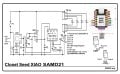
A system was designed and built to turn on a 12 volt
under cabinet LED light system in my kitchen using a PIR
(motion detector) and a microprocessor, XIAO
SAMD21 by Seeed Studio.
The system worked as designed for about a year
and a half. Now the lights stay on and do not
go off after five minutes as the SAMD21 is
programmed, sketch attached herewith below.
Or system goes low for a second
and comes back on again.
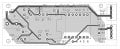
The first test was on the PIR. The PIR tested normal.
That is when i wave my hand at the lens the output
pin reads 3.1 volts for two seconds.
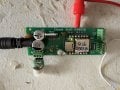
The second test was at the Gate of the UIRF540
transistor. With the PIR isolated the voltage
at the gate reads 3.2 volts. But the reading
should go to zero after twenty seconds.
The operation is inconsistent. Sometimes
it goes low after twenty seconds as designed
but sometimes it stays on. In other tests
the reading goes low but even with the
PCB completely isolated, inside a cardboard box, for
no apparent reason the reading goes
to 3.2 volts.
The conjecture was that the SAMD21 was
failing and sending a false positive
but tests have been with two other
new from the package SAMD21s exhibit the
same behavior. It seems
highly unlikely that all three microprocessor
would fail and fail in the same way.
Allen Pitts
A system was designed and built to turn on a 12 volt
under cabinet LED light system in my kitchen using a PIR
(motion detector) and a microprocessor, XIAO
SAMD21 by Seeed Studio.
The system worked as designed for about a year
and a half. Now the lights stay on and do not
go off after five minutes as the SAMD21 is
programmed, sketch attached herewith below.
Or system goes low for a second
and comes back on again.
The first test was on the PIR. The PIR tested normal.
That is when i wave my hand at the lens the output
pin reads 3.1 volts for two seconds.
The second test was at the Gate of the UIRF540
transistor. With the PIR isolated the voltage
at the gate reads 3.2 volts. But the reading
should go to zero after twenty seconds.
The operation is inconsistent. Sometimes
it goes low after twenty seconds as designed
but sometimes it stays on. In other tests
the reading goes low but even with the
PCB completely isolated, inside a cardboard box, for
no apparent reason the reading goes
to 3.2 volts.
The conjecture was that the SAMD21 was
failing and sending a false positive
but tests have been with two other
new from the package SAMD21s exhibit the
same behavior. It seems
highly unlikely that all three microprocessor
would fail and fail in the same way.
Allen Pitts
Attachments
-
2.3 KB Views: 6