Facebook
 Google
 GitHub
 Linkedin

I have tried a simple project with LED blink on/off using PIC18F4550.
The compilers used are XC8 and CCS. I have used as IDE: MPLABX, CCS and Flowcode 7 (with XC8).
When the projects are burned on real device and I check with the oscilloscope the signal at pin RA0, then there is no problem.
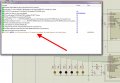
If I use Proteus to simulate this simple project, then I have a problem when I use as oscillator for PIC18F4550 an external crystal + PLL internal to get maximum frequency 48MHz. I have tried various crystal values, but I remained at 16MHz, because this is what I have also in reality on the bench.
If the oscillator is set internal, then there is no problem with Proteus.
But if the oscillator is external, then the values seen with the virtual oscilloscope are not good.
I came to this simple project and I have tested it in various ways, because actually I was working on another project with I2C and I could not find the cause of the problem when was simulated in Proteus, which now is clear related with oscillator when is set external HS with PLL.
Below is a link with the pictures/screenshots and the projects used for LED blinking:
https://goo.gl/nPKKj2
I wrote this topic for 2 reasons:
- To share the problem found.
- To ask you if you are aware of the Proteus problem related with PIC18F4550 external oscillator and if you can double check it and confirm/refute my findings.
The compilers used are XC8 and CCS. I have used as IDE: MPLABX, CCS and Flowcode 7 (with XC8).
When the projects are burned on real device and I check with the oscilloscope the signal at pin RA0, then there is no problem.
If I use Proteus to simulate this simple project, then I have a problem when I use as oscillator for PIC18F4550 an external crystal + PLL internal to get maximum frequency 48MHz. I have tried various crystal values, but I remained at 16MHz, because this is what I have also in reality on the bench.
If the oscillator is set internal, then there is no problem with Proteus.
But if the oscillator is external, then the values seen with the virtual oscilloscope are not good.
I came to this simple project and I have tested it in various ways, because actually I was working on another project with I2C and I could not find the cause of the problem when was simulated in Proteus, which now is clear related with oscillator when is set external HS with PLL.
Below is a link with the pictures/screenshots and the projects used for LED blinking:
https://goo.gl/nPKKj2
I wrote this topic for 2 reasons:
- To share the problem found.
- To ask you if you are aware of the Proteus problem related with PIC18F4550 external oscillator and if you can double check it and confirm/refute my findings.