Physical interventions to interrupt or reduce the spread of respiratory viruses

wayneh

Joined Sep 9, 2010
18,181
I was 5 when Kennedy was assassinated. It was always incredibly frustrating to me that the government, our employees, refused to release relevant documents. That withholding of information has fueled the conspiracy theories for decades. But, I thought, with patience surely these things would come out. I can't believe our government is STILL hiding information from us regarding that event. So I have no confidence we'll ever be told the truth about...anything, really. Telling the truth is just not what governments do.
 

Thread Starter

nsaspook

Joined Aug 27, 2009
16,503
I was 5 when Kennedy was assassinated. It was always incredibly frustrating to me that the government, our employees, refused to release relevant documents. That withholding of information has fueled the conspiracy theories for decades. But, I thought, with patience surely these things would come out. I can't believe our government is STILL hiding information from us regarding that event. So I have no confidence we'll ever be told the truth about...anything, really. Telling the truth is just not what governments do.
The X-files debunked that years ago, we all know the smoking man killed Kennedy.
Please no more.
 

Thread Starter

nsaspook

Joined Aug 27, 2009
16,503
https://www.ncbi.nlm.nih.gov/pmc/articles/PMC4868614/
When I walk past my waiting room, I see people wearing surgical masks. This scene becomes surreal when my patients are watching pandemic disaster movies on the wall-mounted television screen, movies that feature frightened crowds who wear similar masks in the vain hope of protection. As my eyes move from mask-wearing patients to screaming on-screen characters and back, I wonder: What is happening here?

As represented by our cinema and other media, Western society expects too much of masks. In the public’s mind, the still-legitimate use of masks for source control has gone off-label; masks are thought to prevent infection. From here, another problem arises: because surgical masks are thought to protect against infection in the community setting, people wearing masks for legitimate purposes (those who have a cough in a hospital, say) form part of the larger misperception and act to reinforce it. Even this proper use of surgical masks is incorporated into a larger improper use in the era of pandemic fear, especially in Asia, where such fear is high.1 The widespread misconception about the use of surgical masks — that wearing a mask protects against the transmission of virus — is a problem of the kind theorized by German sociologist Ulrich Beck.
 

Thread Starter

nsaspook

Joined Aug 27, 2009
16,503
For balance, it appears others have commented on the Cochrane study:
https://www.nytimes.com/2023/03/10/opinion/masks-work-cochrane-study.html

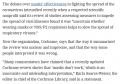
For those who don't have access, a couple of key excerpts:
View attachment 289485

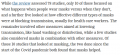
and later:

View attachment 289486

Clearly the effectiveness of mask mandates is complicated, influenced by both the effectiveness of the mask, the compliance with the mandate and the possibility of infection when the mask is not mandated.
My assessment is that initially masking did help but not because cloth or surgical masks are physically helpful to the general public (before the pandemic masking was not a considered an effective virus countermeasure for the public), masking communicated 'risk' in a way that reinforced isolated between possible carriers and the uninfected. Proper sealed and worn respirators work but nobody should expect that wearing a cloth or surgical mask for dangerous virus protection is an effective countermeasure.

https://www.cidrap.umn.edu/covid-19...ical-mask-protect-against-respiratory-viruses
Respirators prevent aerosol inhalation
Respirators are not masks. The correct term for a device approved by the National Institute for Occupational Safety and Health (NIOSH) to prevent inhalation of hazardous materials is "respirator" (and not "respirator mask").

Respirators have very effective filters and are designed to fit most faces. A respirator filter is easy to breathe through, because it's made of a fibrous electret material that has low breathing resistance. Any type of respirator filter approved by NIOSH—N, P, R, 95, 99, 100—will be effective at collecting human-generated aerosols.

Although designed to protect the wearer from inhaling hazardous aerosols, an N95 filtering facepiece respirator (FFR) will also prevent the outward leakage of particles produced by the wearer when breathing, talking, singing, etc.17,18
It's important to note that cloth masks did not significantly affect the likelihood of testing positive. The confidence interval for surgical masks was very wide—3% to 90%—which suggests that some surgical masks might provide some degree of protection. As discussed above, however, they don't fit well, and it's impossible to know whether any particular surgical mask has a good filter. Any protection provided by a mask will be much less than that offered by a respirator.
We strongly disagree with their conclusion about no difference between surgical masks and respirators, for the reasons discussed above. But respirators are not necessarily the only effective method for preventing or minimizing aerosol transmission of infectious respiratory viruses in healthcare settings. Instead, more attention must be given to source and pathway controls, such as improving ventilation and air cleaning in clinics, patient rooms, and spaces shared with coworkers.
There is a point to be made here about the distinction between masks and respirators. From what I see there is basic agreement that cloth or surgical masks don't work but for respirators there is much room for disagreement with the study.
 
Last edited:

Thread Starter

nsaspook

Joined Aug 27, 2009
16,503
https://slate.com/technology/2023/03/long-covid-symptoms-studies-research-variant.html
We’re finally starting to see the truth about the vexing condition. It’s not what we thought.

The best-available figures, then, suggest two things: first, that a significant number of patients do experience significant and potentially burdensome symptoms for several months after a SARS-CoV-2 infection, most of which resolve in less than a year; and second, that a very small percentage experience symptoms that last longer. I want to be clear about this: Long COVID is a real illness that has dramatically affected many people’s lives. But its prevalence does seem significantly less worrisome than originally thought.
...
As Science columnist Derek Lowe wrote last year, “So far there are no diagnostic findings that would allow you to even say for sure that post-Covid even exists, biochemically.”

Instead, it looks more as if people who complain of long COVID are suffering from a collection of different effects. “I think there’s quite a heterogeneous group of people all sailing under the one flag,” said Alan Carson, a neuropsychiatrist at the University of Edinburgh in Scotland. Some patients may be experiencing the lingering aftereffects that occur in the wake of many diseases; some patients with chronic comorbidities might be experiencing the onset of new symptoms or the continuation of old ones; others might be affected by the sorts of mood disorders and psychiatric symptoms you’d expect to find in a population undergoing the stress of a global pandemic.

“I think the problem is, this was given a name before anyone had really worked out what it was,” Carson said. “And from then, people have been playing catch-up and trying to work out what the thing is, rather than the more traditional way of trying to work out what things are and then naming them accordingly.”
 

Thread Starter

nsaspook

Joined Aug 27, 2009
16,503
https://www.thelancet.com/journals/lancet/article/PIIS0140-6736(23)00461-0/fulltext#
Assessing COVID-19 pandemic policies and behaviours and their economic and educational trade-offs across US states from Jan 1, 2020, to July 31, 2022: an observational analysis

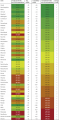
1680580798591.png

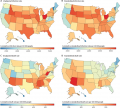
Eventually, the entire population was infected, that effectively ended the pandemic. It's interesting to see how state deaths compare when standardized methods are used.

1680581200887.png
 
Top