PC Power Backup Design.

Thread Starter

vandveuser16776

Joined Feb 21, 2026
121
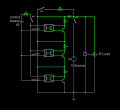
Hello everyone. We have 3 mini PCs and they all have external power supplies, rated 20v but slightly different power output. My need is simple. We experience momentary power cuts (suppose there is some lose wire in the grid ad wind occasionally shorts them or whatever) that come back in a second, but that is enough to reset or shut down a PC. There is always max one PC running and others are off. I need a circuit that just keeps the batteries at a certain voltage, not charging them. The job of the battery pack is to supply the PC for that one second power loss, no heavier. Here I need sanity check by experienced fellows to see if this circuit can do what I want. The sw1 is going to be controlled by some Schmitt Trigger and the V source is the adapter, and R load is the PC. for simplicity, it is reduced to 3 batteries, but obviously can be increased.
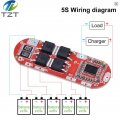
The second option I have is BMS charger, but I would rather design mine and keep voltage at the level that I want.
Other ideas also appreciated, but simplicity counts.
Thanks
I post the images of both. The design can be simulated on Falstad
 

Attachments

Ian0

Joined Aug 7, 2020
13,097
Sorry forgot one important piece. They are 18650 Li-ion. As far as I know, they should be fine if they remain at 3.7v to 3.9v, without occasional discharge, they should be fine. and sw2 represents power loss
You have the wrong batteries for the job. Get rid of the Li-ion and replace them by lead acid.
You can keep Lead-acid at float voltage (2260mV/cell) for ever, and they will last 12 years.
You can't keep Lithium at a fixed charging voltage because overcharge will plate lithium metal on the electrodes and if that happens they catch fire. All you can do is allow them to self-discharge a little then charge them back up again, but that is very stressful for the electrodes, and it will result in far shorter life than then lead-acid.
 

Ian0

Joined Aug 7, 2020
13,097
Since the supply voltage is 20V, perhaps two small 12V SLAs in series with a 20V regulator output?
Or three 6V SLA in series - float voltage 20.3V, provided that the PCs will run at 18V when the mains fails. I can't imagine that the 20V has to be very accurate as it will be stepped down to 5V, 3.3V or whatever.
 

Thread Starter

vandveuser16776

Joined Feb 21, 2026
121
You have the wrong batteries for the job. Get rid of the Li-ion and replace them by lead acid.
You can keep Lead-acid at float voltage (2260mV/cell) for ever, and they will last 12 years.
You can't keep Lithium at a fixed charging voltage because overcharge will plate lithium metal on the electrodes and if that happens they catch fire. All you can do is allow them to self-discharge a little then charge them back up again, but that is very stressful for the electrodes, and it will result in far shorter life than then lead-acid.
I mentioned Schmitt Trigger and the hysteresis fluctuates the enough (or so I think)
 

Thread Starter

vandveuser16776

Joined Feb 21, 2026
121
Or three 6V SLA in series - float voltage 20.3V, provided that the PCs will run at 18V when the mains fails. I can't imagine that the 20V has to be very accurate as it will be stepped down to 5V, 3.3V or whatever.
Does this charge the batteries up as well? Or do i need a separate module for that?
thanks
 

Ian0

Joined Aug 7, 2020
13,097
Does this charge the batteries up as well? Or do i need a separate module for that?
thanks
A float charger will keep the batteries at float voltage (generally 2260mV-3mV/°C per cell) AND supply the load.
When the supply to the charger fails, the batteries supply the load.
VRLA batteries designed for the application are available with 5-year and 12-year life, but will only withstand a small number of complete discharge cycles (in the tens, not in the hundreds).
 

crutschow

Joined Mar 14, 2008
38,316
Does this charge the batteries up as well? Or do i need a separate module for that?
A float charger will keep the batteries at float voltage (generally 2260mV-3mV/°C per cell) AND supply the load.
But you will likely have to build your own charger if you use three 6V SLAs in series, as that's not a common charger voltage.

If your supply voltage is close to 20V, you might be able to use that along with just a resistor in series to limit the charging current.

Alternately, there are 24V chargers available, so that would work with two 12V SLAs and a 20V regulator (e.g. LM317, etc.) at the output.
 

Thread Starter

vandveuser16776

Joined Feb 21, 2026
121
But you will likely have to build your own charger if you use three 6V SLAs in series, as that's not a common charger voltage.

If your supply voltage is close to 20V, you might be able to use that along with just a resistor in series to limit the charging current.

Alternately, there are 24V chargers available, so that would work with two 12V SLAs and a 20V regulator (e.g. LM317, etc.) at the output.
Thank you. Could you tell me what is/are problem(s) with my design and what makes it fail. I have done some googling and Li-ion batteries, seem to be ok with steady voltage as long as they are not overcharged. Correct me please what am I missing
 

MikeA

Joined Jan 20, 2013
442
You can't keep Lithium at a fixed charging voltage because overcharge will plate lithium metal on the electrodes and if that happens they catch fire. All you can do is allow them to self-discharge a little then charge them back up again, but that is very stressful for the electrodes, and it will result in far shorter life than then lead-acid.
Why would they overcharge with a voltage below maximum charge level?

vandveuser16776, you are overthinking this. Take five 18650 cells, wire them up in series, charge the string up to 20V (3.3V per cell) and connect it to the output of your 20V power supply. At this point you already accomplished all your design goals.

The batteries will be kept at 3.3V, which is 25% SOC. It is safe to keep 18650 cell at this level in perpetuity. Will this provide more than a few seconds of runtime at 20V? Yes. Design goal achieved.

Add a fuse and you can stop here. Will cell balance be an issue? Not really if you only discharge them for a few seconds here and there. Will charge current ever be an issue? Not really, your AC power brick is current limited to something like 2-3A which is safe, and again you won't be discharging them for more than a few seconds.

You can certainly get more fancy with your set up, but your design goals don't require it. Does it prevent batteries batteries from being over-discharged? No. Is it safe if your AC power brick grenades and outputs high DC? No.
 

MrChips

Joined Oct 2, 2009
34,628
You can use any type of battery, rechargeable or non-rechargeable.
Just remember to top up the rechargeable battery once every 6 months and every time you experience a power brownout or blackout.
 

AnalogKid

Joined Aug 1, 2013
12,043
My guess - nothing will take less effort and have less total cost (including the cost of your time) than buying the smallest, cheapest UPS you can find and plugging in the three computers.

ak
 
Last edited:

Ian0

Joined Aug 7, 2020
13,097
Thank you. Could you tell me what is/are problem(s) with my design and what makes it fail. I have done some googling and Li-ion batteries, seem to be ok with steady voltage as long as they are not overcharged. Correct me please what am I missing
Nothing wrong with it, but I am just perplexed why anyone would buy an expensive backup battery the only use a quarter of its capacity.
 

Thread Starter

vandveuser16776

Joined Feb 21, 2026
121
Why would they overcharge with a voltage below maximum charge level?

vandveuser16776, you are overthinking this. Take five 18650 cells, wire them up in series, charge the string up to 20V (3.3V per cell) and connect it to the output of your 20V power supply. At this point you already accomplished all your design goals.

The batteries will be kept at 3.3V, which is 25% SOC. It is safe to keep 18650 cell at this level in perpetuity. Will this provide more than a few seconds of runtime at 20V? Yes. Design goal achieved.

Add a fuse and you can stop here. Will cell balance be an issue? Not really if you only discharge them for a few seconds here and there. Will charge current ever be an issue? Not really, your AC power brick is current limited to something like 2-3A which is safe, and again you won't be discharging them for more than a few seconds.

You can certainly get more fancy with your set up, but your design goals don't require it. Does it prevent batteries batteries from being over-discharged? No. Is it safe if your AC power brick grenades and outputs high DC? No.
That would be fine if I were to remove the batteries and charge them individually and put them back. Charging batteries in series always leads to one of the batteries charge faster and the total would show , say, 19v while one battery is charged 3,2v the other 4.2v. That happens even if all batteries are made by the same factory.
 
Top