Ni-Zn battery charger schematic

Thread Starter

DavidB3

Joined Nov 28, 2018
21
Hi,

Does anybody has a (good but simple) Ni-Zn charger schematic?
I have a 3 cell 1200 mAh Ni-Zn rechargeable battery on a led lamp.
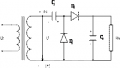
The current charger is a joke: a 1 uF capacitor in series with diodes and resistors directly connected to 230 V 50 Hz. But the only upside is it's very small and fit inside the lamp.
The interior of the lamp is a cylinder with 6..7 cm height and 10 cm diameter.
From what I read on Google, the charger should stop charging when the cell reaches 1.9 V.
 

ian field

Joined Oct 27, 2012
6,536
Hi,

Does anybody has a (good but simple) Ni-Zn charger schematic?
I have a 3 cell 1200 mAh Ni-Zn rechargeable battery on a led lamp.
The current charger is a joke: a 1 uF capacitor in series with diodes and resistors directly connected to 230 V 50 Hz. But the only upside is it's very small and fit inside the lamp.
The interior of the lamp is a cylinder with 6..7 cm height and 10 cm diameter.
From what I read on Google, the charger should stop charging when the cell reaches 1.9 V.
The only zinc batteries I've seen use air as the electrolyte and aren't rechargeable.

A type number or datasheet for the battery in question might help.
 

Thread Starter

DavidB3

Joined Nov 28, 2018
21
Well, the battery has a green plastic shell with no markings.
Each of the 3 cells (AA size) has the same color and only +- markings.
On the lamp box it says "1200 mAh Ni".
Voltage is 4 to 5 V (leds not connected) and 3.5 to 4.5 V at ~ 200 mA.
During charge it reaches almost 6 V.
 

Thread Starter

DavidB3

Joined Nov 28, 2018
21
During charge it reaches almost 6 V.
from Wikipedia:
A NiCd battery has a terminal voltage during discharge of around 1.2 volts which decreases little until nearly the end of discharge.
from Wikipedia:

Nickel–zinc cells have an open circuit voltage of 1.85 volts when fully charged,[10] and a nominal voltage of 1.65 V.
... Known charging regimes include a constant current of C or C/2 to cell voltage = 1.9 V.
 

crutschow

Joined Mar 14, 2008
38,529
They appear to be NiZn rechargeable batteries such as these:
upload_2018-11-30_9-19-52.png

According to Wikipedia "Known charging regimes include a constant current of C or C/2 to cell voltage = 1.9 V."
So for you 1300mAh batteries they should be charged at a 650mA to 1.3A rate to a voltage of 5.7V, at which point the charging is terminated (no trickle charging).

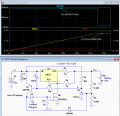
Below is a circuit with its LTspice simulation of an LM317 regulator circuit that charges at a constant-current until the end voltage as determined by the TL431 reference, at which points the charge is terminated.
That voltage is when the voltage at the junction of R1 and R4 equals 2.5V.
At that point U2 turns on, which turns on Q1 and M1, and latches it from positive feedback through D1.
M1 now pulls the LM317 ADJ pin to ground, setting LM317 to its minimum output voltage (1.2V), terminating the charge.

LED D2 lights at this point to show the charging is complete.

To reset the circuit, the batteries to be charged must be connected before the power is applied.
If you want a manual reset, connect a momentary PB NO switch across R4 to ground, and add a 100 ohm resistor in series with D1.

The input supply can be a wall-wort with a maximum output current of at least 1A @ 10Vdc.

The LM317 can dissipate up to 5W or so when charging, so needs to be on an appropriate heat-sink (thermal resistance to air of ≤ 10 °C/W).

Edit: Schematic updated

upload_2018-12-1_12-47-30.png
 
Last edited:

Thread Starter

DavidB3

Joined Nov 28, 2018
21
Thank you :)

I'll test it tomorrow in LTSpice and Proteus.

V1 is probably obtained from a transformer + 4 diodes + capacitor.
The hard part is to make all fit inside the lamp without touching other things like the main PCB, the alternator, the ON/Off button and so on.
 

Thread Starter

DavidB3

Joined Nov 28, 2018
21
I added "probably" just because I'm not sure (yet) to use a transformer+diodes+capacitor or to use a (small) switch power source like the PC does.
I would prefer the first since it's a lot safer/cheaper but I have to find and buy a transformer (or make one). It has to output ~ 7.5 V and ~1..1.5 A for many hours without overheating but it also has to be small to fit inside the lamp.
 

Thread Starter

DavidB3

Joined Nov 28, 2018
21
Unfortunately, as I was manually charging the battery, I found a problem with one of the cells: open circuit voltage is good (1.5 V) but the current is very low. When I try to charge it it goes strait to 2 V but it doesn't actually charge.
 

Thread Starter

DavidB3

Joined Nov 28, 2018
21
I decided to throw away these (not so good) batteries and to buy Ni-Mh instead (Lithium batteries have the self discharge current a bit too high and requires complex electronics to charge).
I'm also thinking on how to double the voltage inside the lamp without problems from other features (like the solar/crank/car battery/AC charger).
Why double? Because I noticed boost led drivers are more efficient at higher voltage.

The other internal lamp components are actually made for 3.6 V 3 cells battery (not for 3 x 1.65 Ni-Zn cells).
So by doubling I mean 3.6 V 3 cells >> 7.2 V 6 cells.
I found some cheap 1300 mAh Energizer Ni-Mh batteries and placed the order (should arrive in a few days).
I know I have to equalize their charges before placing them in series.

For the led driver I use (for now) a modified MT3608 circuit.
As decoupling capacitors I use 2 x 0.33..0.44 uF/275V MLCC. I don't have anything higher now of a lower voltage. I found them inside some damaged PC monitors.
For now they're better than nothing...
But at the same internet company where I ordered the batteries I found some cheap 10..22uF/10..25V smd MLCC.

Doubling the voltage helps MT3608D be more efficient especially when the voltage of the batteries significantly drops (below 1.15V..1.05V per cell).
But unfortunately it doesn't make it more efficient when the voltage is normal/high. MT3608 has its efficiency "peak" when boosting a few watts but the leds are so efficient they consume only 0.6 W maximum.
So the efficiency of MT3608 will be 75..80% tops.

I hope the schematic I posted in the "Electronics resources" section of the forum will be more efficient at this voltage.

What do you guys think so far...?
 

ArakelTheDragon

Joined Nov 18, 2016
1,366
Hi,

Does anybody has a (good but simple) Ni-Zn charger schematic?
I have a 3 cell 1200 mAh Ni-Zn rechargeable battery on a led lamp.
The current charger is a joke: a 1 uF capacitor in series with diodes and resistors directly connected to 230 V 50 Hz. But the only upside is it's very small and fit inside the lamp.
The interior of the lamp is a cylinder with 6..7 cm height and 10 cm diameter.
From what I read on Google, the charger should stop charging when the cell reaches 1.9 V.
The circuit might be only to keep the voltage stable (thats normally done with capacitors and diodes). I wouldn't call it a joke until I see it. Similar circuits are used in automotive test equipment.
 

Thread Starter

DavidB3

Joined Nov 28, 2018
21
Sorry.
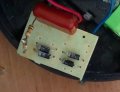
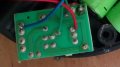
Here is the circuit:
front.jpg back.jpg

The only modification I made is to lower the resistance of the resistor in parallel with the capacitor from 500 KOhm to 200 KOhm.
I hoped it will lower the voltage spikes (I see sparks where the metals come in contact) when I connect/disconnect it to/from 230 VAC, by discharging the capacitor faster.
Those voltage spikes "fried" a circuit I recently bought for showing how much battery is charged.

But it is also dangerous to use since you can easily electrocute...
I won't be the only user of this lamp (elders/children may use it too) so it's safer to use a transformer.
 
Last edited:

ian field

Joined Oct 27, 2012
6,536
I decided to throw away these (not so good) batteries and to buy Ni-Mh instead (Lithium batteries have the self discharge current a bit too high and requires complex electronics to charge).
I'm also thinking on how to double the voltage inside the lamp without problems from other features (like the solar/crank/car battery/AC charger).
Why double? Because I noticed boost led drivers are more efficient at higher voltage.

The other internal lamp components are actually made for 3.6 V 3 cells battery (not for 3 x 1.65 Ni-Zn cells).
So by doubling I mean 3.6 V 3 cells >> 7.2 V 6 cells.
I found some cheap 1300 mAh Energizer Ni-Mh batteries and placed the order (should arrive in a few days).
I know I have to equalize their charges before placing them in series.

For the led driver I use (for now) a modified MT3608 circuit.
As decoupling capacitors I use 2 x 0.33..0.44 uF/275V MLCC. I don't have anything higher now of a lower voltage. I found them inside some damaged PC monitors.
For now they're better than nothing...
But at the same internet company where I ordered the batteries I found some cheap 10..22uF/10..25V smd MLCC.

Doubling the voltage helps MT3608D be more efficient especially when the voltage of the batteries significantly drops (below 1.15V..1.05V per cell).
But unfortunately it doesn't make it more efficient when the voltage is normal/high. MT3608 has its efficiency "peak" when boosting a few watts but the leds are so efficient they consume only 0.6 W maximum.
So the efficiency of MT3608 will be 75..80% tops.

I hope the schematic I posted in the "Electronics resources" section of the forum will be more efficient at this voltage.

What do you guys think so far...?
Eh?!!! - I'm converting everything I can to lithium because all the nickel chemistries self discharge.

Just done my 2005 cordless drill because the Ni-Cd pack was self discharging literally in a matter of days.

A lot of alkalines start leaking in less time than lithium can sit holding a charge.
 

crutschow

Joined Mar 14, 2008
38,529
The new pre-charged NiMh batteries have a low self-discharge rate (such as the Eneloop which claims to maintain 70% of the charge for 10 years).
 

Thread Starter

DavidB3

Joined Nov 28, 2018
21
For almost 2 years I use in my house only Energizer Ni-Mh AA and AAA rechargeable batteries (remotes, clocks, led lamps and so on) + 1 charger.
Not one has "died".
All have low self-discharge rate. For example the ones from remotes I charged them only one time and still working well.
 

Thread Starter

DavidB3

Joined Nov 28, 2018
21
Well, doubling the voltage of the battery has created some problems I have to solve:
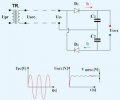
1. the lamp's three-phase generator is now charging the battery through a 6 Shotky diodes "bridge" (and no capacitor). But how to double its voltage?
I could use a transformer, but I never done a three-phase. And besides, it will lower the efficiency.
Or I can use one of these:
download.jpg download.png

Any ideas on how to adapt one of them for this task?
2. The output USB 5V 0.5..2A for charging phones. Until now I used a step-up/boost converter, now I'll have to buy/make a buck boost converter.
Any ideas?
3. The solar panel is 5V/120mA so it won't charge a 7.2V battery. I have another 2 identical solar panels and I can use one of them in series.
But I don't know yet how to add it to the shell case of the lamp so both would have the same amount of light.

Or I can use n-Channel and/or p-Channel Mosfets to switch from parallel to series when I turn on the lamp and back to parallel when off.
In a day or two I will get 10 AO3404A and 10 AO3407A.
The problem is I searched on Google and this forum and found a few schematics but couldn't find a 100% working one.
So far I'm trying to make one but with not much progress...
 

Thread Starter

DavidB3

Joined Nov 28, 2018
21
The package has arrived.
Measurements:
Ebat = 7.605 V
Ubat = 7.515 V
Ibat = 95.7 mA
So rbat ~ 1 ohm and Pinputbooster = 719 mW.
Uleds = 15.82 V
Ileds = 37.4 mA
Poutputbooster = 592 mW.

The efficiency is 82.34% (a little better than I expected to be).


Late edit: tried the crank - it rotates way too easy and is charging only 1 mV per ~ 2 minutes.
So it seems it really needs a voltage doubling too.

The "alternator" has only 3 output wires and no magnet.
It seems it uses a fraction of the output power to generate the rest.
 
Last edited:
Top