Needing a very small balancing or pseudo-balancing circuit for lithium batteries

Thread Starter

LikeTheSandwich

Joined Feb 22, 2021
206
Hi there. Some lithium tool batteries have a tendency to go out of balance over long periods, such as Milwaukee's notorious HD 9.0 and 12.0 batteries (the ones I have). They don't have built in cell balancing (even though they have hardware for it), so I'm trying to think about ways to add it. I've seen some people add balance leads for an external balance charger, but I'd rather find a way to add internal balancing so I can keep using my Milwaukee chargers. However I haven't found any balancing boards that are quite small enough to fit inside the existing case. So first question is: does anyone know of any very small (even if very low current and passive) balance boards? Like 15mmx20mm or smaller? If not, my idea is to design one using 4.1V zener diodes with 10ohm resistors to create a sort of pseudo-balance board so as they charge up, if they're out of balance, the highest ones will slowly drain to allow the lower ones to catch up. Should this theoretically work the way I am expecting, or am I missing something about circuit design?
 

crutschow

Joined Mar 14, 2008
38,320
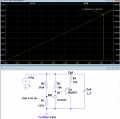
Below is the LTspice sim of a simple circuit to provide the bypass using the inexpensive TLV431 programmable shunt regulator and a PNP transistor:
It provides a much sharper break, and better bypass voltage accuracy than a standard Zener.

The capacitor labeled "Cell" emulates the charging of the battery cell.

U1 and thus Q1 turn on when the Ref voltage from the voltage divider R2/R1 reaches 1.24V (here at a cell voltage of 4.1V).

R1 and R1 generate a few microamp current drain, but that will take several years to discharge the battery (likely longer than the self-discharge rate of the cell).

1749577958581.png
 
Last edited:

Thread Starter

LikeTheSandwich

Joined Feb 22, 2021
206
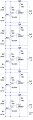
Hey that's really cool! I was wondering if I could use that but I wasn't sure how exactly. Could I use a resistor to limit current and eliminate the transistor altogether, or is the TLV extremely current limited? And trying to understand, for a 5S set look like this?
 

Attachments

Thread Starter

LikeTheSandwich

Joined Feb 22, 2021
206
I was planning on 10mA initially, so 20 is not a big deal to me. But if this circuit will be more robust, I'll see what I can do with this diagram. Thanks!
 

Thread Starter

LikeTheSandwich

Joined Feb 22, 2021
206
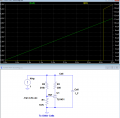
Thank you so much! This is great, I think this will work beautifully. And increasing R3 will decrease the current right? So if I go up to 470 that'll lower the current closer to 10mA? Thanks man, you're the best!
 

crutschow

Joined Mar 14, 2008
38,320
Thank you so much! This is great, I think this will work beautifully. And increasing R3 will decrease the current right? So if I go up to 470 that'll lower the current closer to 10mA? Thanks man, you're the best!
Edit: Due to the 1.5V voltage drop of the TLV431 when ON, which is not properly modeled, leaving R3 at 300Ω will actually give about 10mA of current.
 
Last edited:
Top