Need help with step motor info

Thread Starter

xtal_01

Joined May 1, 2016
227
There are also "absolute" encoders that output an exact position so that the actual position is known at power-up. It is the incremental encoders that only supply pulse trains. The limitation of absolute encoders is resolution. How many bits
Actually, I was thinking of an open loop steering system where the driver is the feedback link. Like in a regular car. You turn the wheel and see where you go. MUCH SIMPLER and much less to go wrong. And no position feedback except thru the driver.
You need to know once where you are. When my wife puts her hand onto the small steering wheel she uses, she knows when the handle is "up" (at 0 deg), the wheels on the van are straight. Think of grabbing the steering wheel of your car and not knowing where the wheels are. With this it is worse as the first time you know they are not straight is when you start driving.

As long as you can say when the small steering wheel is at point X the wheels will be straight, you would be OK.

I agree, this is the most complicated part of the system. Just turning an encoder and making a motor move is relatively easy.

Mike
 

MisterBill2

Joined Jan 23, 2018
27,639
You need to know once where you are. When my wife puts her hand onto the small steering wheel she uses, she knows when the handle is "up" (at 0 deg), the wheels on the van are straight. Think of grabbing the steering wheel of your car and not knowing where the wheels are. With this it is worse as the first time you know they are not straight is when you start driving.

As long as you can say when the small steering wheel is at point X the wheels will be straight, you would be OK.

I agree, this is the most complicated part of the system. Just turning an encoder and making a motor move is relatively easy.

Mike
Using an absolute encoder for a position servo is different, it takes digital comparisons rather than pulse counts. Those instances where we used them, we purchased a system, not just parts. But they only need to be calibrated once at assembly and then only after being taken apart. So it would work very well for steering with only calibrating ence, after installing it.
 

MisterBill2

Joined Jan 23, 2018
27,639
NO!, Those are incremental encoders with internal counters, like used in many industrial robots. Actual true incremental encoders put out multi-bit digital data. That is very much different. They are used because they are much cheaper.
 

Thread Starter

xtal_01

Joined May 1, 2016
227
NO!, Those are incremental encoders with internal counters, like used in many industrial robots. Actual true incremental encoders put out multi-bit digital data. That is very much different. They are used because they are much cheaper.
Go it .... kind of like the old glass scale encoders I had on an old milling machine. The ones I had gave an absolute position rather than a relative one.

Interesting ... I thought as did Max that it was just a counter storing value.

So you would calibrate it once .. guessing it "flashes a value" (or something like that) and it then know where it is at all times.

Thanks so much ... definitely worth looking into !!!!!!!!

Mike
 

MaxHeadRoom

Joined Jul 18, 2013
30,688
Go it .... kind of like the old glass scale encoders I had on an old milling machine. The ones I had gave an absolute position rather than a relative one.
Interesting ... I thought as did Max that it was just a counter storing value.
Glass scales and optical encoders typically use a photo impressed grating and use what is known as the Moirè effect in order to read a grating that exceeds the rough limit with out it of 100 pulses/rev or linear measure.
The end result is they use the 90° quadrature method of reading the scale.
Often, a mark on the grating at one end is used for the zero reference point.
 

MisterBill2

Joined Jan 23, 2018
27,639
Today there are both kinds in use. Robots and machine tools often use the incremental plus counter for two reasons: first, they have better high speed response, and more importantly, they cost less and need fewer wires.

And I offer a serious caution about stepper motors, which is that it is very easy for them to lose steps. Trying too rapid an acceleration , a momentary power glitch, or a bit of overload, and they do not move as many steps as commanded. For any kind of driven steering system in a vehicle it will be wise to have an indicator that tells when the wheels are set for straight ahead, even if the system has a full-feedback servo system.
 

Thread Starter

xtal_01

Joined May 1, 2016
227
Today there are both kinds in use. Robots and machine tools often use the incremental plus counter for two reasons: first, they have better high speed response, and more importantly, they cost less and need fewer wires.

And I offer a serious caution about stepper motors, which is that it is very easy for them to lose steps. Trying too rapid an acceleration , a momentary power glitch, or a bit of overload, and they do not move as many steps as commanded. For any kind of driven steering system in a vehicle it will be wise to have an indicator that tells when the wheels are set for straight ahead, even if the system has a full-feedback servo system.
I was not going to depend on counting steps just for that reason. I thought a pot giving feed back would be better just in case it did miss steps.

That said, the idea of an encoder would be even better.
 

MisterBill2

Joined Jan 23, 2018
27,639
There is still the possibility of the two different types of control, one being that the driver has the control over moving the steering , while the other is that the driver has control over AIMING the steering. totally different driving schemes, although the aiming is what is done in a standard vehicle system. in a normal "Moving" system the driver simply operates the aiming motor and the wheels steer in whatever direction until the driver returns them to straight ahead. That is much less intuitive but very simple to integrate into the hardware because the only feedback and control is from the driver.. It is not really "servo control" because it does not include any feedback within the hardware.
With any technology used for position feedback, reliability is vital, and so redundancy is standard in most instances. I know that at least one version of electronic throttle control used a three section potentiometer on the pedal so that any failure could be sensed and compensated for.
There is also another feedback scheme, which uses selsyn motors for the position control input, the actual position aiming feedback and a differential selsyn to determine the difference and generate the control commands. All of the calibration is mechanical because it does not use an electronic amplifier.
 

Thread Starter

xtal_01

Joined May 1, 2016
227
There is still the possibility of the two different types of control, one being that the driver has the control over moving the steering , while the other is that the driver has control over AIMING the steering. totally different driving schemes, although the aiming is what is done in a standard vehicle system. in a normal "Moving" system the driver simply operates the aiming motor and the wheels steer in whatever direction until the driver returns them to straight ahead. That is much less intuitive but very simple to integrate into the hardware because the only feedback and control is from the driver.. It is not really "servo control" because it does not include any feedback within the hardware.
With any technology used for position feedback, reliability is vital, and so redundancy is standard in most instances. I know that at least one version of electronic throttle control used a three section potentiometer on the pedal so that any failure could be sensed and compensated for.
There is also another feedback scheme, which uses selsyn motors for the position control input, the actual position aiming feedback and a differential selsyn to determine the difference and generate the control commands. All of the calibration is mechanical because it does not use an electronic amplifier.
So just for my own information. Every servo I have used (many were small but a few were on equipment like milling machines) were DC with some kind of feedback.

If you were going use some kind of motor to drive the steering shaft (feedback or not), what would you use? I was worried a standard 12 volt DC motor would have brushes that wear out. That is why I was thinking a stepping motor. Is there a better choice?
 

MaxHeadRoom

Joined Jul 18, 2013
30,688
So just for my own information. Every servo I have used (many were small but a few were on equipment like milling machines) were DC with some kind of feedback.
If you were going use some kind of motor to drive the steering shaft (feedback or not), what would you use? I was worried a standard 12 volt DC motor would have brushes that wear out. That is why I was thinking a stepping motor. Is there a better choice?
Part of my occupation was retrofitting CNC machines, I have used DC in the past, and they were very much in vogue in early CNC machines, The type used were very rugged and lasted many years of daily operations.
In the late 80's, early 90's BLDC and 3ph PM AC versions started appearing on the scene, and now have virtually replaced the DC brushed.
But the DC brushed meant for this kind of service, can work well for many years. And brushes are usually easy to replace, if needed.
I would not hesitate to use one, in most applications. ;)
CNC Servo's typically require some feedback element of some kind, encoder etc, this closes the PID loop.
 

MisterBill2

Joined Jan 23, 2018
27,639
Certainly an adequate powered CNC servo motor could work very well for vehicle steering, if it had the right gearbox output speed, and if the DC drive voltage allows it to be used in whatever vehicle is selected. And a used servo+ driver package may be available at a reasonable price. Or maybe not. Aviation surplus might also be a good source. Finding the desired drive supply voltage will be the problem.
 

Thread Starter

xtal_01

Joined May 1, 2016
227
Part of my occupation was retrofitting CNC machines, I have used DC in the past, and they were very much in vogue in early CNC machines, The type used were very rugged and lasted many years of daily operations.
In the late 80's, early 90's BLDC and 3ph PM AC versions started appearing on the scene, and now have virtually replaced the DC brushed.
But the DC brushed meant for this kind of service, can work well for many years. And brushes are usually easy to replace, if needed.
I would not hesitate to use one, in most applications. ;)
CNC Servo's typically require some feedback element of some kind, encoder etc, this closes the PID loop.
Sooooo ... would you like to vacation in VT for a few weeks:)Long story but I am actually a machinist by trade. I then when back to school for mechanical engineering. When I graduated in the 80's, there was a recession. I found a job as an instrument tech / designer.

No electronics involved ... just PLS's, starters.

I am in the middle of building a large workshop ... 4500 sq ft .. put every nail in myself.

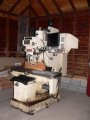
I have an old CNC mill in storage (along with a few other manual machines). Got it cheap as the controller was blown up and they wanted more for the new controller than the machine was worth.

When I get this shop done, rebuilding this machine is one the list.

I guess I really should not be worried about wear. In 12 years, she has only put 40K miles on the van ... low low hours.

I am a PM fan. I change my oil and filters faithfully .... heck I just came in from checking the plow getting ready for the big storm.

The mechanics for this project are easy ... I can make all the mounts ... couplings for gear boxes .... anything that I might need.

It is the electronics that I will need advice on. I know just enough to be dangerous.

That said, I do a lot of homework and thinking things through.

When I was at Westinghouse, I was part of a team that took every new project and tried to figure out how it could fail and how to keep people safe. I remember being told "design it like someone is trying to hurt themselves".

Thanks so much for all the advice !!!!!!!!!!!!!

PS ... if you want to check out my shop project, I have some videos on FB

https://www.facebook.com/michael.csele

https://www.facebook.com/VermontCountryWorkshop/
 

MisterBill2

Joined Jan 23, 2018
27,639
The selsyn control scheme sounds much better now I know the TS has mechanical insight and abilities. Now the challenge would be powering selsyns in a van with 12 volt DC power. Surplus selsyns mostly use 24 volts, 400Hz, AC power. So a reliable inverter will be needed.
 
Last edited:

Thread Starter

xtal_01

Joined May 1, 2016
227
VERY impressive site and work!
" I have an old CNC mill in storage "
What is the make/model?
It is a Fryer MB-14

It had been upgraded a few times ... you can see someone stuck a flat screen on the controls.

The owner said they repair company wanted to put a new controller and instead they just bought a new machine.

Looks good ... ball screws look in good shape.

I took these pictures just before I painted it with oil ... wanted to keep the rust off while in storage.Fryer_MB_14.jpg
 

Thread Starter

xtal_01

Joined May 1, 2016
227
The selsyn control scheme sounds much better now I know the TS has mechanical insight and abilities. Now the challenge would be powering selsyns in a van with 12 volt DC power. Surplus selsyns mostly use 24 volts, 400Hz, AC power. So a reliable inverter will be needed.
WOW ... I just did a quick look-up. Super interesting.
 

MaxHeadRoom

Joined Jul 18, 2013
30,688
It is a Fryer MB-14
Looks good ... ball screws look in good shape.
Looks like a good candidate for a retro-fit, I think I recognize the DC servos, which are built nice.
The down-and -dirty way is Mach3 or 4, or Dynomotion, my preference is with a Galil motion card.
The CNCzone is a good reference.
 

Thread Starter

xtal_01

Joined May 1, 2016
227
Looks like a good candidate for a retro-fit, I think I recognize the DC servos, which are built nice.
The down-and -dirty way is Mach3 or 4, or Dynomotion, my preference is with a Galil motion card.
The CNCzone is a good reference.
Exactly! I monitor the Mach 3 / 4 forums .... lots of good info out there.

I had never looked at Dynomotion.

I got the idea when I was at Westinghouse. We bought to older mills ... both upgraded .. $25K each! We used one for engraving and one for small jobs (we had new HAAS machines for "real" work).

I think I paid $1000 or $1500 for this mill. I figure it is a good sold base to start with.
 
Top