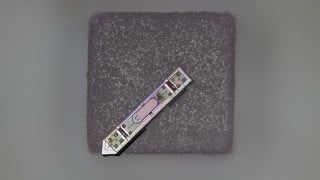
Need help identifying an old 80's component...

AlbertHall

Joined Jun 4, 2014
12,625
For future reference, if I ask you to measure a voltage the board should be switched on. If I ask you to measure a resistance then the board should be off. This is a general rule for using the meter. If you measure a place which has voltage with the meter on a resistance range you might damage the meter or the board.
 

Thread Starter

StirlingSteve

Joined Jan 13, 2020
31
For future reference, if I ask you to measure a voltage the board should be switched on. If I ask you to measure a resistance then the board should be off. This is a general rule for using the meter. If you measure a place which has voltage with the meter on a resistance range you might damage the meter or the board.
eep! OK well I think I got away with it then, board still seems to work and meter hasn't fried :) Let me know what you think of the latest unpowered measurements!
 

Thread Starter

StirlingSteve

Joined Jan 13, 2020
31
On the duff board lift one end of S05 and one end of S11.
Remeasure across the capacitor (diode range, both ways round).
OK, with those diodes out of circuit the diode test gives .592v with the probes swapped (black to positive) and while initially I thought there was a 0 reading with the probes the right way round, sadly it looks like I just wasn't making contact properly and eventually it read .831v so much the same as before I think.

To make things worse, the fact that it was quite hard to get contact this time made me worry that I might've had the same problem with the working board last night when I reported a 0 result one way round. Sure enough, I'm afraid to report that when I tried it again just now, I got .596v with probes swapped (as before) and eventually got .983v with the black probe to negative on the cap. So effectively, both boards are doing much the same thing. I'm really sorry if this throws a spanner in the works again.
 

AlbertHall

Joined Jun 4, 2014
12,625
Please be clear whether a reading is '0' or '0L' as they are effectively opposites.

So with the diodes disconnected both boards read the same?
 

Thread Starter

StirlingSteve

Joined Jan 13, 2020
31
Please be clear whether a reading is '0' or '0L' as they are effectively opposites.

So with the diodes disconnected both boards read the same?
Sorry will do. Yep, both boards read much the same now but to be clear, the duff board's readings haven't changed much from before I lifted the diodes. The big change is on the working board which now gives a voltage both ways. I think I was maybe getting contact issues last night when I tested it. Sorry again if this messes up your train of thought :(
 

Thread Starter

StirlingSteve

Joined Jan 13, 2020
31
Am I right in assuming you wanted those diodes lifted to isolate the inverter circuitry a little? Just trying to understand the thought processes.
 

AlbertHall

Joined Jun 4, 2014
12,625
Yes, it looked like the duff board had a lower resistance hanging on the output on the output of the rectifier. Disconnecting the diodes removed a possible path for this back through the rectifiers. That extra loading could have stopped the oscillator running giving you the zero output that you see.

However, that appears to be all wrong! So now it appears that the problem is with the oscillator and the components around it. I can't see just how those components are connected partly because the transformer internals are unknown.

So, Can you measure resistance around the pins of the transformer. Count the red arrowed pin as pin 1 and the rest numbered in sequence clockwise.
If you get a 0L make sure you have a good connection. There will be duplicates measurements here but that acts as an error check. Measure as follows:
1 - 2
1 - 3
1 - 4
1- 5
1 - 6
1 - 7
1 - 8
1 - 9
1 -10
2 - 3
2 - 4
2 - 5
2 - 6
2 - 7
2 - 8
2 - 9
2 - 10
3 - 4
3 - 5
3 - 6
3 - 7
3 - 8
3 - 9
3 - 10
4 - 5
4 - 6
4 - 7
4 - 8
4 - 9
4 - 10
5 - 6
5 - 7
5 - 8
5 - 9
5 - 10
6 - 7
6 - 8
6 - 9
6 - 10
7 - 8
7 - 9
7 - 10
8 - 9
8 - 10
9 - 10
 

Thread Starter

StirlingSteve

Joined Jan 13, 2020
31
Phew!

Checked, double-checked and triple checked all of them but am happy to check any of them again if some results don't make sense.

1 - 2 OL
1 - 3 OL
1 - 4 OL
1 - 5 OL
1 - 6 OL
1 - 7 ~38MΩ but steadily rising
1 - 8 ~39MΩ but steadily rising
1 - 9 ~8Ω
1 - 10 ~7Ω
2 - 3 ~2.5Ω
2 - 4 ~3Ω
2 - 5 ~3.5Ω
2 - 6 ~3.6Ω
2 - 7 OL
2 - 8 OL
2 - 9 OL
2 - 10 OL
3 - 4 ~4Ω
3 - 5 ~4Ω
3 - 6 ~3.5Ω
3 - 7 OL
3 - 8 OL
3 - 9 OL
3 - 10 OL
4 - 5 ~2.8Ω
4 - 6 ~2Ω
4 - 7 OL
4 - 8 OL
4 - 9 OL
4 - 10 OL
5 - 6 ~1.5Ω
5 - 7 OL
5 - 8 OL
5 - 9 OL
5 - 10 OL
6 - 7 OL
6 - 8 OL
6 - 9 OL
6 - 10 OL
7 - 8 ~2Ω
7 - 9 OL
7 - 10 OL
8 - 9 OL
8 - 10 OL
9 - 10 ~2Ω

Would love to know what this lot tells you! I thought at first I could see a general pattern but nope...
 

Thread Starter

StirlingSteve

Joined Jan 13, 2020
31
Cool, as long as they look vaguely like what you expected, that's good enough for me! I really appreciate all your help on this, it means a lot.
 

Thread Starter

StirlingSteve

Joined Jan 13, 2020
31
I'll get back to you. They look convincing at least. I've got to go through them and link back to the circuitry to understand it.
Hello there, I thought you might like to know that I finally worked out what the problem was with this, it actually turned out that the power circuitry was all fine, it was the main IC that was dead. I guess it had some level of control over whether power was sent to the VFD or not, hence we weren't seeing any output there.

Cheers for all the help you gave me - all the time you spent and patience you demonstrated was well received, I have a much better understanding of what all the parts do now and for that I'm eternally grateful :)

Thanks again!
 
Top