need help build a tongue stimulator device

Status
Not open for further replies.

Thread Starter

Nathan Roberts

Joined Oct 9, 2017
17
Hi all
this is my first post here... hmm so , bit of background. i studied electronic engineering 17 years ago but had to drop out after the second semester due to financial issues. but now im trying to get back into it. so basically i learnt a little bit of everything but not enough of anything to be a danger to myself. shame.

so im dead set keen on building one of these nureo-stimulator devices. i read about them in Norman Doidges book "how the brain heals itself" the military is also very into these devices and you can hear a story about a lady journalist who was invited to a virtual reality military sniper range to test her usefulness with and without the device. the results were amazing since she was exhausted from her flight and just wanted to pass out in her hotel room but was obligated to participate, very intersting . worth a listen: http://www.radiolab.org/story/9-volt-nirvana/

saying that i live in australia and am not interested in any military applications of the device but rather the health benefits it can possibly give.

the university who developed the device has written a brief write up of its construction and i, thinking with a bit of pointing in the right direction from some handy people on this forum i could get it done.

here is the write up:
The technical details
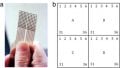
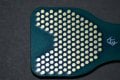
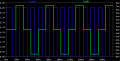
The version 2 PoNS™ device delivers 19-V positive pulses to the top surface of the tongue. The unbalanced biphasic waveform is specifically designed to ensure zero net dc to minimize the potential for tissue irritation. The system delivers triplets of 0.4-60 µs-wide pulses at 5 ms intervals (i.e. 200 Hz) every 20 ms (50 Hz) to a 143-electrode array of gold-plated circular electrodes (1.50 mm diam., on 2.34 mm centers) created by a photolithographic process used to make printed circuit boards. The voltage and pulse timing to each electrode is programmed in the device and cannot be altered. In some PoNS versions the subject can adjust the stimulus intensity by manipulating a pair of intensity buttons. In other versions the intensity is fixed at the discretion of the study director. At any instant in time, one of the 16 electrodes in each of the 9 sectors on the array is delivering stimulation. The remaining electrodes serve as the current return path to ground.

simple right? :)
 

Thread Starter

Nathan Roberts

Joined Oct 9, 2017
17
i probably should give some more info on my skills. i have built lots of things all my life, from electronics to mechanical projects. im not a total noob. i have built drones and various other circuits. i understand arduino and PWM as well as op amps and basic electronics. i presume this needs a dc pulse circuit that is modulated by an op amp and timed with a timer circuit. it must be constant voltage and variable current. the low pulse duration and high conductivity of the tongue will require very low current.
 

DickCappels

Joined Aug 21, 2008
10,661
The reason for passing small currents through the head (brain) is understood (formal research indicates a small but robust improvement), but to what end would one want to pass current through the tongue?

What is your objective in posting --are you looking for design ideas?
 

Uilnaydar

Joined Jan 30, 2008
118
The reason for passing small currents through the head (brain) is understood (formal research indicates a small but robust improvement), but to what end would one want to pass current through the tongue?

What is your objective in posting --are you looking for design ideas?
Virtual taste possibly? Add taste and smell to the ole virtual reality :)
 

wayneh

Joined Sep 9, 2010
18,087
Most nerves in the body do not carry sensory information. So while you might be able to fool a few tongue receptors into firing flavor signals, most of your stimulation will cause noise rather than signal. And the tongue only does a small part of flavor analysis. Try holding your nose while you taste something.

I think a printer cartridge approach would actually work better on the tongue. Use salt, sugar, quinine and citric acid as the "inks" and print a small amount to the tongue's surface. This would exploit the tongue's natural function and pretty well simulate everything the tongue can do. More elaborate flavors/smells would requires a LOT more inks!
 

Thread Starter

Nathan Roberts

Joined Oct 9, 2017
17
they all sound like really cool ideas guys. but it is not a taste thing i am interested. although now i am slightly :)

so a breif background on the device is it stimulates the tounge nerves. the tounge has the most amount of nerves out of any part of the body and the nerves are connected directly to the brain stem. research has shown that by sending square wave pulses at net zero dc to this region activates all the regions of the brain at once. it is used for firing circuits in the brain that have become damaged. it has shown great promise in traumatic brain injury repair, autism, Alzheimers, MS, parkinsons and lots of other neuro degenerative conditions. i have a condition that studys has shown it can improve. i really really want to do this. i know i can. but i just need a little bit of knowledge from some one. i dont mean to sound desperate but.... the design was sold to a company 6 years ago and they have been running trials in russia. every year they say they are going to release it but every year they postpone the release date. its very frustrating. it seems as though they are more concentrated on appointing CEOs and getting there corporate model developed than there product. the company is called helius and they are not a small venture. they are big in the medical industry and im sure the hold up is them making sure they aren't going to get sued. im not the kind of guy to steal some ones information but when it comes to my quality of life suffering and someones check book, i know where my priorities lie. to be clear the device is for me and only me and im not looking to manufacture. saying that i have a few family members that could possibly benefit from it and when they release the official product i will definitely be buying one regardless, but until then i just want to be well again. i really hope some one can lend me a bit of time. thanks again, you souns=d like you have a great little community here.
 

Thread Starter

Nathan Roberts

Joined Oct 9, 2017
17
a little bit more info
the stimulus alone isnt enough to heal. the trick is to engage in activitys that the individual is defeciet in while stimulating. balance is an area it works very well at, so they have people perform balance exercises while connected to the machine for example. is also works very well in adhd and bipolar for some reason. i hope to use it to improve my vision, memory and concentration as i have a rather "noisy "brain (a neuro term used by Doidge in his book)


its a fascinating book by the way i really recommend it to anyone interested in self improvement and health.
"the brains way of healing" Norman Doidge.
 

Thread Starter

Nathan Roberts

Joined Oct 9, 2017
17
The reason for passing small currents through the head (brain) is understood (formal research indicates a small but robust improvement), but to what end would one want to pass current through the tongue?

What is your objective in posting --are you looking for design ideas?
hi Dick
the tongue nerves travel for a few inches and then they are directly at the brain stem. this means they are a window to the brain. there are over 20 nerves in the tongue. more than any other place in the body, in one little area. the thin skin and high conductivity mean it is an ideal interface region.

my reason for posting is to seek a few pointers from clever folks such as your self Dick. i starting looking at arduino but thought it could be simplified and shrunk with off the shelf ICs.

secondly im not certain what the waveform should look like exactly. terminology looses me a bit since it seems as though when they say pulse they mean period and vice versa. if anything maybe someone could tell me what the wave looks like and i could try to replicate it.

thanks Dick
 

wayneh

Joined Sep 9, 2010
18,087
Thanks for the post in the above thread, but let's keep your project thread separated from that one.

From the reference you posted there:
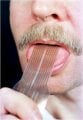
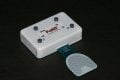
The Portable Neuromodulation Stimulator (PoNS)™ is a small electrode array (3 × 3 × 0.1 cm, and 100 g) that is held in place on the tongue’s surface with light pressure to the roof of the mouth (Figure 1). The stimulation consists of 19-V pulses delivered at a rate of 200 Hz with every fourth pulse removed[29]. The 143 electrodes are pulsed sequentially in groups of nine. Subjects were instructed to increase stimulation to a moderate-high level (pulse width adjustable from 0.4 to 60 μs) that was tolerable and not painful.
So as I understand it, you want a similar electrode array with:
• ~16 individual 'channels', with a
• frequency variable from ~30-300Hz,
• 19V or 6mA (it's not quite clear which it is)
• AC so that polarity reverses
• pulse width control in addition to frequency

Does this sound about right?

A circuit to accomplish all that should not be too complicated, but I have no idea how to do the tongue electrodes. Do you have ideas for that?
 

Thread Starter

Nathan Roberts

Joined Oct 9, 2017
17
  • hi
Thanks for the post in the above thread, but let's keep your project thread separated from that one.

From the reference you posted there:


So as I understand it, you want a similar electrode array with:
• ~16 individual 'channels', with a
• frequency variable from ~30-300Hz,
• 19V or 6mA (it's not quite clear which it is)
• AC so that polarity reverses
• pulse width control in addition to frequency

Does this sound about right?

A circuit to accomplish all that should not be too complicated, but I have no idea how to do the tongue electrodes. Do you have ideas for that?
hi wayneh :) for your information in Australia your name would be wayneoh :) we put oh on the end of everything for some reason

yup you've pretty much nailed the only clarifications being:

  • frequency (carrier?) would be set to 50hz
  • 19v would be constant and amps variable and limited to 6mA to stop burns resulting in changing resistance ( movement of the array away from the tongues surface)
  • yes it would be an alternating dc wave... (sounds oxymoronic) or what they are calling an unbalnced biphasic square wave
  • and pulse width control and frequency would be variable. if this is to difficult i would be happy to make the pulses fixed around 200hz and the carrier at 50hz
as for the stimulator itself it would be a circuit board at first. then hopefully i can do some more research and find out how to construct a photolithographic version on a flexible medium. like this one:

http://www.sciencedirect.com/science/article/pii/S1026309811001702

1-s2.0-S1026309811001702-gr2.jpg 1-s2.0-S1026309811001702-gr1b.jpg


i am very excited that you said it shouldnt be to hard
 
Last edited:

wayneh

Joined Sep 9, 2010
18,087
Circuit boards are often tinned with lead, so beware.

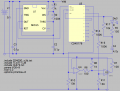
When I get some time I’ll look more deeply but in the meantime I’d say that nearly everything except the pulse width control could be obtained with just modifications of the circuit in my completed project. It was designed to produce constant current pulses with alternating polarity. You just need a different frequency. Making it switch “channels” will take some thought. My device had just one channel. But there is such a thing called a multiplexer and I suspect that’s what would be needed.
 

Thread Starter

Nathan Roberts

Joined Oct 9, 2017
17
Circuit boards are often tinned with lead, so beware.

When I get some time I’ll look more deeply but in the meantime I’d say that nearly everything except the pulse width control could be obtained with just modifications of the circuit in my completed project. It was designed to produce constant current pulses with alternating polarity. You just need a different frequency. Making it switch “channels” will take some thought. My device had just one channel. But there is such a thing called a multiplexer and I suspect that’s what would be needed.
and i will study you circuit and amass the parts in the mean time. thanks very much mate il build you one and send it to you when im done. legend. very excited. and roger that on the lead PCB. :)
 

Thread Starter

Nathan Roberts

Joined Oct 9, 2017
17
wow yeah thats just about it, so what would the be the effective change of the tongues resistance have on the pulse frequencys do you think. due to interface device construction (inbuilt resistance) , node spacing, how many cheetos the patient had consumed prior etc.
also when they say 19v pulses do you you think they mean peak to peak or 19vdc positive.
i suppose with 6ma they mean pk to pk but thought id ask the question. seems an odd way to label a dc voltage as 19v dc if really its 9.5vdc. maybe my amatuer showing but sounds fishy.
 
Last edited:

Thread Starter

Nathan Roberts

Joined Oct 9, 2017
17
as for the method to distribute the "spark" to the tongue. i am perty good with mechanical design but terrible in electronnic. i imagined a modified distributor cap. instead of a spining rotor distributing one spark to eight cylinders it had a flat disc in the place of the rotor button. one 45 degree section of the disc would be isolated from the rest and would carry the signal while the remaining 345 would carry the earth path. but in this scenario it would then require 9 alternators. and 16 plugs per alternator.
im not sure how this translates to silicon but it is my best guess, i know in some capacitor discharge ignition systems the spark from one coil goes to two plugs and those plugs are fired to two parts of the engine. essentially getting 6 sparks from 3 coils. the redundant spark that is fired at the exhaust stroke does very little but limits the complexity of the timing circuit.
if anything im am just saying this to fuel thought. probably in vane :/
 

wayneh

Joined Sep 9, 2010
18,087
wow yeah thats just about it, so what would the be the effective change of the tongues resistance have on the pulse frequencys do you think. due to interface device construction (inbuilt resistance) , node spacing, how many cheetos the patient had consumed prior etc.
The frequency is controlled by the circuit and essentially unaffected by the load.
also when they say 19v pulses do you you think they mean peak to peak or 19vdc positive.
If it was me, I would cite the voltage of the DC power supply. It is true that, because the polarity reverses, the peak-to-peak voltage approaches 2X the DC supply. The choice of 19V seems a bit random until you realize this is the voltage supplied by a typical laptop power brick. These make great project power supplies, and perhaps that's where it came from. Note that it's somewhat moot. The output hitting the user is controlled-current. The peak voltage would only matter when it's required to drive that current. Most of the time, with conduction, the load would not see the peak voltage.
i suppose with 6ma they mean pk to pk but thought id ask the question. seems an odd way to label a dc voltage as 19v dc if really its 9.5vdc. maybe my amatuer showing but sounds fishy.
I read 6mA as an absolute value, regardless of direction. So you get 6mA in one polarity and then 6mA in the opposite polarity. I suppose you could call that 12mA alternating current, but that would be misleading. When we talk about AC current, we talk about the average in either direction, which in this case is still 6mA.
 

Thread Starter

Nathan Roberts

Joined Oct 9, 2017
17
yes. i think you are right about the current and voltage. as for the frequency changing im not sure what i meant there i suppose i was worried that a bigger load would drive up current but its limited so no worries.
it looks as though im going to have to get something fabricated in regards to the output interface. it is multi layered so i think hand made is out of the question
 
Status
Not open for further replies.
Top